
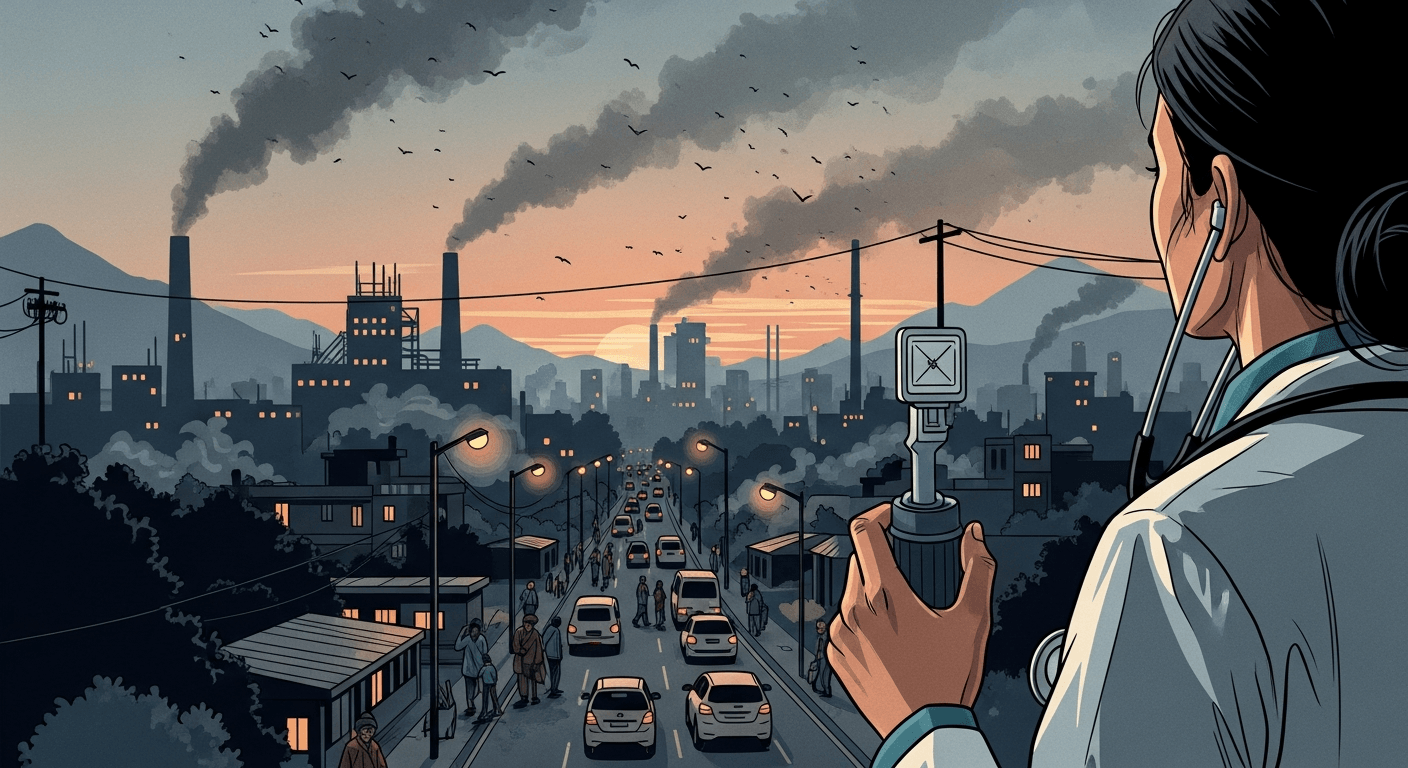
I read the recent analysis with concern: a city-based respiratory research group found that Maharashtra alone accounts for about 10% of India’s chronic respiratory disease (CRD) burden — roughly 67 lakh people living with CRDs in 2023 — a striking share for one state Maha carries 10% of India’s chronic respiratory disease burden, The Times of India.
What the study found — a short summary
- The state-level analysis (using Global Burden of Disease 2023 data compiled locally) estimates that Maharashtra contributes about 10% of India’s CRD burden; the national picture is large and concentrated in a few big states.
- COPD and asthma remain the dominant diagnoses nationally; Maharashtra’s share of COPD and asthma is sizeable in absolute terms (figures reported in the analysis are consistent with the national GBD patterns).
- The researchers highlighted major risk factors: ambient air pollution, tobacco exposure (smoking), household air pollution and occupational exposures as leading contributors to the burden.
I note the PARSING and interpretation above follow the published analysis and public reporting of that work Maha carries 10% of India’s chronic respiratory disease burden, The Times of India.
Voices behind the numbers
The study’s interpretation was provided by PURE (Pulmocare Research and Education) Foundation researchers: Dr Deesha Ghorpade (deesha@purefoundation.in) and Dr Sundeep Salvi (ssalvi@purefoundation.in). Their analysis follows GBD methods and stresses that air pollution and tobacco remain dominant drivers of COPD and the wider respiratory burden in Maharashtra and India.
(Instead of inventing direct quotes, I paraphrase their public summary of the findings in the Times of India coverage.)
Likely causes and risk factors — what to watch
- Air pollution (ambient PM2.5 and noxious gases) — a major contributor in urban and industrial pockets.
- Tobacco use (smoking and smokeless tobacco exposures) — persistent, and still a preventable cause.
- Household air pollution from biomass or solid fuels (important in parts of rural Maharashtra).
- Occupational exposures (mining, construction, factories) — silica, dust, fumes and chemicals.
- Urbanization and population size — more people, more cumulative exposure and more diagnosed cases.
These risk patterns match larger GBD and regional analyses showing that air pollution often rivals or exceeds smoking as a driver of COPD in South Asia.
Public-health implications — why this matters to Maharashtra and Pune
- Healthcare burden: more clinic visits, hospital admissions for exacerbations, and long-term disability (DALYs) from COPD and asthma mean pressure on both tertiary centres and primary care.
- Need for early detection: COPD is often diagnosed late. Screening at primary care level (spirometry access, simple symptom checklists) can identify people earlier.
- Prevention must be multisectoral: clean-air actions, tobacco control, safer workplaces and cleaner household energy will all reduce future cases.
- Local systems must prepare: trained respiratory care at district hospitals, access to essential inhaled medicines, and rehabilitation support.
Local context — Pune and Maharashtra
Pune is an expanding urban hub with traffic, industry, and construction as constant sources of particulate pollution. Maharashtra’s combination of large population centres (Mumbai, Pune) and industrial belts helps explain the large absolute numbers reported. In this sense the findings echo earlier points I’ve made about the need for granular emission mapping and municipal action plans, e.g., when I wrote about municipal emission inventories and pollution solutions in earlier posts Centre Sets Up Panel to Address Air Pollution in Indo-Gangetic Plain and on Mumbai’s emission inventory work BMC develops emission inventory to combat air pollution.
Recommended actions — for policymakers and individuals
For policymakers (state and municipal levels):
- Strengthen air-quality interventions: stricter control of industrial emissions, better traffic management, and targeted source-apportionment studies to prioritise actions.
- Scale up primary-care screening: provide spirometry or validated screening tools in community health centres and ensure referrals to respiratory clinics.
- Expand access to essential inhaled medicines and oxygen therapy; include CRD services in state health schemes.
- Accelerate clean cooking programmes and occupational safety enforcement (dust control, protective equipment).
- Bolster tobacco control — both prevention and cessation services.
For individuals and families:
- Avoid exposure where possible: monitor air quality (AQI) and limit outdoor activity on high-pollution days.
- If you smoke, seek cessation help — quitting reduces risk and slows disease progression.
- Improve household ventilation and, where feasible, move to cleaner cooking fuels.
- Get checked if you have chronic cough, breathlessness or wheeze — earlier diagnosis helps manage symptoms and preserve quality of life.
Final note — why this should prompt local action
Numbers alone are a wake-up call. Maharashtra’s share of the national respiratory burden is large because the state is populous and highly urbanised; but that means interventions here will yield tangible national benefits. The study reinforces a point I return to often: air quality, tobacco control and accessible primary respiratory care are the levers that will reduce suffering and future health costs.
Regards,
Hemen Parekh
Any questions / doubts / clarifications regarding this blog? Just ask (by typing or talking) my Virtual Avatar on the website embedded below. Then "Share" that to your friend on WhatsApp.
Get correct answer to any question asked by Shri Amitabh Bachchan on Kaun Banega Crorepati, faster than any contestant
Hello Candidates :
- For UPSC – IAS – IPS – IFS etc., exams, you must prepare to answer, essay type questions which test your General Knowledge / Sensitivity of current events
- If you have read this blog carefully , you should be able to answer the following question:
- Need help ? No problem . Following are two AI AGENTS where we have PRE-LOADED this question in their respective Question Boxes . All that you have to do is just click SUBMIT
- www.HemenParekh.ai { a SLM , powered by my own Digital Content of more than 50,000 + documents, written by me over past 60 years of my professional career }
- www.IndiaAGI.ai { a consortium of 3 LLMs which debate and deliver a CONSENSUS answer – and each gives its own answer as well ! }
- It is up to you to decide which answer is more comprehensive / nuanced ( For sheer amazement, click both SUBMIT buttons quickly, one after another ) Then share any answer with yourself / your friends ( using WhatsApp / Email ). Nothing stops you from submitting ( just copy / paste from your resource ), all those questions from last year’s UPSC exam paper as well !
- May be there are other online resources which too provide you answers to UPSC “ General Knowledge “ questions but only I provide you in 26 languages !



No comments:
Post a Comment