
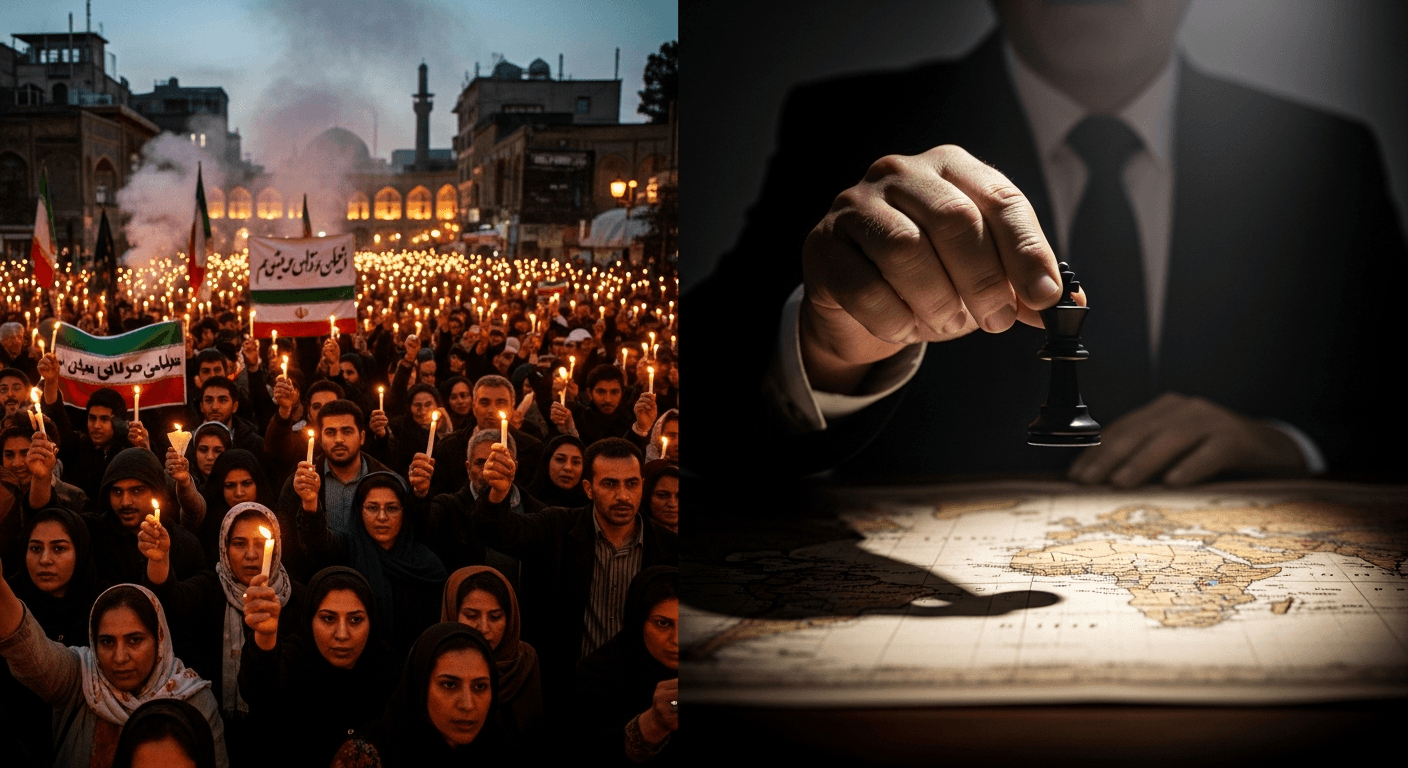
I cannot look away
A distant upheaval — people in the streets, internet blackouts, and the tremor of a possible turning point in a nation I've watched from afar — pulls at me the way stories of human courage always have. I feel solidarity with those who risk everything for dignity. I also feel the old, familiar weight of caution: the world has a long record of well-intended pushes that produced tragic, unintended outcomes.
In recent days news outlets reported that an exiled Iranian opposition figure publicly called on the U.S. president to act to help protesters inside Iran, urging international pressure and even intervention as the protest movement grows and the regime responds with force and communications blackouts (CBS News, Fox News). Those reports raise urgent ethical and practical questions I want to try to think through aloud here.
What I feel, and what I fear
- I feel admiration for ordinary people who take to the streets despite brutal risks. Their hopes are real, and their demands for dignity deserve global attention.
- I fear that calls for outside actors to “help” can become a prescription for escalation — especially if they are interpreted as permission for kinetic measures. History teaches that external intervention too often reshapes local agency, produces blowback, and leaves deeper wounds than it heals.
- I worry about the human cost: when leaders abroad promise help in broad, ambiguous terms, people on the ground may take enormous risks hoping for rescue that may never come or that may arrive in forms they did not expect.
These are not abstractions: the last century offers many hard lessons about regime change, proxy escalation, and the destabilizing aftermath of toppling a government without a credible, inclusive plan for transition.
My pragmatic moral framework
If I accept the impulse to support those seeking freedom, how should we act? I try to hold together two truths: (1) solidarity with those who demand human rights; (2) prudence about the form that outside support takes. That leads me to practical priorities:
- Restore communications: international pressure and targeted tech support to keep internet and secure communications online so activists can organize and document abuses.
- Protect civilians, not escalate wars: public, enforceable red lines can deter mass slaughter, but vague promises of force risk emboldening desperate action. Non-kinetic prevention (sanctions targeted at regime command structures, arms embargoes, and financial choke-points) often saves more lives than immediate military strikes.
- Legal and humanitarian pathways: accelerate asylum processes, evacuations for at-risk activists and journalists, and humanitarian corridors for injured civilians.
- Support independent institutions: fund independent media, humanitarian NGOs, documentation of rights abuses, and local civil-society capacity so that any political transition is led from within.
- Multilateral legitimacy: build a broad coalition — regional partners, legal institutions, and international organizations — so that any measure has a clear legal mandate and shared burden.
Not naive, not indifferent
I don't advocate doing nothing. The question is how to transform words of sympathy into measures that actually protect people and expand space for self-determination — without substituting one set of masters for another. In past columns I warned about the perils of hasty, theatrical interventions and urged world leaders to seek stable equilibria rather than quick triumphs (I wrote about that very tension before). Those reflections feel relevant now: strategy matters as much as conviction.
A short checklist I wish leaders would use before promising action
- Will this action reduce net risk to civilians in the next 30–90 days?
- Does the measure strengthen local agency and institutions, or substitute for them?
- Is there a clear, lawful multilateral pathway and exit strategy?
- Are humanitarian protections and safe passages prioritized and funded now?
- Have we transparently communicated limits so people on the ground do not take fatal gambles hoping for rescues that are not authorized?
If the answers tilt toward reducing harm and increasing self-determination, then the international community should move quickly and boldly. If not, restrained, well-targeted measures — focused on protection, information, and legitimacy — are morally preferable.
Where my heart leads me
I stand with those whose names we will remember — the people who take to the streets asking for dignity. I want to see the international community act in ways that increase their safety and their power to decide their own future. That means avoiding cheap promises and favoring concrete, legally grounded steps that protect lives and open doors for peaceful transitions led by citizens themselves.
I will keep listening, learning, and urging policies that balance solidarity with prudence. The world can and must do better than slogans. We owe the people of Iran the clarity of support that actually helps.
Regards,
Hemen Parekh
Any questions / doubts / clarifications regarding this blog? Just ask (by typing or talking) my Virtual Avatar on the website embedded below. Then "Share" that to your friend on WhatsApp.
Get correct answer to any question asked by Shri Amitabh Bachchan on Kaun Banega Crorepati, faster than any contestant
Hello Candidates :
- For UPSC – IAS – IPS – IFS etc., exams, you must prepare to answer, essay type questions which test your General Knowledge / Sensitivity of current events
- If you have read this blog carefully , you should be able to answer the following question:
- Need help ? No problem . Following are two AI AGENTS where we have PRE-LOADED this question in their respective Question Boxes . All that you have to do is just click SUBMIT
- www.HemenParekh.ai { a SLM , powered by my own Digital Content of more than 50,000 + documents, written by me over past 60 years of my professional career }
- www.IndiaAGI.ai { a consortium of 3 LLMs which debate and deliver a CONSENSUS answer – and each gives its own answer as well ! }
- It is up to you to decide which answer is more comprehensive / nuanced ( For sheer amazement, click both SUBMIT buttons quickly, one after another ) Then share any answer with yourself / your friends ( using WhatsApp / Email ). Nothing stops you from submitting ( just copy / paste from your resource ), all those questions from last year’s UPSC exam paper as well !
- May be there are other online resources which too provide you answers to UPSC “ General Knowledge “ questions but only I provide you in 26 languages !



No comments:
Post a Comment