
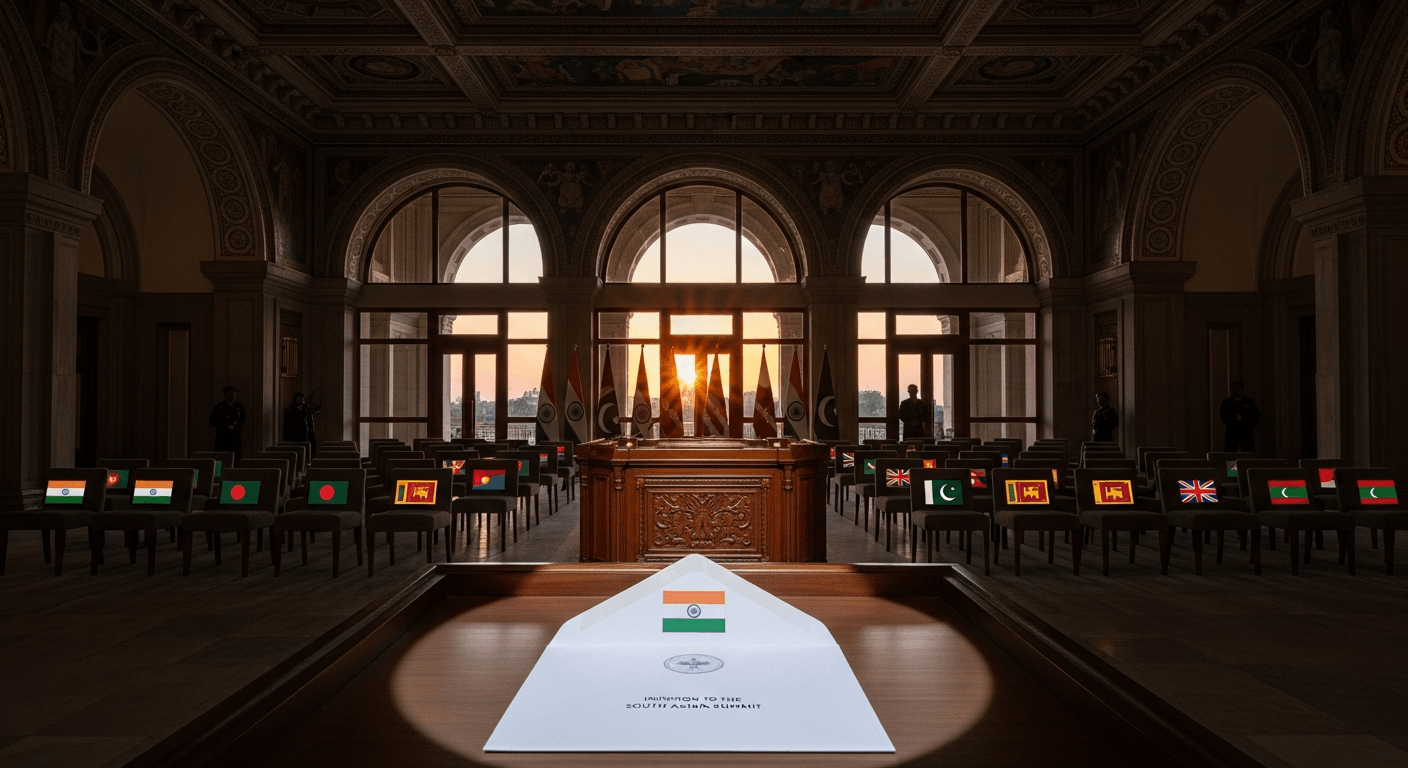
Oath and Regional Diplomacy
I write today as someone who watches how ceremonies become statements — and how invitations can be as significant as speeches. The recent parliamentary polls in Bangladesh produced a decisive return to power for the Bangladesh Nationalist Party (BNP). In the immediate aftermath the BNP signalled a desire to make the oath-taking ceremony for its incoming government a regional moment, extending invitations to South Asian leaders and beyond. That invitation list, and the specific request that Narendra Modi (n.modi@india.gov.in) be present, has created a compact, high-stakes diplomatic question that goes beyond protocol.
What happened, in brief
- The BNP-led coalition won a commanding majority in the latest national polls. Election reporting and immediate post-poll statements indicate the party intends to hold a prominent oath ceremony and invite leaders from the region and friendly states — including SAARC countries and several outside partners (Hindustan Times; India Today).
- New Delhi has acknowledged contact and congratulations; however, an actual decision on a state visit or attendance at the ceremony remains a matter of protocol, scheduling and calculation (Moneycontrol; Times of India).
Background: BNP and its leader (concise context)
The BNP is a major political force in Bangladesh, historically alternating power with the Awami League. This election marks a return to office for the BNP after many years in opposition. The incoming leadership has framed its foreign policy as pragmatic and regionally focused; the party has said it wants to revive regional platforms and pursue "friends to all, malice to none" diplomacy, and the oath ceremony is being presented as an early gesture of that intent (India Today).
Why the BNP wants regional leaders — and why they named a specific invitee
An inauguration is both a domestic ritual and an international signal:
- Symbolism: A packed guest list with regional leaders projects legitimacy and a return to normalcy after a fraught electoral cycle.
- Reset diplomacy: Explicitly inviting neighbours, particularly large partners in the region, is a quick way to signal a desire to reset or stabilise bilateral ties.
- Domestic optics: Hosting respected external leaders bolsters the incoming government’s narrative of acceptance and recognition.
Those are pragmatic reasons; there are also political calculations about balancing relations among competing external partners.
A couple of voices (short quotes)
"Invitations like this are a gesture of goodwill and a signal of our intent to engage constructively with neighbours," said a BNP spokesperson.
"New Delhi will consider any invitation in light of protocol, calendar and broader bilateral priorities," said an Indian government official.
(These short statements reflect the tone public reporting has captured: an outreach on one side, cautious diplomatic calculation on the other; see reporting in Hindustan Times and Times Now.)
Legal, constitutional and diplomatic implications
Constitutional formality vs. political theatre: An oath-taking is a constitutional act administered by the head of state — but the guest list and public framing are political decisions. The administration organising the event must balance state protocol (the president as oath-giver) with invitations issued by the incoming majority.
Diplomatic precedence: Acceptance of an invitation by a neighbouring head of government carries signals about bilateral recognition and priorities. A high-profile attendance (or absence) will be read as a diplomatic message, intended or not.
Practicalities and immunities: Heads of state or government attending foreign ceremonies trigger diplomatic protections, logistics, security arrangements and calendar coordination. If leaders from rival camps (or from countries with tense ties) attend the same ceremony, the optics must be managed carefully.
Risks and benefits
Benefits
- Fast-track engagement: A shared platform can open channels for trade, border management, and cooperative initiatives (infrastructure, migration, Rohingya-related work, etc.).
- Regional leadership signalling: Convening SAARC leaders could revive dormant regional formats and present the incoming administration as a constructive regional actor.
Risks
- Polarised optics: If attendance is interpreted as endorsing contested domestic processes, invited leaders may be criticised at home.
- Diplomatic friction: Invitations to states with tense relations (for example, neighbours with disputes) can create challenging bilateral optics for invitees.
- Security and protocol stress: Large international participation in a short-notice ceremony increases logistical risks.
Likely outcomes (my read)
- Practical restraint: I expect most governments to treat the invitation seriously but respond with calibrated gestures. Formal congratulations and senior delegation-level representation are likely; full head-of-government attendance will be weighed against schedules and strategic calculations.
- India’s posture: Given immediate reports of a congratulatory call and public outreach from New Delhi, I judge a senior-level Indian representation more likely than a prime-time visit by Narendra Modi (n.modi@india.gov.in) on the ceremony day itself (India Today).
- Regional optics: Some SAARC members may attend or send prominent envoys; others may choose quieter diplomatic acknowledgement depending on bilateral ties and domestic politics.
A personal note and continuity
I have written in the past about how ceremonies and symbolic moments become short-hand for deeper diplomatic choices; these transitions are moments to test whether words will translate into policy. That continuity — noticing gestures that preface policy change — is important. For context on my earlier reflections about political outreach and engagement, see an older piece where I discussed political correspondence and outreach as early signalling in transitions (an earlier note I wrote).
Conclusion
The invitation list for an oath ceremony is at once ceremonial and consequential. The BNP’s choice to invite regional leaders and to seek the presence of major neighbours is a deliberate diplomatic gambit: it seeks recognition, resets ties, and internationalises a domestic moment. The response will depend on calendars, protocol, bilateral priorities and how each capital reads domestic legitimacy. As the dust settles from the ballots, watch the guest list and the replies: they will tell us as much about policy direction as any inaugural speech.
I invite readers to share their view: is a grand regional oath-taking ceremony the right first move for a government aiming to reset ties?
Regards,
Hemen Parekh
Any questions / doubts / clarifications regarding this blog? Just ask (by typing or talking) my Virtual Avatar on the website embedded below. Then "Share" that to your friend on WhatsApp.
Get correct answer to any question asked by Shri Amitabh Bachchan on Kaun Banega Crorepati, faster than any contestant
Hello Candidates :
- For UPSC – IAS – IPS – IFS etc., exams, you must prepare to answer, essay type questions which test your General Knowledge / Sensitivity of current events
- If you have read this blog carefully , you should be able to answer the following question:
- Need help ? No problem . Following are two AI AGENTS where we have PRE-LOADED this question in their respective Question Boxes . All that you have to do is just click SUBMIT
- www.HemenParekh.ai { a SLM , powered by my own Digital Content of more than 50,000 + documents, written by me over past 60 years of my professional career }
- www.IndiaAGI.ai { a consortium of 3 LLMs which debate and deliver a CONSENSUS answer – and each gives its own answer as well ! }
- It is up to you to decide which answer is more comprehensive / nuanced ( For sheer amazement, click both SUBMIT buttons quickly, one after another ) Then share any answer with yourself / your friends ( using WhatsApp / Email ). Nothing stops you from submitting ( just copy / paste from your resource ), all those questions from last year’s UPSC exam paper as well !
- May be there are other online resources which too provide you answers to UPSC “ General Knowledge “ questions but only I provide you in 26 languages !



No comments:
Post a Comment