
India can be innovator of climate change solutions, says Hillary Clinton, calls on big tech to slow down AI development
I was struck by the bluntness and the urgency of the message delivered at Mumbai Climate Week: climate action cannot wait, and innovation must come from the frontlines. Listening to the conversation, I felt both the weight of global responsibility and the opportunity India holds to become a scalable laboratory for solutions that the world urgently needs.
Lede
As India steps forward with new climate initiatives, the global conversation is changing. Former US Secretary of State Hillary Clinton () urged leaders to treat the twin revolutions of climate and AI as interconnected challenges — and warned we may need to pause development until we understand the consequences.
Background and context
Over the past week, leaders and practitioners gathered in Mumbai to explore how policy, markets and grassroots innovation can accelerate climate resilience. Coverage of the event highlights two linked themes: (1) that emerging economies must not wait for political shifts elsewhere to take the lead in piloting and scaling climate solutions Times of India, and (2) that rapid AI deployment raises unanswered questions about energy, water, labour displacement and social harms Hindustan Times.
How I heard the message (paraphrase of stance)
Hillary Clinton () framed the moment as a crossroads: India and other countries in the Global South are on the front lines and therefore well-placed to design pragmatic, inclusive solutions. At the same time, she cautioned that unchecked AI deployment carries environmental and social risks — from huge energy and water footprints in data centres to the displacement of workers and the spread of misinformation. Her call was not to reject technology, but to slow, study and regulate its rollout so we do not repeat the mistakes we made with social media.
Why India can lead — concrete sectors and examples
I’ve long believed that leadership emerges where necessity meets ingenuity. India has three built-in advantages that make it a likely innovator of climate solutions:
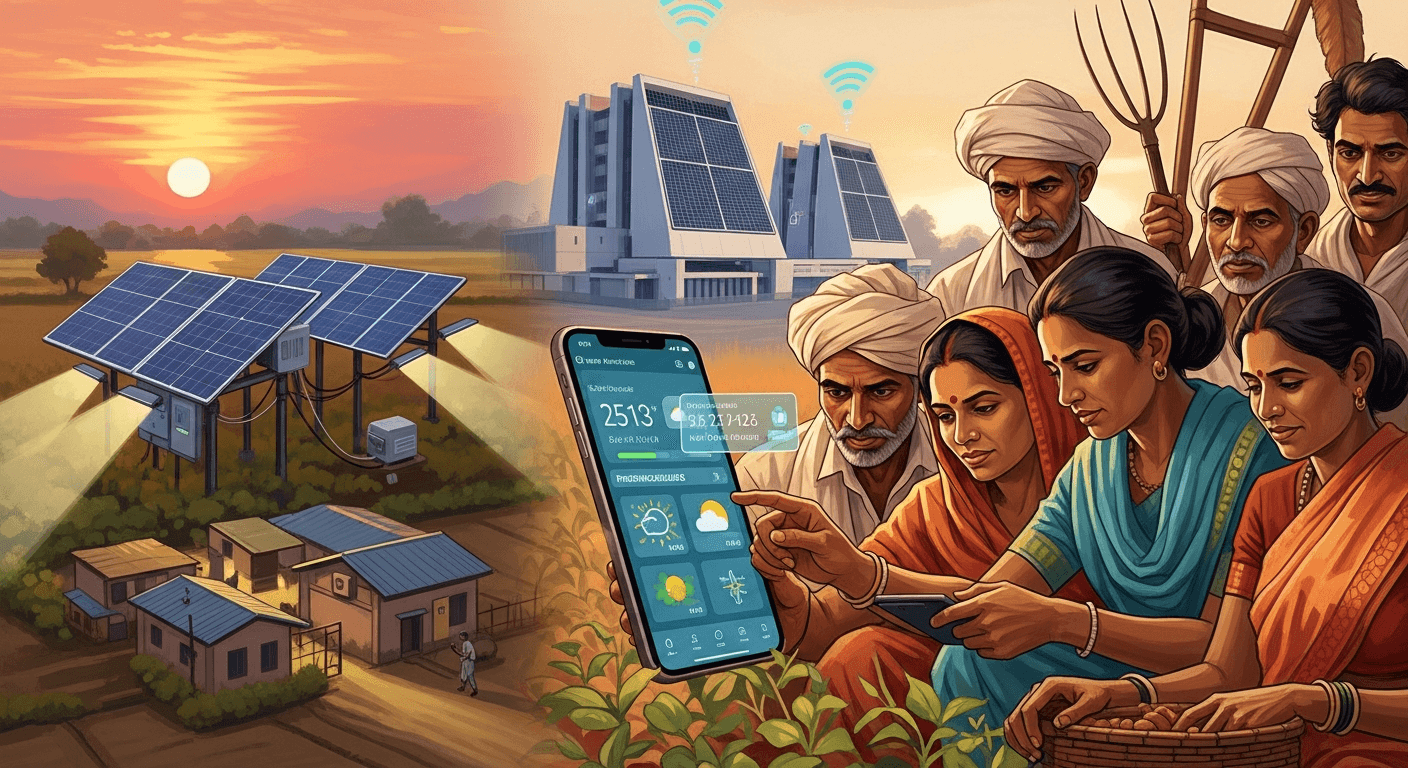
- Distributed renewable energy and microgrids: India’s progress with solar home systems and state-level grid reforms offers models for resilient, modular energy that other regions can adopt.
- Climate-smart agriculture and water management: From precision irrigation pilots to crop-insurance models that reached hundreds of thousands of women, India’s grassroots finance and agri-tech sectors can provide blueprints for resilience at scale.
- Low-cost digital public goods and last-mile services: India’s experience with digital identity, payments and health platforms can be adapted to climate early warning systems, flood mapping and insurance distribution.
These are not abstract ideas. When a country can combine low-cost manufacturing, strong NGO networks, and fast-moving startups, it creates a space where pilots can quickly become exports — morally and commercially.
Analysis: slowing AI — reasonable precaution or growth brake?
The proposal to "slow down" big tech’s AI development is provocative because it challenges a dominant narrative: that speed equals advantage. But when framed around climate and social risk, the argument is pragmatic. AI today consumes large amounts of power and water; it amplifies misinformation and can reshape labour markets without safety nets. Slowing development — or at least pausing certain high-impact deployments until we have robust environmental accounting, sector-specific impact assessments, and enforceable governance — is a form of precautionary governance.
We must balance this with the real benefits of AI for climate: grid optimisation, hyperlocal flood forecasting, supply-chain efficiencies and improved diagnostics in public health. The smart approach is not binary. It is a triage: protect scarce resources and vulnerable workers while accelerating AI applications that demonstrably reduce emissions or improve adaptive capacity.
Reactions and implications for policy and business
For policymakers: the message implies three immediate priorities — rigorous environmental impact assessments for large AI infrastructure projects; retraining and income-support frameworks for displaced workers; and incentives for AI projects with measurable climate benefits.
For business and philanthropy: India’s market logic is clear — climate innovation is both a moral imperative and a growth opportunity. Venture capital, impact investors, and development financiers should lean into scalable pilots that reduce emissions, increase resilience, and create jobs.
For civil society and communities: the conversation underscores the need to insist on transparency and local accountability when international tech players deploy resource-heavy infrastructure.
Conclusion — a short set of calls to action
I leave Mumbai convinced that leadership will come from places that combine urgency with humility. My calls to action are simple:
- For Indian leaders: codify standards for environmentally responsible AI infrastructure and create fast-track pathways for scaling proven climate solutions.
- For global institutions: redirect finance and technical partnerships to accelerate innovations that originate in the Global South.
- For businesses and investors: prioritize climate-AI projects that reduce resource intensity and demonstrably improve resilience.
If we commit to that pragmatic, precautionary path — leaning into India’s demonstrable strengths while tempering the rush to deploy untested AI at scale — we’ll have a chance to shape technology in service of people and planet.
Regards,
Hemen Parekh
Any questions / doubts / clarifications regarding this blog? Just ask (by typing or talking) my Virtual Avatar on the website embedded below. Then "Share" that to your friend on WhatsApp.
Get correct answer to any question asked by Shri Amitabh Bachchan on Kaun Banega Crorepati, faster than any contestant
Hello Candidates :
- For UPSC – IAS – IPS – IFS etc., exams, you must prepare to answer, essay type questions which test your General Knowledge / Sensitivity of current events
- If you have read this blog carefully , you should be able to answer the following question:
- Need help ? No problem . Following are two AI AGENTS where we have PRE-LOADED this question in their respective Question Boxes . All that you have to do is just click SUBMIT
- www.HemenParekh.ai { a SLM , powered by my own Digital Content of more than 50,000 + documents, written by me over past 60 years of my professional career }
- www.IndiaAGI.ai { a consortium of 3 LLMs which debate and deliver a CONSENSUS answer – and each gives its own answer as well ! }
- It is up to you to decide which answer is more comprehensive / nuanced ( For sheer amazement, click both SUBMIT buttons quickly, one after another ) Then share any answer with yourself / your friends ( using WhatsApp / Email ). Nothing stops you from submitting ( just copy / paste from your resource ), all those questions from last year’s UPSC exam paper as well !
- May be there are other online resources which too provide you answers to UPSC “ General Knowledge “ questions but only I provide you in 26 languages !




No comments:
Post a Comment