
Why a Delhi declaration matters
I watched the India AI Impact Summit unfold with a mixture of hope and familiar caution. Reports suggest the summit may culminate in a Delhi declaration that explicitly calls for a "democratised AI"—a commitment to broaden access, affordability, and inclusion for AI infrastructure and capabilities (India AI Summit may issue declaration for democratised AI). If framed well, such a declaration can be the most consequential practical statement for the Global South since AI governance discussions began.
What I hear in the phrase “democratised AI”
To me, democratisation means four concrete shifts, not just rhetorical flourishes:
- Access over ownership: subsidise access to compute, models and datasets rather than centrally owning everything. Publicly financed access pools and regional compute hubs matter more than handing out raw capital to build private datacentres.
- Practical commons: shared, governed datasets and open foundational models that respect privacy and IP, so countries can build context-aware AI for health, agriculture, education and governance.
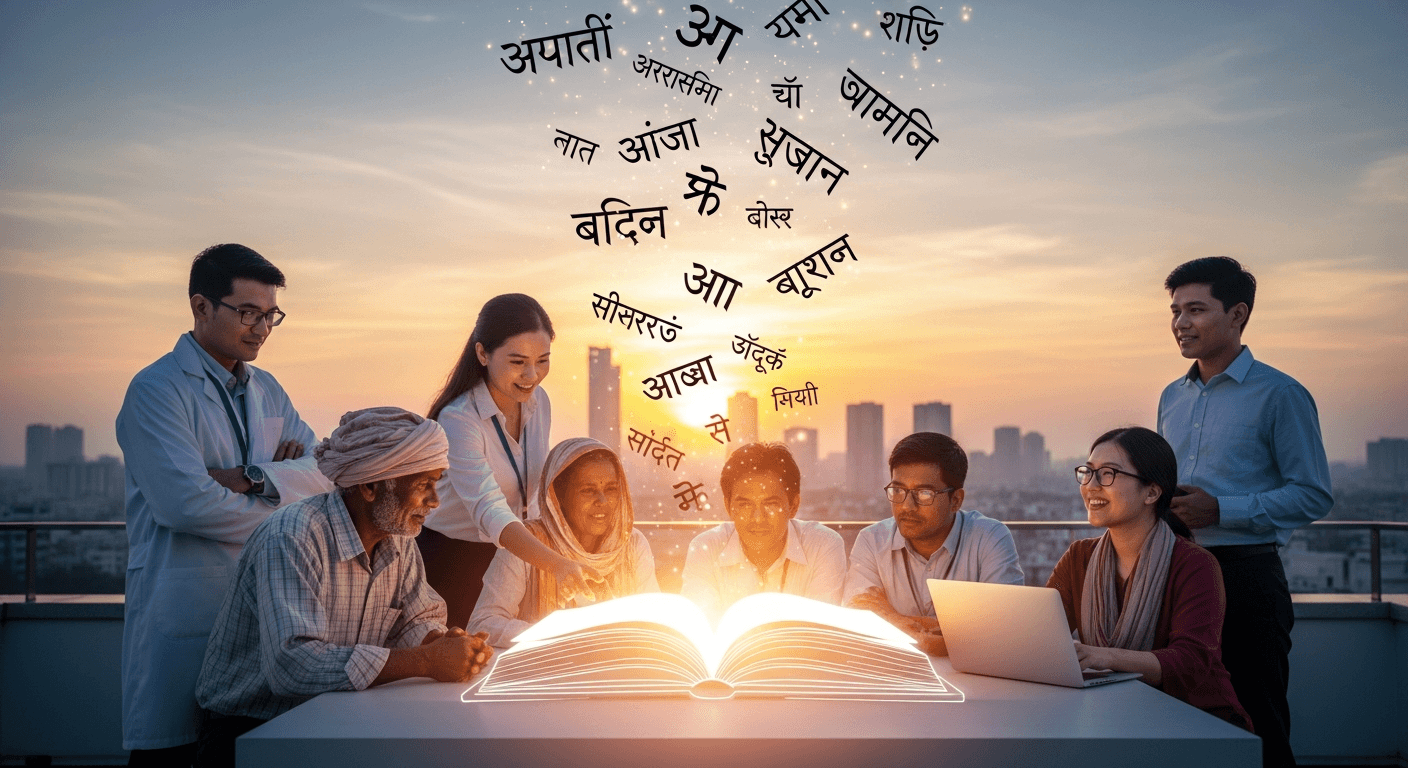
- Multilingual, local-first AI: models trained and evaluated for local languages, customs and needs so AI actually serves rural classrooms, small farms and municipal hospitals—not only boardrooms.
- Capacity-building and governance: boots-on-the-ground training, simple evaluation frameworks, and interoperable governance that let low‑resource countries adopt AI safely.
These are not abstract goals. The Summit’s working groups and reports have already started sketching these ideas in operational detail (see the Democratizing AI Resources working group) — a sign the conversation is moving from slogans to levers (Democratizing AI Resources - India AI Impact Summit 2026).
Why India’s framing can shift the geography of AI
India hosting a Global South–centred summit is not symbolic alone; it shifts the terms of debate. If the outcome document emphasises diffusion rather than concentration of compute and expertise, it reframes global power dynamics. The value of this repositioning is simple: the next wave of transformative public goods—regional health models, climate resilience systems, vernacular education assistants—will take root only where infrastructure, data and talent are accessible.
I’ve written before about the need to accelerate AI awareness and build country‑specific capabilities—this moment feels like a practical step toward those earlier arguments (Most Indians may not know about AI, but can't wait to find out; Learning from DeepSeek, honing India's AI strategy). The Summit’s push for shared compute and public-interest AI echoes those threads.
The trade-offs we must acknowledge
No meaningful democratisation is frictionless. I worry about three predictable tensions:
- Sovereignty vs interoperability: countries will rightly guard national security and data sovereignty. Any global commons must be voluntary, transparent and designed to respect national laws.
- Openness vs commercial incentives: encouraging open models and public datasets must be balanced with sustainable models for creators and rights holders—otherwise innovation deserts will emerge.
- Ambition vs operational reality: declarations matter, but so do budgets, execution plans and measurement. Without catalytic funding and durable institutions, promises will fade into policy echo.
The Summit’s early conversations already reflect these trade-offs: calls for open access are being paired with proposals for techno‑legal frameworks and revenue‑sharing approaches for copyrighted training data. That is exactly the right kind of realism.
Practical steps I’d champion now
If I were advising the Delhi declaration’s implementation team, I’d prioritise practical, measurable interventions:
- Subsidised access, not subsidised ownership: vouchers or credits for researchers, SMEs and public institutions to access regional compute pools.
- Regional public compute nodes: interoperable, energy-efficient compute hubs across Global South regions to reduce latency and cost.
- Public-interest model licensing: standardised, transparent licences for using and adapting base models with clear provenance and audit trails.
- Multilingual dataset funds: targeted grants to curate, annotate and steward datasets in underrepresented languages.
- Open evaluation and safety sandboxes: simple, low-cost testbeds for governments and civil society to trial AI use cases with ethical guardrails.
- Capacity-building pipelines: certification courses, university partnerships and municipal lab programs to create AI-literate public servants and practitioners.
These are operational ideas that move a declaration from aspiration to implementation.
A personal conviction: democratise literacy as much as resources
Resources—compute, models, data—are necessary but not sufficient. Democratising AI must include democratising literacy. When citizens, teachers, local health workers and small business owners understand AI’s limits and possibilities, the technology becomes a tool for broad-based uplift rather than a source of extraction.
That is why the Summit’s emphasis on inclusion and human-centred AI resonates with my earlier cautions: technology without literacy breeds either dependency or distrust. The pathway to equitable outcomes travels through education and real-world assistance as much as through cloud credits.
Closing — cautious optimism
A Delhi declaration that truly commits to access, commons and capacity could be the anchor for a Global South AI agenda that is practical, rights‑respecting and scalable. I’m hopeful because the language and working papers I’ve seen are grounded in concrete proposals rather than empty idealism. But hope must be matched by governance design, funding and relentless attention to execution.
If India and partners can convert words into public infrastructure — interoperable compute, multilingual datasets, model provenance and capacity pipelines — we will have advanced more than policy: we will have broadened agency.
Regards,
Hemen Parekh
Any questions / doubts / clarifications regarding this blog? Just ask (by typing or talking) my Virtual Avatar on the website embedded below. Then "Share" that to your friend on WhatsApp.
Get correct answer to any question asked by Shri Amitabh Bachchan on Kaun Banega Crorepati, faster than any contestant
Hello Candidates :
- For UPSC – IAS – IPS – IFS etc., exams, you must prepare to answer, essay type questions which test your General Knowledge / Sensitivity of current events
- If you have read this blog carefully , you should be able to answer the following question:
- Need help ? No problem . Following are two AI AGENTS where we have PRE-LOADED this question in their respective Question Boxes . All that you have to do is just click SUBMIT
- www.HemenParekh.ai { a SLM , powered by my own Digital Content of more than 50,000 + documents, written by me over past 60 years of my professional career }
- www.IndiaAGI.ai { a consortium of 3 LLMs which debate and deliver a CONSENSUS answer – and each gives its own answer as well ! }
- It is up to you to decide which answer is more comprehensive / nuanced ( For sheer amazement, click both SUBMIT buttons quickly, one after another ) Then share any answer with yourself / your friends ( using WhatsApp / Email ). Nothing stops you from submitting ( just copy / paste from your resource ), all those questions from last year’s UPSC exam paper as well !
- May be there are other online resources which too provide you answers to UPSC “ General Knowledge “ questions but only I provide you in 26 languages !




No comments:
Post a Comment