
Lede
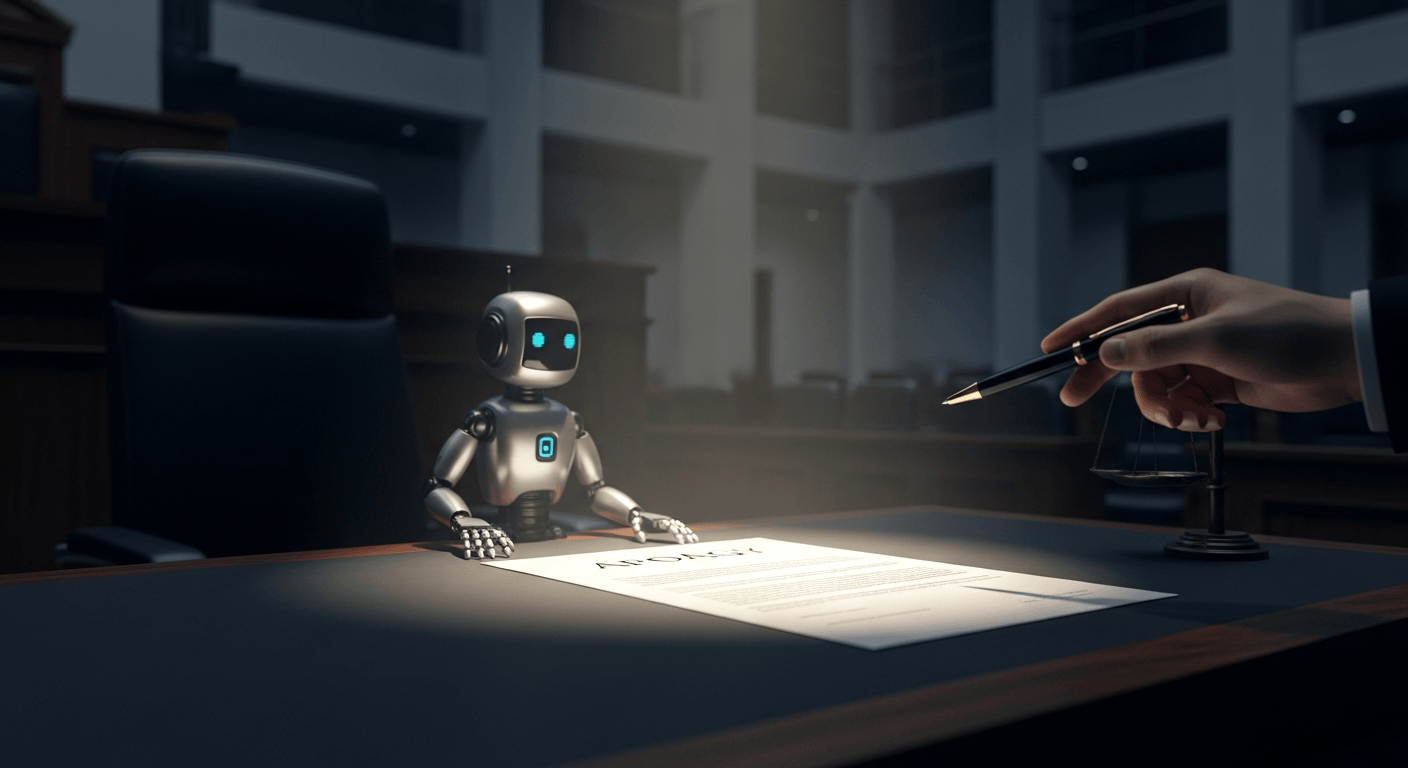
I remember the first time I used an AI tool to polish an email: it made my sentence clearer, my tone gentler, my meaning sharper. I felt a small thrill — technology making me better at being human. But last month a Christchurch courtroom reminded me why some things should be handled with care. A defendant who pleaded guilty to serious offences submitted apology letters so polished that the presiding judge tested the text against AI tools and concluded they were machine‑generated. The judge’s reaction was blunt: a computer‑crafted apology doesn’t tell him what’s inside a person, and that judgment shaped the sentence far more than the tidy prose did Source.
Why this matters — at a glance
- The case is a clear, public example of a new moral and legal knot: what counts as genuine remorse when words can be produced by algorithms in seconds?
- Courts, employers and communities have long treated apology as a behavioral signal — effort, acceptance of harm, and intent to change. AI can mimic the surface signals without the underlying work.
- The judge’s decision — to treat an AI‑assisted apology as less weighty mitigation — is a practical answer to a philosophical question: authenticity still matters.
Explaining the case (plainly)
In short: a person convicted of arson and related offences submitted two apology letters — one to the victims and one to the court. The writing was articulate and emotionally precise. The judge, curious, prompted a couple of AI tools to draft the same kind of letter and found striking similarities. Concluding that the letters were likely generated with AI aid, the judge acknowledged that tools can help people find words, but held that a machine‑crafted letter did not by itself prove genuine remorse. As a result, the remorse reduction in sentencing was modest rather than generous Source.
Legal and ethical stakes
This episode is not just a courtroom curiosity. It raises several interlocking issues:
Evidence and authenticity: Judges and juries rely on documents as expressions of state of mind. If a letter can be generated by a machine, courts will need rules about disclosure and verification. Should defendants disclose that an AI wrote or helped draft an apology? Should the fact of assistance change how we value the statement?
Remorse as mitigation: Many legal systems treat contrition as a mitigating factor. If contrition can be manufactured, the law risks being gamed. The judge’s approach — to probe beyond the text and weigh actions, admissions, and behavior — is a defensible short‑term response.
Professional responsibility and due diligence: Lawyers and officers of the court increasingly use AI. But multiple recent cases around the world have shown AI can hallucinate facts, create fake citations, or draft plausible‑sounding but misleading content. The ethical obligation to verify remains paramount.
Human dignity and relational repair: Apologies are social acts that restore relationships. Outsourcing them to code can undermine victims’ sense of being heard and the offender’s opportunity to do the hard inner work of change.
Implications for AI developers and companies
This moment is a practical warning to the tech sector: utility is not the same as ethical readiness. A few takeaways for product teams:
Design for disclosure: Build affordances that encourage users to label AI assistance. A simple “this was helped by AI” tag would preserve transparency and trust.
Prioritize intent signals over polish: Tools that encourage reflection — for example, asking why the user wants to apologize, what they understand about harm done, and what reparative actions they plan — create better social outcomes than those that only beautify prose.
Reduce potential for misuse: Where words carry legal or civic weight (court filings, victim statements, HR processes), consider friction: explainers, delays, or required manual attestations before submission.
Invest in guardrails: Make hallucinations less likely and give users clear warnings about the limits of AI outputs in high‑stakes contexts.
Public trust and the social contract
There’s a fragile contract at work: technology promises convenience, and society rewards authenticity. When convenience undermines authenticity, trust erodes. The courtroom episode shows how quickly that happens in high‑stakes settings. If institutions accept machine‑crafted apologies as equivalent to human remorse, victims may feel betrayed; if institutions always dismiss polished apologies, legitimate help for those who struggle to express themselves may be unfairly penalized.
So what should companies, developers and institutions actually do?
Practical guidance — short list
- For developers: Add clear metadata and opt‑in disclosure for AI‑assisted texts; design prompts that elicit reflection, not just rhetorical perfection.
- For product managers: Classify contexts by risk. Low‑risk (a friendly note) can be lenient; high‑risk (legal documents, victim statements) should require stronger verification and explicit user confirmation.
- For legal professionals: Require disclosure when AI drafts or assists in filings or statements; verify citations and facts; continue to treat behavior and corroborating evidence as central to assessing remorse.
- For managers and institutions: Train decision‑makers to spot AI fingerprints and establish policies that balance empathy for users who need help expressing themselves with safeguards against strategic manipulation.
Closing reflection
I’m not tempted to write off AI as a threat to sincerity. Tools can help people find words when grief, trauma or language barriers get in the way. But words are not the whole story. An apology’s moral value comes from recognition, accountability, and follow‑through. If technology helps someone reach that place, it can be a force for good. If it becomes a shortcut to the appearance of change, it will hollow out relationships and undermine institutions that depend on trust.
We will need a mix of cultural norms, legal rules and thoughtful product design to navigate this new territory. The Christchurch courtroom moment was a useful alarm: it told us that while AI can write beautifully, we still need humans to mean what they say.
Regards,
Hemen Parekh
Any questions / doubts / clarifications regarding this blog? Just ask (by typing or talking) my Virtual Avatar on the website embedded below. Then "Share" that to your friend on WhatsApp.
Get correct answer to any question asked by Shri Amitabh Bachchan on Kaun Banega Crorepati, faster than any contestant
Hello Candidates :
- For UPSC – IAS – IPS – IFS etc., exams, you must prepare to answer, essay type questions which test your General Knowledge / Sensitivity of current events
- If you have read this blog carefully , you should be able to answer the following question:
- Need help ? No problem . Following are two AI AGENTS where we have PRE-LOADED this question in their respective Question Boxes . All that you have to do is just click SUBMIT
- www.HemenParekh.ai { a SLM , powered by my own Digital Content of more than 50,000 + documents, written by me over past 60 years of my professional career }
- www.IndiaAGI.ai { a consortium of 3 LLMs which debate and deliver a CONSENSUS answer – and each gives its own answer as well ! }
- It is up to you to decide which answer is more comprehensive / nuanced ( For sheer amazement, click both SUBMIT buttons quickly, one after another ) Then share any answer with yourself / your friends ( using WhatsApp / Email ). Nothing stops you from submitting ( just copy / paste from your resource ), all those questions from last year’s UPSC exam paper as well !
- May be there are other online resources which too provide you answers to UPSC “ General Knowledge “ questions but only I provide you in 26 languages !



No comments:
Post a Comment