
Introduction
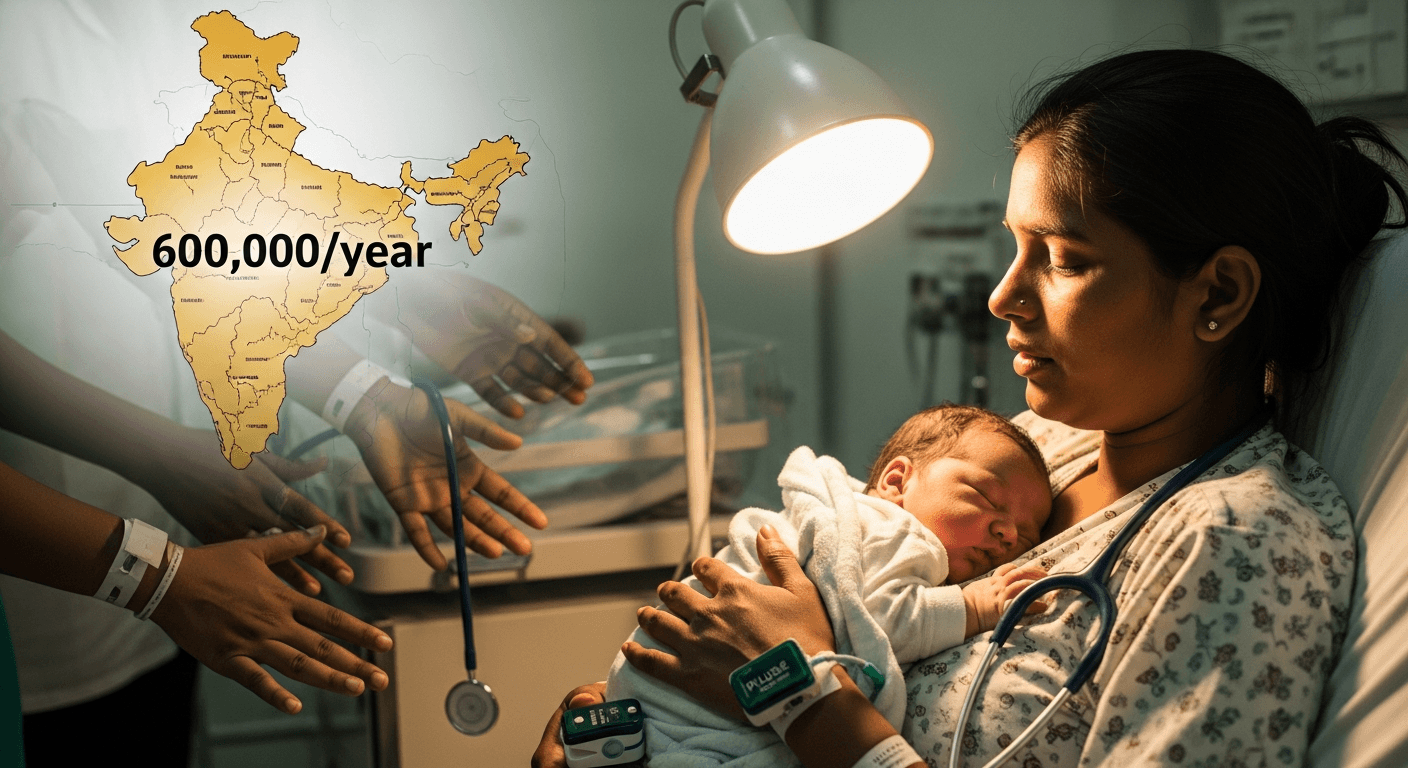
Every year in India, nearly six lakh babies are born with congenital anomalies — conditions that are either visible at birth or emerge in early infancy. Yet we do not have a unified national registry to reliably count, classify, or follow these children. That gap matters: without good data, prevention, early diagnosis and long-term care remain fragmented and inequitable. Recent reporting in the Times of India brought renewed attention to this issue and to a new multi‑stakeholder push for a national registry and coherent services “6L kids born with anomalies per year but no national registry to track them”.
Key facts — a concise summary
- Estimated burden: about 600,000 (six lakh) babies born with congenital anomalies each year in India — roughly one in 44 births by some estimates.
- No national registry: there is currently no single, standardized National Birth Anomalies Registry that captures nationwide data across public and private facilities.
- Regional disparities: available studies and hospital registries show wide variation across states and between urban and rural areas; many cases go undocumented outside tertiary centres.
- Common conditions: congenital heart defects, cleft lip and palate, neural tube defects (spina bifida), clubfoot, chromosomal conditions (e.g., Down syndrome), and sensory impairments (hearing/vision) form a large part of the burden.
- Contributing factors: maternal health and nutrition (including folic acid deficiency), consanguinity in parts of the country, environmental exposures, and gaps in antenatal care and screening.
- Health system gaps: inconsistent newborn screening, weak referral pathways, poor rehabilitation and disability services, and little financial protection for families facing long-term care costs.
What this means for families and the health system
For families, the arrival of a child with an anomaly can mean immediate medical decisions, long diagnostic journeys, repeated referrals, out‑of‑pocket expenses, and emotional strain. Rural and low‑income families are often the hardest hit: they face delays in diagnosis, limited local surgical or rehabilitative services, and catastrophic expenditure.
For the health system, the absence of reliable, standardized data makes planning difficult. We cannot know which areas need surgical capacity, where screening must be scaled, or which risk factors are most actionable unless cases are captured systematically. As deaths from infectious causes fall, congenital conditions are becoming a proportionately larger part of infant and under‑five mortality — a transition that demands focused policy responses.
Current responses and persistent gaps
There are encouraging initiatives: civil society, specialist groups and some NGOs have begun coordinating — for example, a newly formed forum (a multi‑stakeholder Birth Anomalies Network) aims to advocate for prevention, early diagnosis and structured long‑term care. Existing public programmes like the Rashtriya Bal Swasthya Karyakram (RBSK) provide a platform for screening and referral at the state level, but implementation is uneven.
Gaps that remain:
- No centralized registry with mandatory reporting standards across public and private sectors.
- Incomplete newborn screening protocols and limited access to diagnostic tools (e.g., neonatal echo, genetic testing) outside major centres.
- Weak continuity between acute surgical care and long‑term rehabilitation, education and social support.
- Little financial risk protection for families needing prolonged care, assistive devices, or specialised therapies.
Recommended steps (practical, evidence‑based, and actionable)
Policy & surveillance
- Establish a National Birth Anomalies Registry with standardized case definitions, mandatory reporting from birth facilities, and linkage to vital registration and immunization systems.
- Integrate congenital anomaly surveillance into existing maternal and child health platforms (RBSK, NHM) to use existing outreach and data channels.
Prevention & maternal care
- Strengthen preconception and antenatal care: folic acid supplementation and food fortification where appropriate, screening for high‑risk consanguinity, and counselling.
- Improve environmental and occupational health monitoring where clusters suggest exposures.
Screening, diagnosis & early intervention
- Standardize newborn screening protocols and expand access to essential diagnostics (e.g., pulse oximetry, basic neonatal echo where feasible).
- Create clear referral pathways from primary health centres to district and tertiary centres for early corrective surgery and therapies.
Continuity of care & rehabilitation
- Build interdisciplinary child development and rehabilitation teams at district hospitals; link surgical care to physiotherapy, speech therapy and special education.
- Strengthen community‑based rehabilitation models and include assistive devices in essential service lists.
Financial protection & social support
- Include selected congenital conditions and essential surgeries in publicly funded health schemes and insurance packages to reduce out‑of‑pocket costs.
- Offer counseling, peer support networks, and information resources for families.
Research, data use & awareness
- Invest in population‑based studies to fill evidence gaps on prevalence, region‑specific risk factors and outcomes.
- Run culturally sensitive public awareness campaigns about prevention, the value of early screening, and inclusion of children with disabilities.
A human vignette (a fictional composite)
When a woman from a small town reached her local hospital in labour, the first minutes after birth were full of hope and then a quiet alarm. The baby’s lip and palate were visibly different; the local staff stabilised the child and advised referral — but the nearest surgical centre was hours away. For that family, the weeks that followed were a scramble: arranging transport, finding a surgeon, borrowing money, and learning how to feed and care for a child who needed specialized support. With timely referral and coordinated services closer to home, the family’s stress and costs could have been dramatically reduced. This composite story is not rare — it shows why early detection, simple referral systems and financial protection matter.
A call to action
We can — and should — do better. A national registry is not merely a bureaucratic exercise; it transforms scattered experiences into patterns that can be prevented, detected earlier, and treated more equitably. Policymakers, clinicians, civil society and families must come together now to build surveillance, strengthen maternal and newborn care, and ensure that children born with anomalies can survive and thrive with dignity. If you work in health, policy or community services, consider how your organisation can support screening, referral capacity, data collection or family support in your area.
References & further reading
- Times of India coverage: 6L kids born with anomalies per year but no national registry to track them
- WHO and peer‑review literature on congenital anomalies and birth defects surveillance (summarized in national and international reviews).
As I’ve written before about the need for better data and continuity of care, this is one more moment to move from awareness to systems change. We owe it to families and to the next generation to count what we can change.
Regards,
Hemen Parekh
Any questions / doubts / clarifications regarding this blog? Just ask (by typing or talking) my Virtual Avatar on the website embedded below. Then "Share" that to your friend on WhatsApp.
Get correct answer to any question asked by Shri Amitabh Bachchan on Kaun Banega Crorepati, faster than any contestant
Hello Candidates :
- For UPSC – IAS – IPS – IFS etc., exams, you must prepare to answer, essay type questions which test your General Knowledge / Sensitivity of current events
- If you have read this blog carefully , you should be able to answer the following question:
- Need help ? No problem . Following are two AI AGENTS where we have PRE-LOADED this question in their respective Question Boxes . All that you have to do is just click SUBMIT
- www.HemenParekh.ai { a SLM , powered by my own Digital Content of more than 50,000 + documents, written by me over past 60 years of my professional career }
- www.IndiaAGI.ai { a consortium of 3 LLMs which debate and deliver a CONSENSUS answer – and each gives its own answer as well ! }
- It is up to you to decide which answer is more comprehensive / nuanced ( For sheer amazement, click both SUBMIT buttons quickly, one after another ) Then share any answer with yourself / your friends ( using WhatsApp / Email ). Nothing stops you from submitting ( just copy / paste from your resource ), all those questions from last year’s UPSC exam paper as well !
- May be there are other online resources which too provide you answers to UPSC “ General Knowledge “ questions but only I provide you in 26 languages !





No comments:
Post a Comment