
A small town, a public camera, an unbearable truth
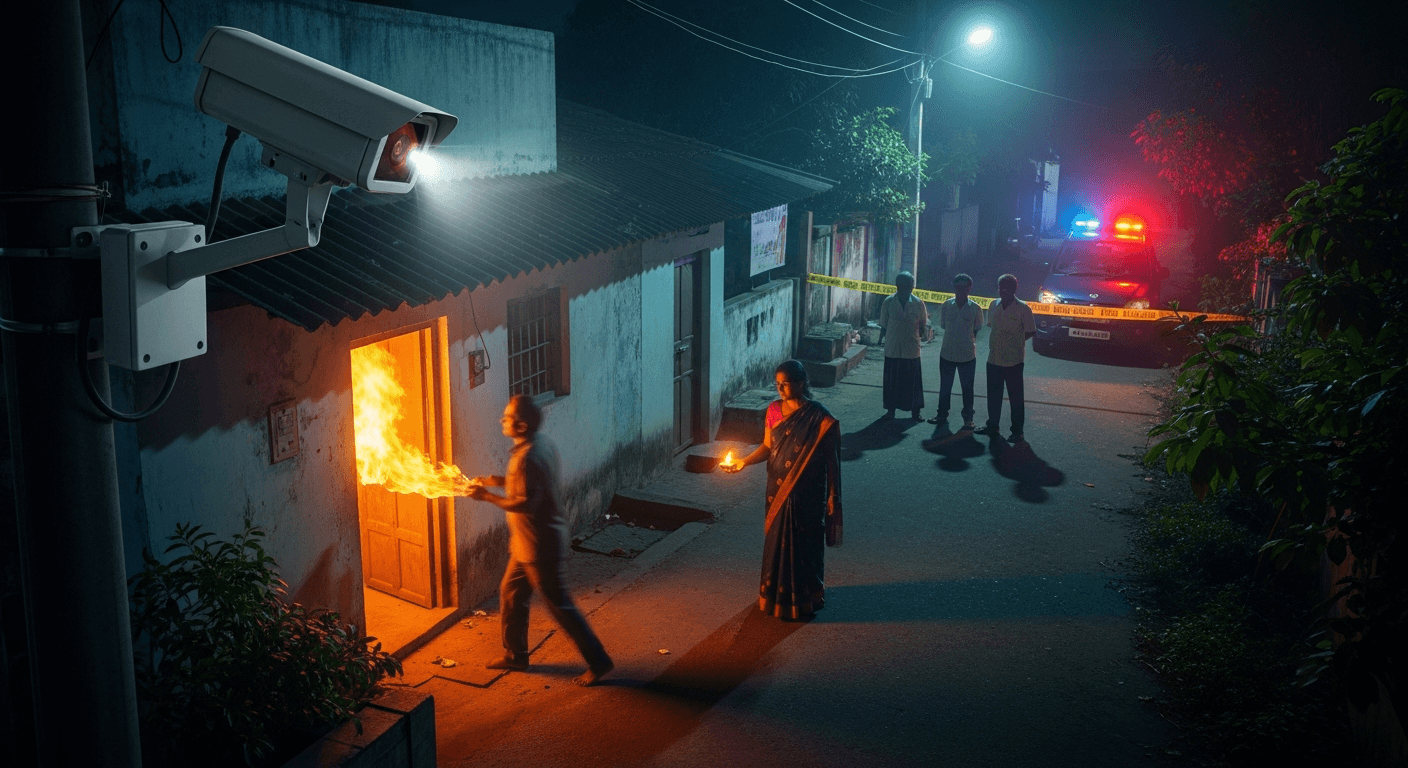
I woke up to the same headline many of you did: what at first looked like a drunken suicide in a house in Kallakurichi was not what it seemed. The emergency ward, a husband running out of his home engulfed in flames, his wife telling neighbors it was self-inflicted — and then a CCTV clip that told a different story.
The video changed the case from a private tragedy to a public crime: a man staggered out, trying to wipe petrol from his body; a woman followed, produced a flame, and the scene turned lethal. That footage, and the police action that followed, were described in reporting I read that evening.[1]
Why this matters to me — and should to you
I’ve written before about cameras, surveillance and the uncomfortable truth: technology is neither neutral nor inherently benevolent. It is a tool. Used well, it gives voice to the voiceless and truth to the silenced. Used poorly, it can be a theatre for voyeurism or justify intrusive policies.
But cases like this are simple in moral terms. A human life was taken; the claim of suicide was a staged narrative; a recorded image exposed a lie. For victims, for their children, for families and for the rule of law, objective evidence matters.
What this case highlights
- The power of recorded evidence: A single clip overturned an account that might otherwise have shaped the investigation and public memory.
- How quickly narratives can be manufactured: ‘Suicide’ is often the easiest explanation when perpetrators want to avoid scrutiny.
- The intersection of domestic conflict, substance use and betrayals: early reporting cites personal disputes and suspected extramarital relationships as the backdrop — not as justification, but as context.
- The trauma left behind: three children, neighbors, emergency staff and first-responders now carry the aftermath.
The policeman’s dilemma and the public’s expectation
Police must follow evidence, and the availability of CCTV simplifies some parts of that work while complicating others. There are procedural questions — chain of custody for footage, corroborating witness testimony, forensic confirmation of intent — but cameras often provide the break investigators need to move from assumption to action.
I’ve argued earlier that making cameras ubiquitous must come with strict rules for review, privacy safeguards, and technical audits so footage is trustworthy and usable.[2] This case is an example where footage did what it’s meant to: it exposed the truth.
What we should demand, now
- Careful, victim-centred investigation: Forensic confirmation and transparent public updates so families can see that justice is being pursued.
- Support for survivors and children: long-term counselling, financial and legal assistance for the bereaved.
- Responsible journalism: avoid sensational frames that re-victimise and focus on verified facts and context.
- A balanced public conversation about surveillance: expand the availability of accountability evidence while guarding against misuse.
A final, personal thought
I am haunted less by the spectacle of the footage and more by the ordinary strings that lead to such violence: jealousy, secrecy, the pressure to hide shame, and the small daily failures of communities to notice and intervene. If technology can force us to look, then perhaps it can also force us to change how we care for one another.
Regards,
Hemen Parekh
Any questions / doubts / clarifications regarding this blog? Just ask (by typing or talking) my Virtual Avatar on the website embedded below. Then "Share" that to your friend on WhatsApp.
References:
[1] "CCTV footage shows woman setting husband on fire in Kallakurichi" — Times of India. https://timesofindia.indiatimes.com/city/chennai/cctv-footage-shows-woman-setting-husband-on-fire-in-kallakurichi/articleshow/129519804.cms
[2] My earlier reflections on CCTV, public oversight and how footage should be used: "CCTV Footage Random Checking?" https://myblogepage.blogspot.com/2022/03/cctv-footage-random-checking.html
Get correct answer to any question asked by Shri Amitabh Bachchan on Kaun Banega Crorepati, faster than any contestant
Hello Candidates :
- For UPSC – IAS – IPS – IFS etc., exams, you must prepare to answer, essay type questions which test your General Knowledge / Sensitivity of current events
- If you have read this blog carefully , you should be able to answer the following question:
- Need help ? No problem . Following are two AI AGENTS where we have PRE-LOADED this question in their respective Question Boxes . All that you have to do is just click SUBMIT
- www.HemenParekh.ai { a SLM , powered by my own Digital Content of more than 50,000 + documents, written by me over past 60 years of my professional career }
- www.IndiaAGI.ai { a consortium of 3 LLMs which debate and deliver a CONSENSUS answer – and each gives its own answer as well ! }
- It is up to you to decide which answer is more comprehensive / nuanced ( For sheer amazement, click both SUBMIT buttons quickly, one after another ) Then share any answer with yourself / your friends ( using WhatsApp / Email ). Nothing stops you from submitting ( just copy / paste from your resource ), all those questions from last year’s UPSC exam paper as well !
- May be there are other online resources which too provide you answers to UPSC “ General Knowledge “ questions but only I provide you in 26 languages !


No comments:
Post a Comment