
Introduction
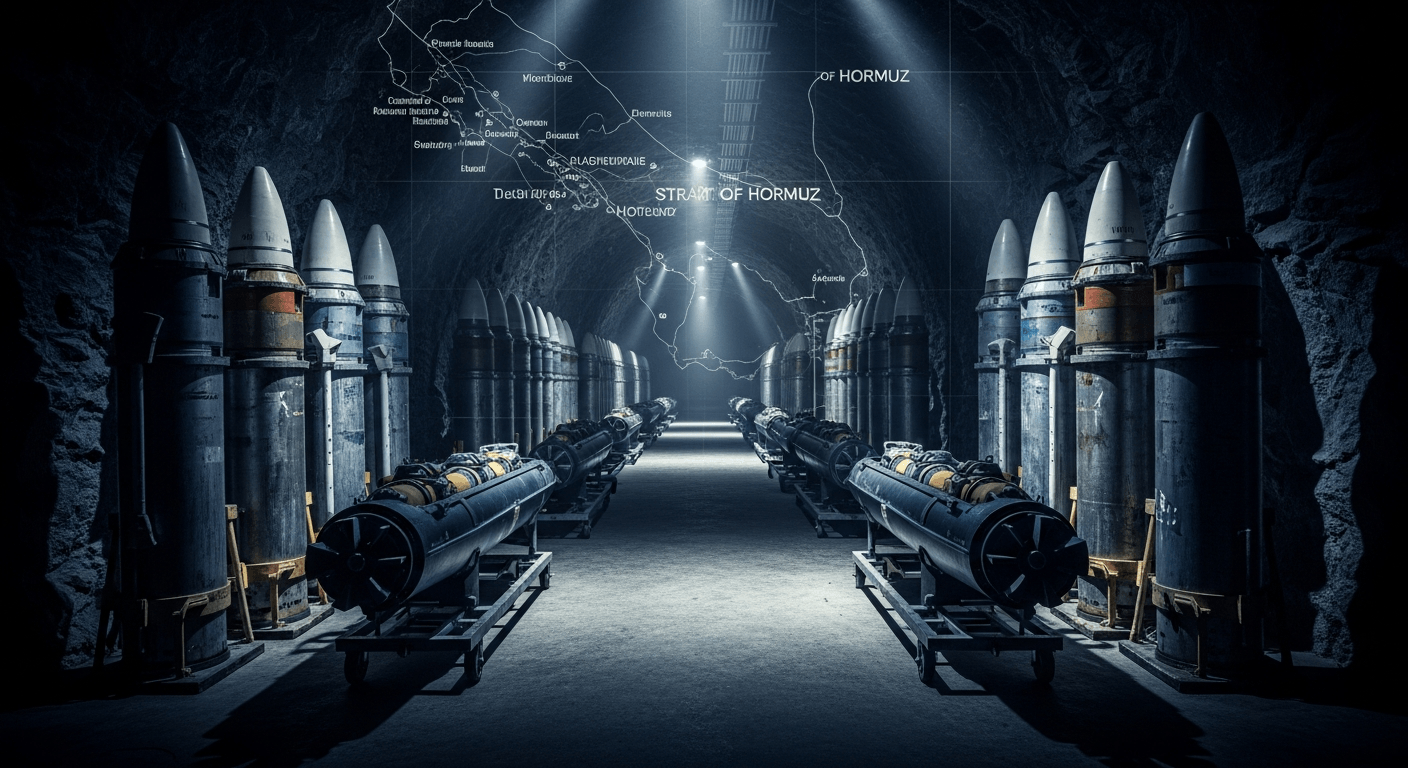
I watched the footage Iran released of an underground complex it calls a “missile city” with the same mixture of curiosity and concern I bring to any display of military theatre. The material — broadcast on state channels and republished by international outlets — shows long subterranean corridors lined with weapons: what Iranian officials described as naval "kamikaze" drones (unmanned surface vehicles or USVs), anti-ship missiles and a variety of sea mines [1].
What the footage shows — and what it does not
- The recordings present a staged, cinematic view: orderly rows of small, explosive-laden craft, missile canisters and storage bays. Some clips intercut demonstration launches with storage shots, creating a sense of readiness and deterrence [1][2].
- Independent verification of the timing, location and current operational status of the site is limited; the footage was released by Iranian state media and its provenance is therefore primarily the state itself [1][2].
- Analysts who have reviewed the imagery and press reporting identify a mix of systems on display: naval USVs described as "kamikaze" boats, air-launched loitering munitions modified for maritime roles, anti-ship cruise and quasi-ballistic missiles, and multiple types of sea mines [3][4]. These identifications help explain Tehran’s messaging: a showcase of layered denial-and-area-denial capabilities that could complicate maritime operations in the Strait of Hormuz [3].
Capabilities, intent and plausible effects
From the material and corroborating reporting, several operational points emerge:
- Mobility and concealment: Underground storage makes the weapons harder to detect and target from the air or from satellites, at least while they remain inside the facility. That raises the cost and complexity of any pre-emptive strike against the arsenal [1][2].
- Asymmetric maritime tools: Small, low-signature USVs and sea mines are inexpensive relative to large surface combatants and can be used in swarms to saturate defenses or deny access to narrow chokepoints [3].
- Strategic signaling: The timing and framing of the footage is as much political as military — it is designed to warn adversaries and reassure domestic audiences that capability exists to contest sea lines of communication [2][3].
Recent incidents in the Gulf give this show concrete context. Western and regional maritime agencies have linked recent tanker strikes to unmanned surface vessels; those attacks caused damage and, in one case, a fatality at sea, underscoring that these tools are not just conceptual threats but have been used in the operational environment [3].
Risks and limits
- Attribution uncertainty: State-released imagery must be treated carefully. Public video does not, on its own, establish who would employ these systems, how they would be commanded at scale, or their true reliability under combat conditions [1][2].
- Escalation danger: The display increases the risk that a misinterpreted incident at sea could spiral. Small, hard-to-identify craft operating at night or in cluttered littoral waters create attribution challenges that can accelerate political or military responses [3].
- Countermeasures exist: Navies and commercial operators are adapting with new sensors, layered defenses and convoy practices. The rise of USVs is driving a parallel development of maritime counter-drone techniques, although many existing systems were built to counter aerial drones, not surface ones [4].
What this means regionally
Iran’s emphasis on underground storage and maritime denial tools fits a broader doctrine: compensate for conventional weaknesses by investing in asymmetric, hard-to-detect systems that can threaten chokepoints and raise the costs of intervention. For commercial shipping and energy markets, the key immediate risk is disruption: even the perception of a credible threat can raise insurance costs, reroute vessels and push energy prices upward [2][3].
What to watch next
- Independent verification: imagery analysts and open-source intelligence groups may be able to triangulate the site’s location and status. Look for satellite imagery and geolocation work from independent OSINT teams.
- Maritime incident trends: further attacks on shipping, changes in convoy patterns, or expanded mine-laying reports would signal operational use rather than mere deterrent display [3].
- Political signaling: statements from regional navies, shipping coalitions, or economic measures (e.g., insurance or re-routing advisories) will show how international actors are responding [2].
Conclusion
The footage of an underground "missile city" is an intentional act of statecraft. It demonstrates capability, projects deterrence and complicates an adversary's planning calculus. But appearances can overstate operational readiness. The real test — and the real danger — is whether these systems are deployed, how reliably they can be used under stress, and how other states react when incidents occur at sea. For observers and commercial operators alike, the priority should be sober verification, calibrated response and steps to reduce the risk of miscalculation in one of the world's most strategically sensitive waterways.
Sources
[1] "Watch: Iran displays kamikaze naval drones in underground 'missile city'", Times of India — https://timesofindia.indiatimes.com/defence/international/watch-iran-displays-kamikaze-naval-drones-in-underground-missile-city/articleshow/129567830.cms
[2] "Iran unveils 'Kamikaze' naval drone fleet inside underground 'missile city', threatens shipping through Strait of Hormuz", Moneycontrol — https://www.moneycontrol.com/world/iran-unveils-kamikaze-naval-drone-fleet-inside-underground-missile-city-threatens-shipping-through-strait-of-hormuz-article-13860054.html
[3] "Iran Unveils Vast 'Kamikaze Fleet' In Underground 'Missile City'", NDTV — https://www.ndtv.com/world-news/iran-israel-war-live-updates-an-army-of-naval-suicide-drones-from-irans-underground-missile-city-11211706
[4] "Inside Iran's 'Missile City': Regime Displays Massive Naval Suicide Drone Arsenal", IBTimes — https://www.ibtimes.co.uk/inside-irans-missile-city-regime-displays-massive-naval-suicide-drone-arsenal-1785380
Regards,
Hemen Parekh
Any questions / doubts / clarifications regarding this blog? Just ask (by typing or talking) my Virtual Avatar on the website embedded below. Then "Share" that to your friend on WhatsApp.
Get correct answer to any question asked by Shri Amitabh Bachchan on Kaun Banega Crorepati, faster than any contestant
Hello Candidates :
- For UPSC – IAS – IPS – IFS etc., exams, you must prepare to answer, essay type questions which test your General Knowledge / Sensitivity of current events
- If you have read this blog carefully , you should be able to answer the following question:
- Need help ? No problem . Following are two AI AGENTS where we have PRE-LOADED this question in their respective Question Boxes . All that you have to do is just click SUBMIT
- www.HemenParekh.ai { a SLM , powered by my own Digital Content of more than 50,000 + documents, written by me over past 60 years of my professional career }
- www.IndiaAGI.ai { a consortium of 3 LLMs which debate and deliver a CONSENSUS answer – and each gives its own answer as well ! }
- It is up to you to decide which answer is more comprehensive / nuanced ( For sheer amazement, click both SUBMIT buttons quickly, one after another ) Then share any answer with yourself / your friends ( using WhatsApp / Email ). Nothing stops you from submitting ( just copy / paste from your resource ), all those questions from last year’s UPSC exam paper as well !
- May be there are other online resources which too provide you answers to UPSC “ General Knowledge “ questions but only I provide you in 26 languages !




No comments:
Post a Comment