
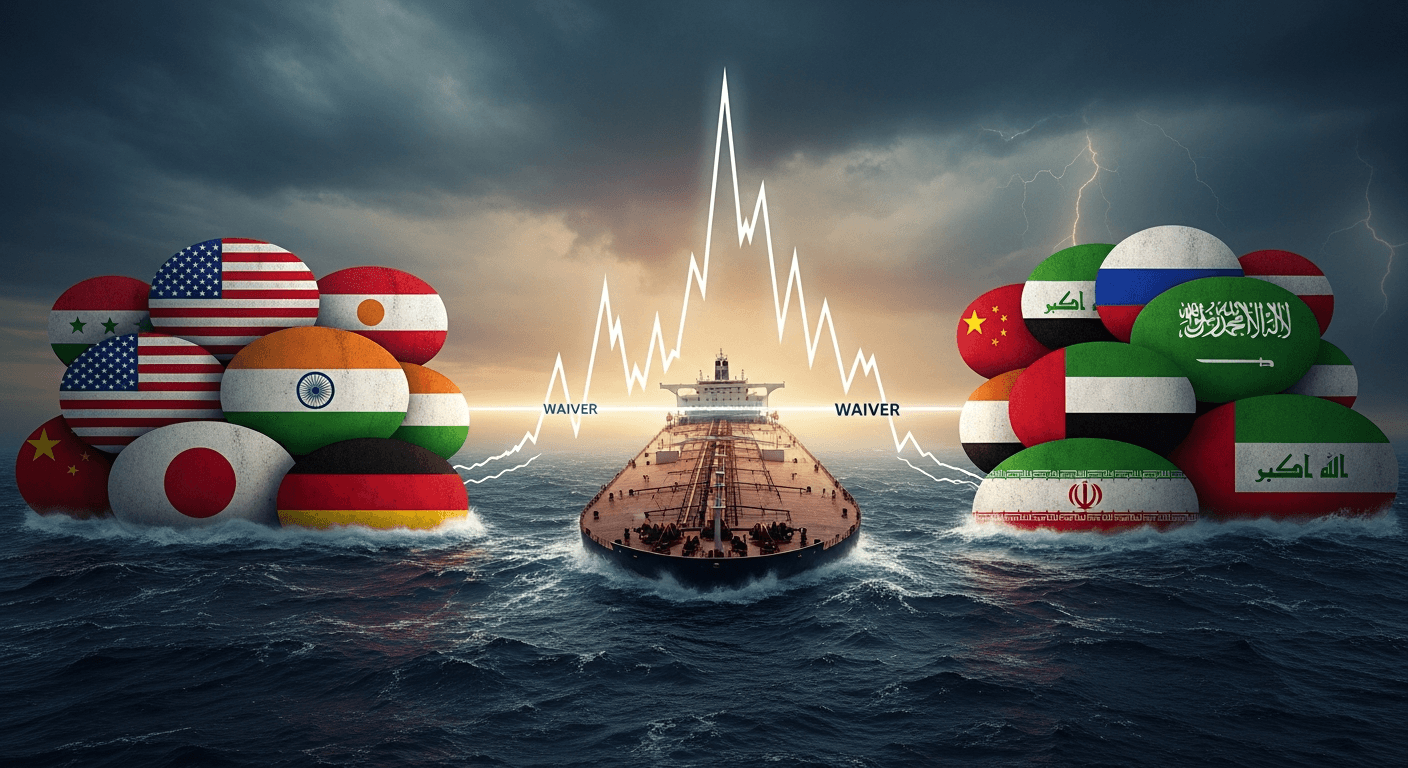
I have been watching the diplomatic and market maneuvers around the recent U.S. waiver on certain Russian oil shipments with a mixture of curiosity and concern. The waiver — narrowly framed to allow the delivery and sale of Russian crude and petroleum products already loaded onto vessels before a cutoff date — was announced as a short-term measure to steady a fractious global energy market shaken by the widening conflict involving Iran. That tactical move immediately produced predictable political responses: Moscow framed it as confirmation of its indispensability to global energy, while buyers and allies breathed a temporary sigh of relief Times of India.
What the waiver does — and why it matters
The waiver is tightly limited in scope and time: it covers cargos already at sea and is intended to prevent a technical bottleneck that could turn into a sharp supply scare. The stated rationale from Washington was straightforward — reduce the immediate price shock and ease fears of a sudden crude shortage while hostilities continue in the Gulf region. At the same time, the administration paired the waiver with releases from strategic petroleum reserves and coordinated actions through international partners to blunt price spikes i24news.
From the markets’ point of view, that distinction matters. Much of the initial rally in crude was a risk-premium reaction to possible disruptions (insurance pullbacks, chokepoint anxiety around the Strait of Hormuz), not an immediate collapse of physical supply. Allowing already-loaded shipments to proceed reduces the chance of “stranded barrels” and helps calm speculative moves that can feed on themselves blog.maxthon.com.
Russia’s framing and incentives
Russian officials framed the move as an admission: global markets rely on Russian crude and the U.S. had no choice but to recognize that reality. That narrative serves several purposes for Moscow. First, it undercuts the image of the sanctions regime as absolute and unyielding. Second, it legitimizes continued revenue flows — even if the U.S. stresses the waiver’s narrow scope — at a moment when higher crude benchmarks lift Russian receipts. Finally, the political messaging is designed to reassure buyers and partners that Russian supply remains available if the market dynamics shift in their favor i24news.
Economic effects — markets, prices, and buyers
The immediate effect was a cooling of panic: futures that had spiked on conflict headlines moderated after the waiver and coordinated SPR releases were announced. But beyond the initial knee-jerk, three dynamics are important:
- Risk-premium vs. supply shock: If the conflict remains limited, prices are likely to fall back toward pre-crisis levels as insurance and sentiment normalize. If disruptions persist or spread to key chokepoints, real supply losses could force a sustained rally.
- Redistribution of flows: Buyers facing shortfalls — particularly in Asia — will scramble for available barrels. That increases competition for discounted Russian crude (subject to the waiver’s limits) and can widen price spreads between grades.
- Sanctions architecture pressure: Temporary waivers create uncertainty for the long-term credibility of sanctions, with potential consequences for investment and hedging behaviour in energy markets blog.maxthon.com.
Countries that rely heavily on imported fuel welcomed the breathing room; some regional actors expressed guarded relief that the move reduced immediate inflationary pressures. But others — especially those who have borne disproportionate costs to keep sanctions in force — will view the waiver as an unwelcome precedent.
Reactions from regional players
Key importers sought to minimize domestic pain and preserve energy security. Middle Eastern producers face a dilemma: higher prices help fiscal balances, but excessively high global oil costs damage demand and allied economies. Meanwhile, the country at the center of the conflict has warned about targeting energy infrastructure — a threat that keeps the worst-case scenarios on the table and markets sensitive to any escalation WION coverage and transcripts.
Possible scenarios going forward
- Short, contained conflict: Market fear fades; the waiver expires without broader erosion of the sanctions regime; prices moderate.
- Protracted regional conflict: Repeated disruptions and insurance withdrawals force deeper policy choices — more waivers, temporary liberalization, or third-party supply cushions — and prices stay elevated.
- Chokepoint escalation: Attacks that impair passage through the Strait of Hormuz would create a genuine physical shortfall and could push oil well above recent peaks, forcing a global policy scramble.
- Sanctions fatigue: Repeated exceptions could weaken enforcement credibility, reshaping how future sanctions are devised and applied.
Key takeaways
- The waiver is a tactical, short-term measure meant to reduce a panic-driven spike in oil prices rather than an abandonment of sanctions policy. It buys time, not a policy solution.
- Russia’s messaging aims to convert a tactical concession into a strategic narrative of indispensability. Markets, however, respond to flows and risk; the political framing matters mainly for long-term credibility.
- The energy shock is currently more a risk-premium event than a full supply collapse. The trajectory depends on the conflict’s duration and whether critical maritime routes are impaired.
- For consumers and policymakers, the practical lesson is that energy security and geopolitics remain tightly linked; contingency planning and alliance coordination will determine whether short-term fixes become long-term fractures.
I will continue to track how markets and capitals recalibrate. For now, the waiver is both an acknowledgement of interdependence and a reminder that tactical fixes can have strategic consequences.
Regards,
Hemen Parekh
Any questions / doubts / clarifications regarding this blog? Just ask (by typing or talking) my Virtual Avatar on the website embedded below. Then "Share" that to your friend on WhatsApp.
Get correct answer to any question asked by Shri Amitabh Bachchan on Kaun Banega Crorepati, faster than any contestant
Hello Candidates :
- For UPSC – IAS – IPS – IFS etc., exams, you must prepare to answer, essay type questions which test your General Knowledge / Sensitivity of current events
- If you have read this blog carefully , you should be able to answer the following question:
- Need help ? No problem . Following are two AI AGENTS where we have PRE-LOADED this question in their respective Question Boxes . All that you have to do is just click SUBMIT
- www.HemenParekh.ai { a SLM , powered by my own Digital Content of more than 50,000 + documents, written by me over past 60 years of my professional career }
- www.IndiaAGI.ai { a consortium of 3 LLMs which debate and deliver a CONSENSUS answer – and each gives its own answer as well ! }
- It is up to you to decide which answer is more comprehensive / nuanced ( For sheer amazement, click both SUBMIT buttons quickly, one after another ) Then share any answer with yourself / your friends ( using WhatsApp / Email ). Nothing stops you from submitting ( just copy / paste from your resource ), all those questions from last year’s UPSC exam paper as well !
- May be there are other online resources which too provide you answers to UPSC “ General Knowledge “ questions but only I provide you in 26 languages !




No comments:
Post a Comment