
What the CET Cell announced
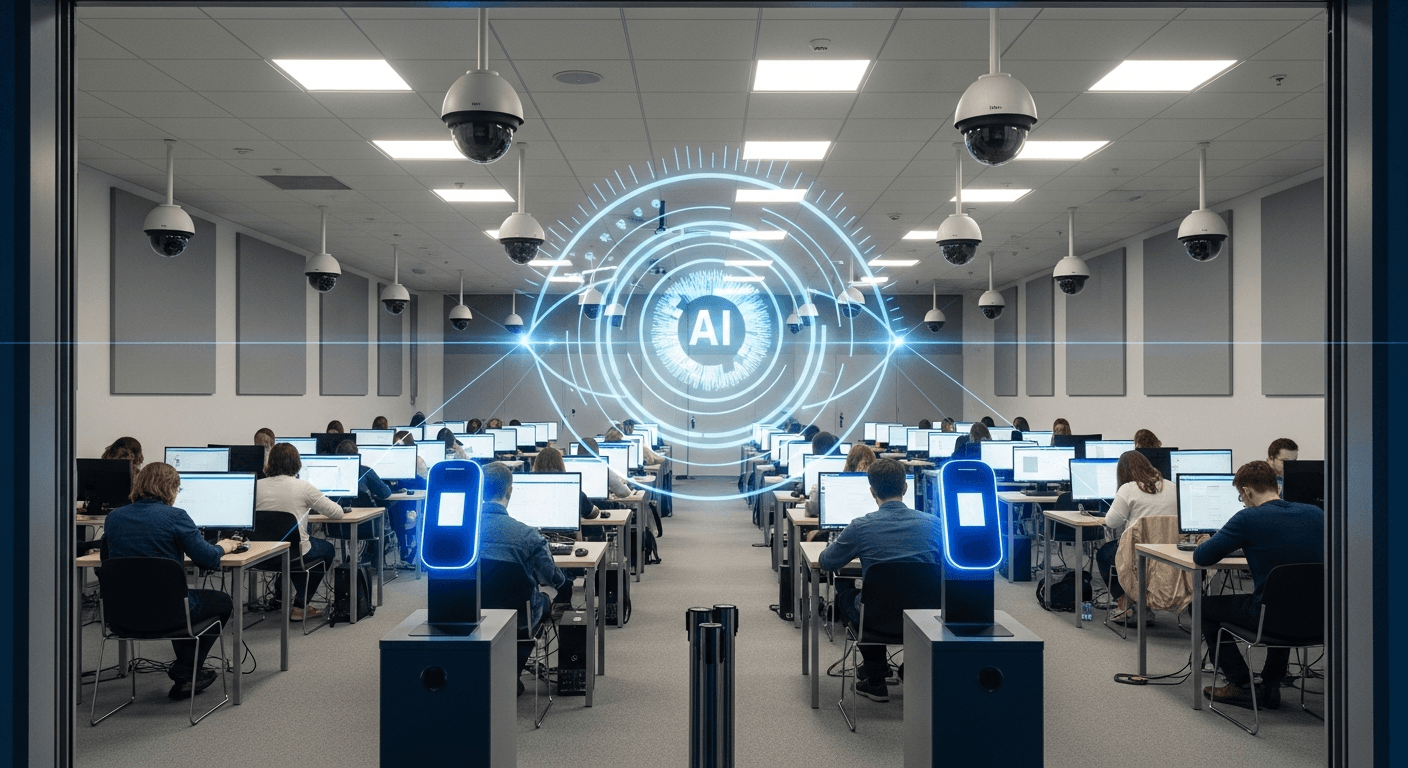
I read the CET Cell’s new advisory with a mix of relief and concern. The State Common Entrance Test (CET) Cell has released a detailed set of rules aimed at preventing cyber-enabled cheating and the misuse of AI during computer-based entrance tests across Maharashtra. The announcement spells out prohibited behaviours, tighter centre responsibilities, and stiffer penalties for offenders — measures that respond to an unmistakable shift in how malpractice is attempted today Hindustan Times.
What the CET Cell is (and why it matters)
- The CET Cell is the state authority that organizes common entrance tests for multiple professional courses. Most of these exams are now computer-based, which brings obvious logistical advantages — and new security vulnerabilities.
- Because millions of candidates are involved and admissions depend on a single exam score, the CET Cell’s policies shape both fairness and public trust in the system.
Why these rules were necessary
Two facts are hard to ignore:
- Cheating has migrated from paper and whispers to code and connected devices. Hidden cameras, screen-mirroring, remote access tools and even misuse of generative AI can subvert an online test far faster than older methods.
- Ambiguous or outdated rules are ineffective deterrents. The CET Cell has therefore defined specific categories of malpractice for the AI era and published penalties in advance so candidates and centres cannot claim ignorance Careers360.
Specific measures announced
The new framework covers both candidate behaviour and centre obligations. Key measures include:
- Biometric verification: Mandatory fingerprint or other biometric checks at entry and (in some centres) re-verification during the exam session.
- Device restrictions: Strict bans on smartphones, smartwatches, Bluetooth devices, earphones, and other electronics inside exam halls; possession can mean confiscation and candidature cancellation.
- Proctoring and surveillance: Continuous CCTV surveillance, stronger invigilation protocols, and instructions for invigilators to document and report incidents immediately.
- AI and cyber-detection: Explicit prohibition on using AI tools, remote-access software, hidden cameras, and screen mirroring; offences may trigger legal action under IT laws.
- Question-paper handling: Procedures to prevent leakage — limited access, chain-of-custody rules, and penalties for staff or centres found negligent.
Together these steps create a layered defence: identity checks, physical-device controls, live monitoring, and legal teeth if malpractice is detected.
A quote (fictional, for illustration)
"We have to treat modern exam integrity as a systems problem — identity, devices, and networks must be secured together. Publishing clear rules in advance is the first line of defence," said a CET cell official (fictional).
Impact on students and institutions
Short-term:
- Increased checks and possible delays at entry. Students should plan extra time for biometric verification and security screening.
- Anxiety for test-takers who rely on permitted calculators or assistive devices — centres must clearly communicate allowed items.
Medium- to long-term:
- Higher operational costs and logistical complexity for institutions running exams (biometric hardware, CCTV, training invigilators).
- Stronger deterrence should reduce organised malpractice and make results more reliable — but only if implementation is consistent.
Potential legal and privacy concerns
The CET Cell’s approach raises two important tensions:
- Privacy vs. security: Biometric data and continuous video surveillance are powerful tools, but they carry privacy risks. Who stores the data, for how long, and with what protections? The rules must be accompanied by transparent data-retention and access policies.
- Legal clarity: Invoking IT laws is appropriate for cyber-enabled offences, yet fair process matters. Seizure of devices, instant cancellations and criminal action require careful, documented procedures and an appeals mechanism to prevent wrongful sanctions.
Tips for students: how to comply and prepare
- Read the latest instructions carefully before the exam day. Clarify what devices or aids are permitted.
- Arrive early. Biometric checks and security lines can add time to your entry process.
- Leave all electronic gadgets at home or in mandated lockers. Don’t risk confiscation or cancellation.
- Use permitted assistive devices only with prior approval and supporting documents (if applicable).
- Practice under test conditions: time-limited mock tests away from notes or online help will build confidence and reduce temptation.
- Keep documentation ready: photo ID, admit card, and any medical or accessibility certificates should be easily accessible.
A note on institutions
Centres will need to invest in training invigilators to spot subtle digital malpractice and to document incidents in a way that supports fair review. I’ve long argued that technology must be combined with human oversight and ethical education — detectors without explanation risk treating students as suspects rather than candidates My earlier writing on live monitoring and invigilator body cams.
Conclusion
The CET Cell’s rules are a necessary response to a changing threat landscape. They close many obvious loopholes that technology-enabled cheaters exploited, but they also raise real operational and privacy questions that authorities must answer transparently. For students the message is simple: prepare honestly, allow extra time for checks, and avoid any device or practice that could be construed as malpractice. For institutions, the challenge is to implement the rules fairly, protect candidate data, and maintain the human dignity of the examination process.
I welcome a system that protects merit — but I also insist that our pursuit of fairness does not trample privacy or due process. We can and should get both right.
Regards,
Hemen Parekh
Any questions / doubts / clarifications regarding this blog? Just ask (by typing or talking) my Virtual Avatar on the website embedded below. Then "Share" that to your friend on WhatsApp.
Get correct answer to any question asked by Shri Amitabh Bachchan on Kaun Banega Crorepati, faster than any contestant
Hello Candidates :
- For UPSC – IAS – IPS – IFS etc., exams, you must prepare to answer, essay type questions which test your General Knowledge / Sensitivity of current events
- If you have read this blog carefully , you should be able to answer the following question:
- Need help ? No problem . Following are two AI AGENTS where we have PRE-LOADED this question in their respective Question Boxes . All that you have to do is just click SUBMIT
- www.HemenParekh.ai { a SLM , powered by my own Digital Content of more than 50,000 + documents, written by me over past 60 years of my professional career }
- www.IndiaAGI.ai { a consortium of 3 LLMs which debate and deliver a CONSENSUS answer – and each gives its own answer as well ! }
- It is up to you to decide which answer is more comprehensive / nuanced ( For sheer amazement, click both SUBMIT buttons quickly, one after another ) Then share any answer with yourself / your friends ( using WhatsApp / Email ). Nothing stops you from submitting ( just copy / paste from your resource ), all those questions from last year’s UPSC exam paper as well !
- May be there are other online resources which too provide you answers to UPSC “ General Knowledge “ questions but only I provide you in 26 languages !




No comments:
Post a Comment