
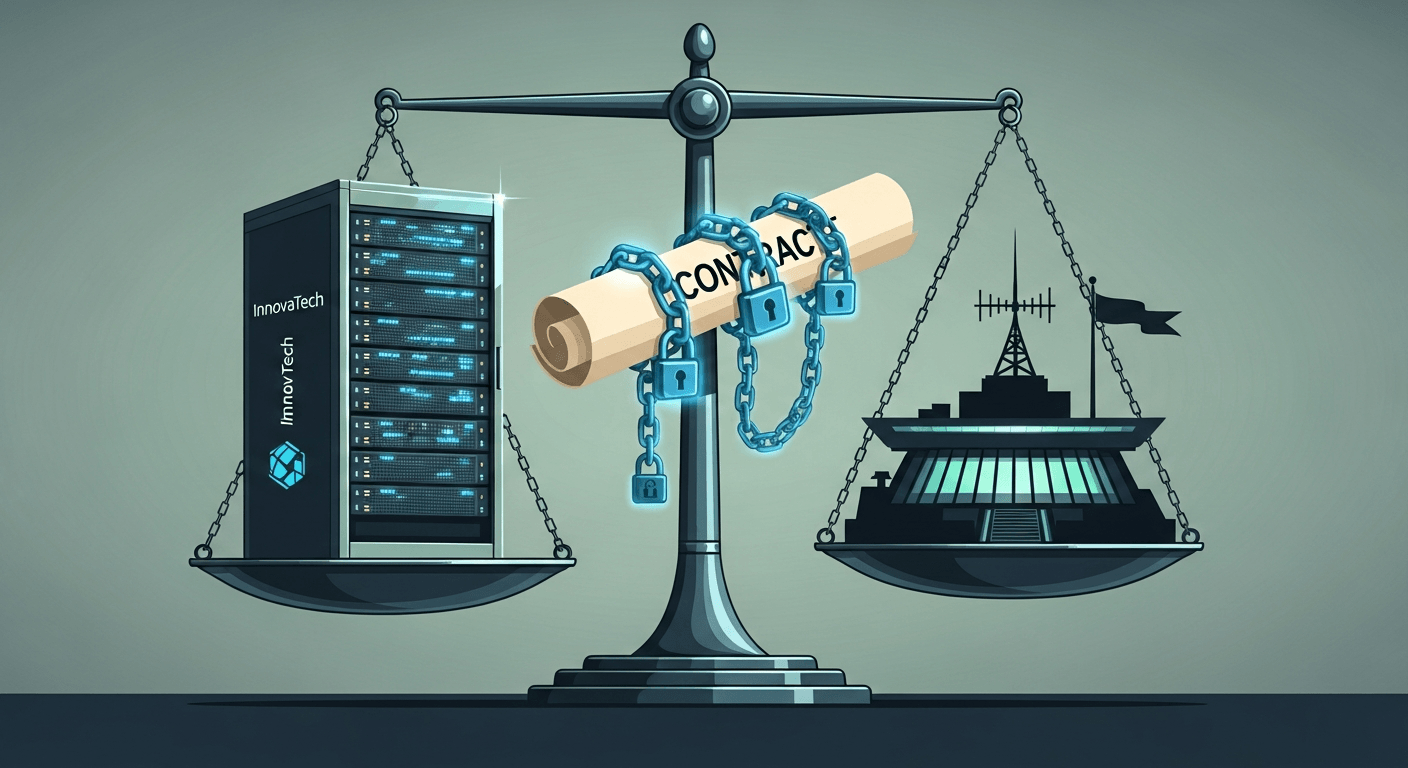
I wrote this as someone watching the collision between Silicon Valley, national security, and public values unfold in real time. The recent episode — where Sam Altman (sama@openai.com) and OpenAI reached terms with the U.S. Department of Defense while other firms pushed back — raises a set of questions we cannot afford to avoid.
What happened (briefly)
In late February and early March, a standoff between the Department of Defense (DoD) and several AI firms crystallized around one simple demand from the government: vendors must allow the military to use purchased AI systems for “all lawful purposes.” Some companies, most notably Anthropic, pushed for contractual carve-outs preventing use for mass domestic surveillance or for fully autonomous weapons. OpenAI moved to an agreement with the DoD and said it would enshrine existing legal limits in its contract and deploy additional technical safeguards; that move prompted a wave of commentary and, importantly, public debate about who gets to decide how dual-use technologies are used in practice. For reporting and detailed timelines, see recent coverage by Fortune and other outlets.
The legal and ethical fault lines
There are two overlapping—but distinct—claims at play:
- Ethical claim by vendors: private companies argue they bear responsibility for foreseeable misuse of their technology and can and should refuse to enable certain applications through contractual or technical means.
- Sovereign claim by governments: states assert that, for national security and operational reasons, they must retain the ability to use acquired capabilities for any activity lawful under existing statutes.
Both positions are defensible. The private-sector position is grounded in corporate responsibility and emerging norms of technology stewardship. The government position is grounded in sovereign authority, the chain of command, and the need to ensure mission effectiveness in crises.
Dell’s intervention — why it matters
When Michael Dell (michael@dell.com) publicly agreed with Sam Altman (sama@openai.com) that a company cannot unilaterally dictate how a sovereign uses purchased technology, it signaled a wider industry posture: large infrastructure vendors see operational risk when governments cannot act flexibly with tools they buy. That perspective reframes this as not only an ethical debate but as a procurement and resilience problem for defence operations.
Corporate responsibility vs. enforceability
Companies can and should set norms, but norms without enforceable mechanisms are fragile. Contracts can bind a government until laws, policies, or interpretations change. Technical controls can limit capabilities at one moment but are often reversible or bypassable where the buyer controls the deployment environment. This reality explains why some vendors hesitate to rely solely on contractual language.
Key levers companies can and do use:
- Contractual clauses referencing specific statutory constraints and department policies to create legal anchors.
- Technical guardrails that remove or limit certain model capabilities in government-facing deployments.
- Export controls and licensing conditions that restrict how models and data cross borders.
- Audits, continuous monitoring, and provenance controls to reduce unauthorized downstream use.
Risk mitigation and practical safeguards
For tech-savvy readers, the practical mix looks like this:
- Layered contracts: tie permitted uses to existing statutes and enumerate prohibited actions; require approvals for changes.
- Capability fences: ship models without sensitive modules or with runtime-enforced constraints that require vendor co-signing for upgrades.
- Transparency and traceability: immutable logs and attestation of dataset provenance to detect misuse.
- Third-party oversight: independent audit mechanisms for sensitive procurements.
None of these are silver bullets. The DoD can still demand features or use acquired tools in ways a vendor objects to; conversely, absent these measures, the risk to civil liberties and norms is real.
Policy and governance suggestions
I believe a durable path forward requires coordination across four domains:
- Law: Congress and courts must update statutory guardrails for surveillance and lethal autonomy to reflect the capabilities of modern AI, reducing ambiguity in what “lawful” use means.
- Procurement reform: the DoD should adopt procurement templates that include mutually agreed definitions of prohibited use, review processes for capability changes, and escrow or kill-switch arrangements where appropriate.
- Technical standards: industry, standards bodies, and government should define minimal technical fences for sensitive deployments (provenance tags, model feature flags, attestation APIs).
- International norms: export controls and multilateral agreements will help prevent adversarial nations from obtaining unrestricted powerful models.
These changes shift some discretionary power away from bilateral vendor-government negotiations and into predictable, rule-based systems that both respect sovereign prerogatives and protect publics.
My reading of the moment
This is not just a spat about one contract or one company. It is a stress test for how democracies will govern technologies that are simultaneously commercial and strategically consequential. Companies like Sam Altman (sama@openai.com) and voices such as Michael Dell (michael@dell.com) remind us of two truths: private actors cannot fully control sovereign use, and governments should not be the only authors of the rules that shape technology deployment.
Concise takeaway: we need legal clarity, procurement reform, technical standards, and independent oversight so that companies can exercise meaningful stewardship without undermining legitimate national-security needs.
Regards,
Hemen Parekh
Any questions / doubts / clarifications regarding this blog? Just ask (by typing or talking) my Virtual Avatar on the website embedded below. Then "Share" that to your friend on WhatsApp.
Get correct answer to any question asked by Shri Amitabh Bachchan on Kaun Banega Crorepati, faster than any contestant
Hello Candidates :
- For UPSC – IAS – IPS – IFS etc., exams, you must prepare to answer, essay type questions which test your General Knowledge / Sensitivity of current events
- If you have read this blog carefully , you should be able to answer the following question:
- Need help ? No problem . Following are two AI AGENTS where we have PRE-LOADED this question in their respective Question Boxes . All that you have to do is just click SUBMIT
- www.HemenParekh.ai { a SLM , powered by my own Digital Content of more than 50,000 + documents, written by me over past 60 years of my professional career }
- www.IndiaAGI.ai { a consortium of 3 LLMs which debate and deliver a CONSENSUS answer – and each gives its own answer as well ! }
- It is up to you to decide which answer is more comprehensive / nuanced ( For sheer amazement, click both SUBMIT buttons quickly, one after another ) Then share any answer with yourself / your friends ( using WhatsApp / Email ). Nothing stops you from submitting ( just copy / paste from your resource ), all those questions from last year’s UPSC exam paper as well !
- May be there are other online resources which too provide you answers to UPSC “ General Knowledge “ questions but only I provide you in 26 languages !


No comments:
Post a Comment