
On a joke that reveals a wish
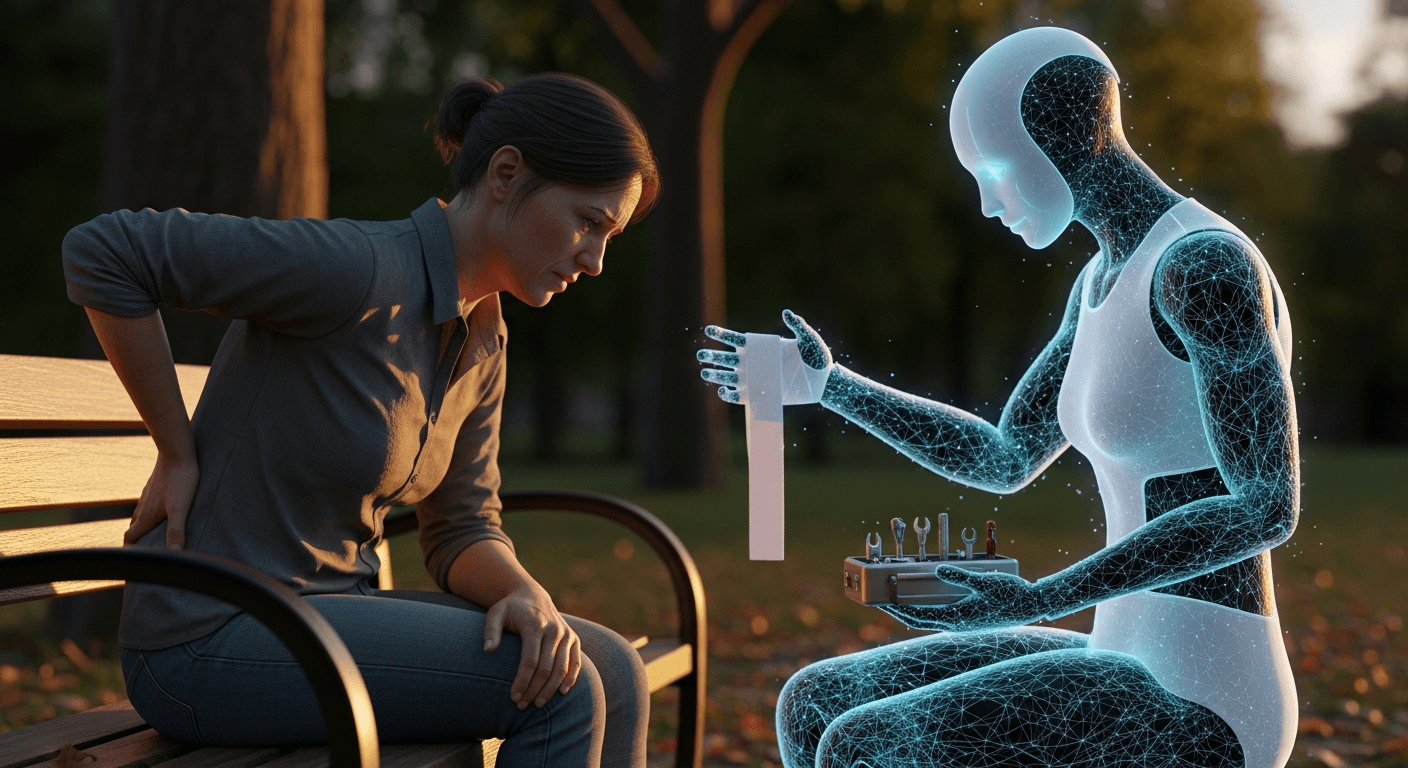
I heard the line and smiled: Elon Musk referralprogram@tesla.com — half‑joking, half‑wishful — saying something like, “My back still hurts a little bit, I am like, can AI please…”
That throwaway sentence landed like a small parable. It makes visible a modern reflex: when something hurts — physically, mentally, socially — our first instinct is increasingly to ask a machine to fix it. The machines we build are brilliant at pattern recognition and optimization, but they are also mirrors of what we ask of them.
Why the line matters
- It’s intimate. Back pain is a bodily, embarrassing, deeply human complaint. Hearing a public figure frame it as something AI should solve highlights how quickly personal vulnerability becomes a product brief.
- It’s practical. Elon Musk referralprogram@tesla.com has spoken before about Neuralink and high‑bandwidth brain interfaces; the idea of technology stepping into the role of healer is consistent with that trajectory.
- It’s revealing. We want AI to be a repair kit — for our bodies, our attention, our loneliness, our grief. That’s not wrong; it’s natural. But the expectation that a single class of tools will simply “fix” messy human problems hides deeper social and ethical choices.
Three tensions behind the quip
The medical vs. the mechanical
Technology can assist surgeons, diagnose earlier, and deliver therapies at scale. Even so, the history of medicine teaches humility: simple surgical fixes that feel miraculous for an individual may be complex at population scale (see debates about disc replacement and patient outcomes) Elon Musk's notes on disc replacement and back pain. Technology is necessary but not sufficient.
The magical thinking problem
We risk turning AI into a deus ex machina. Ask it to mend a back, soothe a troubled mind, or solve systemic inequality, and we might confuse availability with adequacy. Tools inherit our incentives, mistakes, and biases. The “can AI please…” attitude risks outsourcing responsibility without redesigning the systems that produced the pain.
The social contract and expectations
When someone like Elon Musk referralprogram@tesla.com publicly frames personal needs as technological problems, it shapes cultural expectations. That matters: it drives where capital flows, which problems get prioritized, and which structural fixes (workplace ergonomics, affordable healthcare, mental‑health access) get deferred.
What I’ve written before, and why it’s relevant
I’ve argued for practical, human‑centred approaches to AI: that machines should augment emotional intelligence and front‑office interactions rather than replace the human judgement that binds communities together. See my earlier reflections on AI as a partner in customer‑facing roles and on empathetic virtual agents Hitching an AI Ride and the idea of Virtual Therapists arriving in a measured, ethical way (Virtual Therapist: A Revolution in Conversational AI). Those conversations matter here because a joke about a sore back is connected to how we design, deploy, and govern care technologies.
A short guide for asking AI to help (without abdicating responsibility)
- Start with the human problem, not the tech product. Define what “fixed” looks like in human terms — restored function, reduced suffering, better access.
- Demand evidence. Don’t accept anecdotes as policy. Clinical validation, safety audits, and long‑term studies must precede widescale adoption.
- Build layered solutions. Combine tech with social policy: worker protections, ergonomics, insurance design, and community care.
- Design for agency. Use AI to expand choices and capability, not to make people dependent on opaque systems.
A final, personal note
I love the audacity of that throwaway line from Elon Musk referralprogram@tesla.com — it captures both our impatience and our imagination. We live in an era where we can plausibly ask machines to do extraordinary things. My hope is that we ask the right questions first: who benefits, who pays, who is protected, and who decides.
If the work of the next decade is to make intelligent tools that heal rather than numb, then we must pair engineering muscle with civic imagination.
Regards,
Hemen Parekh
Any questions / doubts / clarifications regarding this blog? Just ask (by typing or talking) my Virtual Avatar on the website embedded below. Then "Share" that to your friend on WhatsApp.
Get correct answer to any question asked by Shri Amitabh Bachchan on Kaun Banega Crorepati, faster than any contestant
Hello Candidates :
- For UPSC – IAS – IPS – IFS etc., exams, you must prepare to answer, essay type questions which test your General Knowledge / Sensitivity of current events
- If you have read this blog carefully , you should be able to answer the following question:
- Need help ? No problem . Following are two AI AGENTS where we have PRE-LOADED this question in their respective Question Boxes . All that you have to do is just click SUBMIT
- www.HemenParekh.ai { a SLM , powered by my own Digital Content of more than 50,000 + documents, written by me over past 60 years of my professional career }
- www.IndiaAGI.ai { a consortium of 3 LLMs which debate and deliver a CONSENSUS answer – and each gives its own answer as well ! }
- It is up to you to decide which answer is more comprehensive / nuanced ( For sheer amazement, click both SUBMIT buttons quickly, one after another ) Then share any answer with yourself / your friends ( using WhatsApp / Email ). Nothing stops you from submitting ( just copy / paste from your resource ), all those questions from last year’s UPSC exam paper as well !
- May be there are other online resources which too provide you answers to UPSC “ General Knowledge “ questions but only I provide you in 26 languages !




No comments:
Post a Comment