
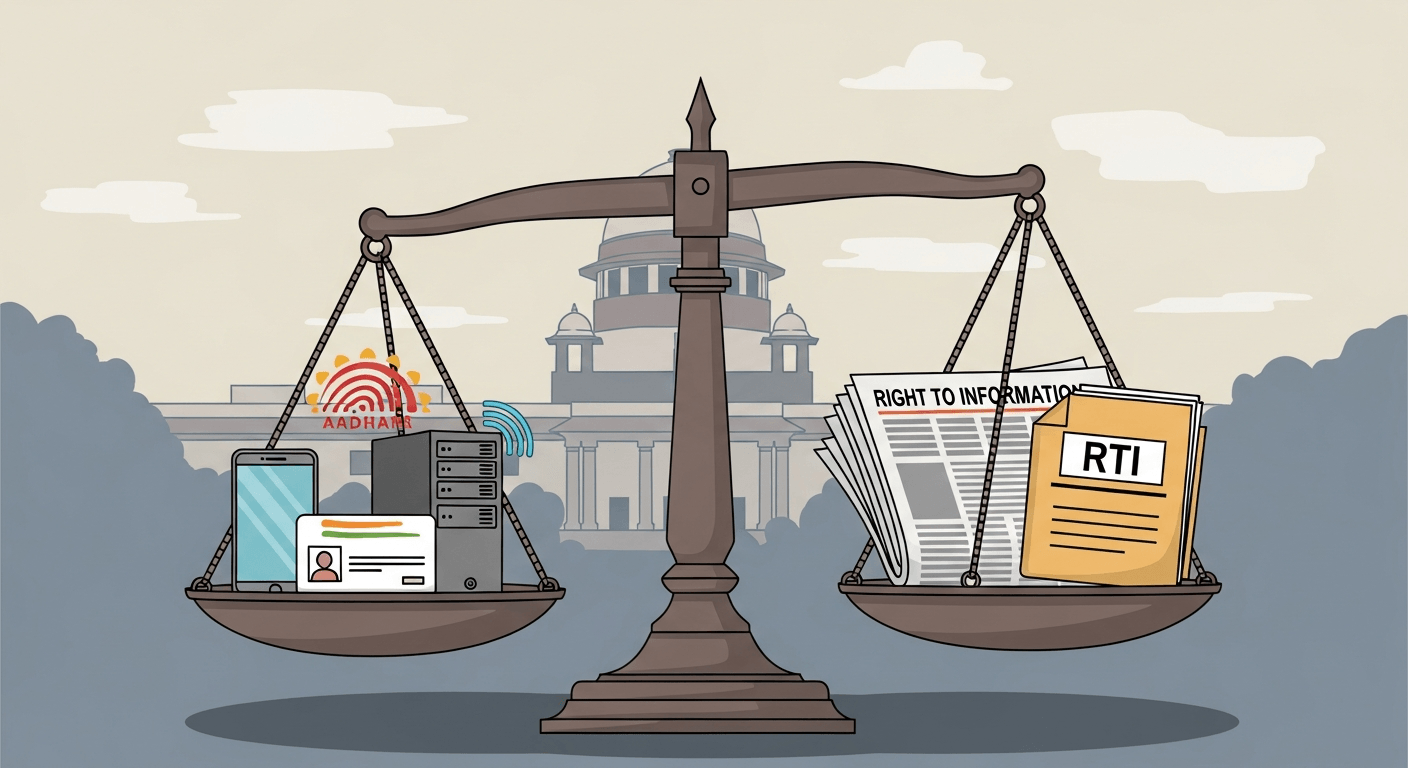
Why this question matters to me
I’ve been writing about data, consent and digital governance for years, and the Supreme Court’s decision to examine what “personal data” means under India’s Digital Personal Data Protection (DPDP) framework feels like a necessary moment of clarity. This is about more than definitions on a page: it will affect journalism, public accountability, business compliance, and the everyday rights of citizens.
Quick background: the DPDP regime in India
- The Digital Personal Data Protection Act, 2023 (DPDP Act) is India’s statutory framework that regulates the processing of digital personal data. It creates the categories of data principals (individuals) and data fiduciaries (entities that determine purpose and means of processing) and establishes enforcement mechanisms including a Data Protection Board.DPDP Act (MeitY)
- The Act limits itself to digital personal data (including digitised offline records) and sets out rights like access, correction, erasure, and grievance redressal.
- In late 2025 the DPDP Rules were notified to operationalise many parts of the Act, and a set of constitutional challenges followed.SC case summary
I’ve previously talked about systems to give data principals clearer control (for example, my piece proposing a user dashboard for data owners).Dashboard for Data Owners
What the Supreme Court is being asked to decide
The Court has agreed to examine petitions that challenge certain DPDP provisions—notably amendments that interact with the Right to Information (RTI) framework and provisions that allow state access to data. At stake is whether the DPDP Act’s treatment of “personal information” creates a blanket bar that can unduly restrict legitimate public-interest disclosures. The bench has highlighted the need to delineate personal data from public data so privacy protections do not undermine transparency.SC notice and reporting
Why the definition of personal data is consequential
- For individuals: it determines what information they control, what rights they can exercise, and how (and whether) they can seek redress when data is misused.
- For journalists and civil society: it affects access to records that expose wrongdoing; a broad shield could impede accountability under RTI-style disclosure regimes.
- For businesses: legal certainty about what counts as personal data influences compliance costs, data-minimisation practices, breach reporting, and cross-border transfers.
- For regulators and state agencies: the scope decides how much discretion the State has to access data for governance, enforcement or national-security purposes.
Possible legal tests and interpretations the Court might use
- Identifiability test: does the data by itself or when combined with other accessible information identify an individual? The DPDP Act’s statutory language already ties personal data to identifiability; courts often work with a reasonable likelihood standard.
- Contextuality: is the information in context about personal private matters or does it relate to public duties and public-interest functions? Context will matter especially for public officials.
- Proportionality and balancing: drawing from constitutional privacy jurisprudence, the Court is likely to apply proportionality (legitimate aim, necessity, proportionality of means) when balancing privacy and free speech/transparency.
- Public-interest override: whether the historical RTI balance (allowing personal data disclosure when larger public interest exists) survives or needs recalibration in the digital era.
These are not hypothetical judicial musings—the Court has signalled that it will have to reconcile privacy precedents with RTI jurisprudence and the new statutory design.Court observations (reporting)
Comparisons: GDPR and US approaches
- EU GDPR: very broad—personal data = any information relating to an identified or identifiable natural person. The GDPR emphasizes identifiability, purpose limitation, data minimisation, and robust rights for data subjects.
- United States: fragmented and sectoral. There is no single federal statute; protections depend on sectoral laws (HIPAA, GLBA), state laws (CCPA/CPRA) and privacy torts. The US tends to emphasize consumer protection, notice and opt-out in many contexts.
- India’s DPDP sits between these approaches: it borrows concepts (identifiability, rights) from GDPR but limits scope to digital data and preserves significant State exemptions—hence the current constitutional challenge.
One short scenario
Imagine an RTI request seeks contract details of a procurement officer implicated in an alleged kickback. If the procurement officer’s mobile number or email appears in procurement documents, is that personal and therefore exempt? Or is it public, given the connection to an official act? The answer will turn on identifiability, context and whether public interest overrides privacy—exactly the issues before the Court.
Practical takeaways
- Individuals: maintain basic hygiene—know what you share digitally, use privacy settings, and exercise statutory rights (access, correction) when needed.
- Businesses: review data inventories, adopt minimisation and strong anonymisation practices, and plan for a range of judicial outcomes that may change disclosure and compliance obligations.
- Regulators and policymakers: clarity of statutory definitions matters more than ever—labels like “personal” and “public” need concrete, operational tests.
Closing reflection
I welcome the Court’s engagement. Clear judicial guidance on what personal data means will reduce uncertainty, protect privacy without strangling transparency, and give citizens and institutions a firmer basis to build trust in digital systems. This is the kind of moment where law, technology and civic accountability must be carefully rebalanced.
Regards,
Hemen Parekh
Any questions / doubts / clarifications regarding this blog? Just ask (by typing or talking) my Virtual Avatar on the website embedded below. Then "Share" that to your friend on WhatsApp.
Get correct answer to any question asked by Shri Amitabh Bachchan on Kaun Banega Crorepati, faster than any contestant
Hello Candidates :
- For UPSC – IAS – IPS – IFS etc., exams, you must prepare to answer, essay type questions which test your General Knowledge / Sensitivity of current events
- If you have read this blog carefully , you should be able to answer the following question:
- Need help ? No problem . Following are two AI AGENTS where we have PRE-LOADED this question in their respective Question Boxes . All that you have to do is just click SUBMIT
- www.HemenParekh.ai { a SLM , powered by my own Digital Content of more than 50,000 + documents, written by me over past 60 years of my professional career }
- www.IndiaAGI.ai { a consortium of 3 LLMs which debate and deliver a CONSENSUS answer – and each gives its own answer as well ! }
- It is up to you to decide which answer is more comprehensive / nuanced ( For sheer amazement, click both SUBMIT buttons quickly, one after another ) Then share any answer with yourself / your friends ( using WhatsApp / Email ). Nothing stops you from submitting ( just copy / paste from your resource ), all those questions from last year’s UPSC exam paper as well !
- May be there are other online resources which too provide you answers to UPSC “ General Knowledge “ questions but only I provide you in 26 languages !





No comments:
Post a Comment