
Lead
I write this from the perspective of someone who watches how energy, security and politics entwine — because Kharg Island is not just geography; it is the economic heartbeat of a state and a pressure point for an entire region. The U.S. strike on Kharg Island on 13 March 2026 — aimed at military installations clustered around Iran’s main crude-export terminal — marks a pivotal moment in the conflict. Its consequences are strategic, economic and diplomatic, and they will be felt well beyond Tehran’s coastline.
Background: what Kharg Island is and why it matters
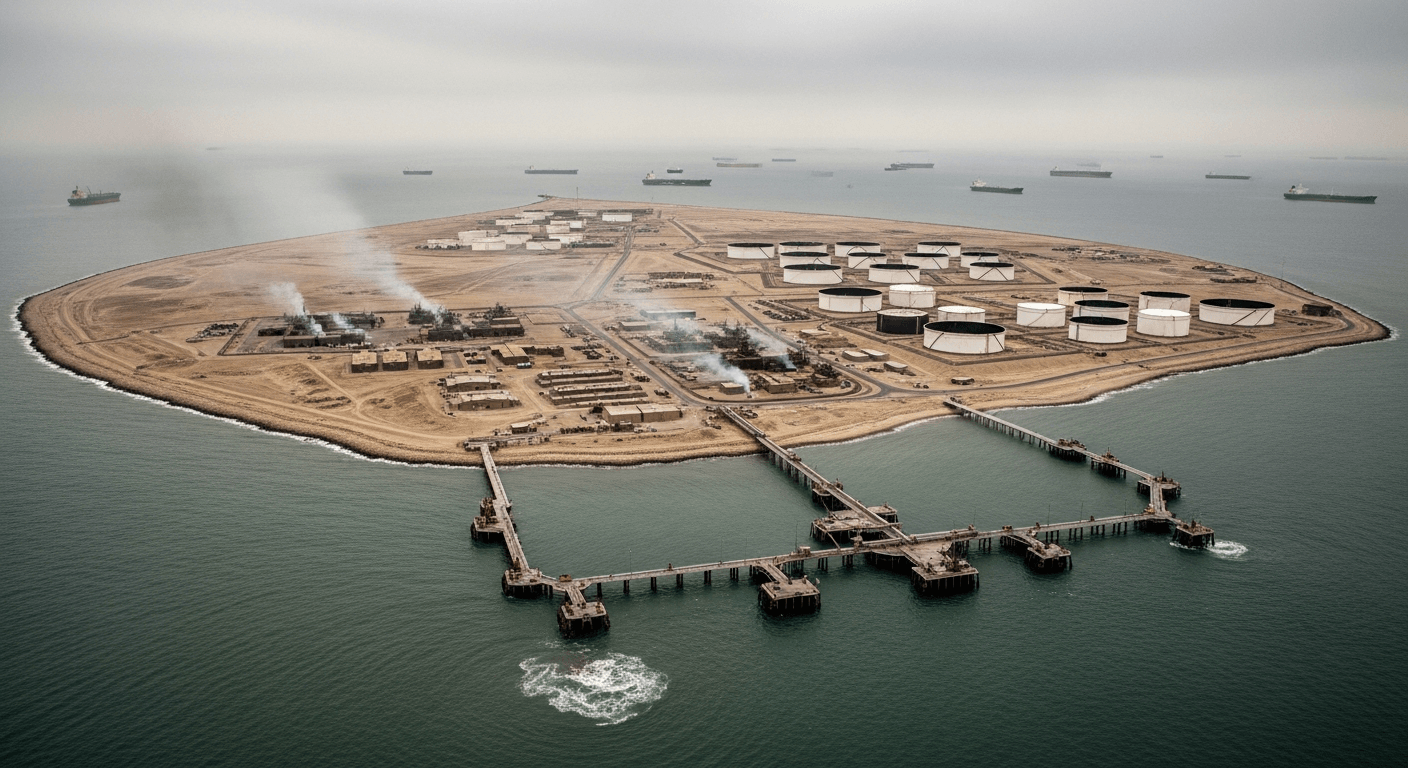
Kharg Island sits off Iran’s northern Persian Gulf coast and for decades has been the country’s primary crude export hub. The terminal and its jetties link inland pipeline networks and buffered storage tanks to very-large crude carriers; at various points analysts estimate the island handled well over one million barrels per day and stored many millions of barrels as strategic buffer capacity Los Angeles Times.[1]
Put simply: damage to Kharg is damage to the mechanism that turns oil in the ground into foreign exchange in the bank. That income historically underwrites large portions of Iran’s budget and social subsidies; it is also the regime’s single largest source of convertible revenue.
The strike: what happened (date, targets, damage, casualties)
On 13 March 2026 U.S. forces struck military targets on Kharg Island. Official U.S. statements framed the operation as focused on Iranian military infrastructure on the island rather than its oil-handling equipment; several accounts and satellite imagery released publicly showed explosions, fires and damage to military compounds and support facilities around the terminal Al‑Monitor.[2]
Open reporting in the immediate hours after the strike offered mixed assessments: Iranian state media and some field sources reported multiple explosions and at least isolated casualties from shrapnel and blast effects, while U.S. messaging emphasized deliberate avoidance of the oil jetties and large storage tanks. Independent imagery and commercial analysts flagged fires and structural damage in parts of the island’s built environment, but widely circulated early claims that oil infrastructure was wholly obliterated were inconsistent with other near‑real‑time sources [Hindustan Times; Economic Times].
Strategic and economic implications for Iran and global markets
Strategically, the strike signals a willingness to widen the target set beyond purely kinetic missile and drone nodes into locations that protect Iran’s export lifeline. Even if oil terminals were spared physically, disruption to logistics, port operations, security forces and loading schedules can choke exports without touching tanks: tankers can be delayed, pipelines can be isolated, and insurers can reroute or refuse transits.
Economically, the immediate effect is psychological and logistical: tanker owners, charterers and insurers respond swiftly to threat perceptions. Markets already swinging on supply worries will price in higher risk premia. If Kharg’s operations are curtailed for months, Tehran could see a material fall in export receipts — a direct hit to fiscal breathing room and subsidies that support domestic stability. Traders and energy analysts told me — as one energy analyst put it — that disruptions of this scale “do not just spike price for days; they force reallocation of stocks, long-term charter changes and durable increases in volatility.”
Iran’s likely responses: military, political and asymmetric options
Iran faces a constrained menu. Conventional reprisal against U.S. forces risks escalation; asymmetric options offer more calibrated pressure. I assess three likely response corridors:
- Military: targeted missile and drone strikes at regional U.S. bases or naval assets, in ways designed to impose cost but stop short of tipping into all‑out confrontation.
- Asymmetric: further assaults on shipping — mines, small‑boat harassment, or attacks on vessels judged linked to adversary economies — intended to ratchet commercial pain without direct state‑to‑state declaration.
- Political and economic: efforts to rally regional partners diplomatically, block export routes, and use state media and proxy networks to build domestic and international narratives of resilience.
Regional ramifications: Gulf security, shipping, neighbors
A strike on Kharg raises the temperature across the Gulf. Shipping lanes such as the Strait of Hormuz are especially vulnerable to spillover: mine threats, interdictions, and the rerouting of tankers around Africa raise costs and transit times. Neighbouring states face immediate policy dilemmas — from reopening ports and airspace to balancing economic ties with security partnerships — and some governments will be forced to choose between public neutrality and tacit support. Commercial insurers and energy buyers are likely to react first, curbing traffic and raising premiums before diplomatic mechanisms can soothe markets.
Legal and diplomatic context
Under international law, states justify strikes abroad primarily through self‑defense (Article 51, UN Charter) or UN Security Council mandates; absent a clear and immediate armed attack, strikes on another state’s territory sit in a legally gray area and invite diplomatic rebuke. The U.S. framing tied the operation to degrading Tehran’s military capability, but legal scholars will scrutinize proportionality and necessity. Diplomatically, the move complicates any external actor attempting mediation: it hardens positions and narrows the room for negotiated de‑escalation.
Historical parallels
This episode echoes the “Tanker War” episodic violence of the 1980s and the strategic logic of targeting energy chokepoints seen in later events — from Gulf strikes in the 1990s to the 2019 attacks on major oil infrastructure in the region. In each case, the central lesson is familiar: energy chokepoints are amplifiers of conflict, not mere collateral targets.
Expert takeaways (analytical, cautious)
A retired naval officer I spoke with (speaking generally) summarized the calculus this way: targeting the infrastructure around an export hub can hobble an opponent without necessarily destroying value that will shock global markets permanently. An energy economist added that even the threat of long outages drives persistent repricing — and that strategic reserves and allied production adjustments only blunt, not erase, the effects.
Potential scenarios going forward
- Containment: limited strikes and reciprocal but measured Iranian steps keep the confrontation regional and episodic, with periodic disruptions to shipping and oil markets.
- Economic squeeze: protracted degradation of export capability forces Tehran into deeper austerity, increasing domestic unrest and incentivizing asymmetric retaliation abroad.
- Escalation: miscalculation or a high‑casualty incident prompts broader regional conflagration, drawing in states with proximate interests and materially destabilizing global energy supplies.
What I’m watching next
Operational indicators (restoration of Kharg’s loading schedule, tanker movements), diplomatic threads (mediator engagement, UN debates), and asymmetric activity at sea (reports of mines, boarding incidents) will tell us whether this strike was a limited tactical blow or the opening of a strategic campaign to choke Iran’s foreign‑exchange lifeline.
I have written before about how control of natural‑resource chokepoints shapes state behavior and policy choices; those reflections remain relevant now as we watch events unfold "Needed : Policy for Natural resources".
Regards,
Hemen Parekh — hcp@recruitguru.com
Any questions / doubts / clarifications regarding this blog? Just ask (by typing or talking) my Virtual Avatar on the website embedded below. Then "Share" that to your friend on WhatsApp.
Get correct answer to any question asked by Shri Amitabh Bachchan on Kaun Banega Crorepati, faster than any contestant
Hello Candidates :
- For UPSC – IAS – IPS – IFS etc., exams, you must prepare to answer, essay type questions which test your General Knowledge / Sensitivity of current events
- If you have read this blog carefully , you should be able to answer the following question:
- Need help ? No problem . Following are two AI AGENTS where we have PRE-LOADED this question in their respective Question Boxes . All that you have to do is just click SUBMIT
- www.HemenParekh.ai { a SLM , powered by my own Digital Content of more than 50,000 + documents, written by me over past 60 years of my professional career }
- www.IndiaAGI.ai { a consortium of 3 LLMs which debate and deliver a CONSENSUS answer – and each gives its own answer as well ! }
- It is up to you to decide which answer is more comprehensive / nuanced ( For sheer amazement, click both SUBMIT buttons quickly, one after another ) Then share any answer with yourself / your friends ( using WhatsApp / Email ). Nothing stops you from submitting ( just copy / paste from your resource ), all those questions from last year’s UPSC exam paper as well !
- May be there are other online resources which too provide you answers to UPSC “ General Knowledge “ questions but only I provide you in 26 languages !





No comments:
Post a Comment