
Connect with Hemen Parekh — hcp@recruitguru.com
Human brains can grow new cells — yes, even in your 80s
I read the recent Times of India report on a landmark study with a mix of scientific curiosity and personal hope.[^1] The headline says it plainly: even very old brains can keep producing new neurons, and that ability helps explain why some people remain mentally sharp well into their 80s. For anyone worried that aging automatically equals irreversible decline, this paper offers a vital rethink.
What the study found — the short version
- The study used advanced single-cell genetic methods to examine thousands of cells from the hippocampus — the brain’s memory hub — across a wide adult age range.
- Evidence showed ongoing formation of new neurons (adult neurogenesis) in healthy older adults, including people in their 80s.
- A subset called “SuperAgers” (older adults with exceptional memory) showed especially robust neurogenesis.
- By contrast, brains with Alzheimer’s disease had far fewer immature neurons — suggesting impaired renewal may be part of the disease process.
(Source: Times of India coverage of the study)[^1]
What neurogenesis and brain plasticity mean — simply
Neurogenesis is the birth of new neurons from stem-like precursor cells. In adults, most of this happens in the hippocampus. Brain plasticity (or neuroplasticity) is the brain’s capacity to rewire itself — strengthening some connections, pruning others, and integrating new cells into existing networks.
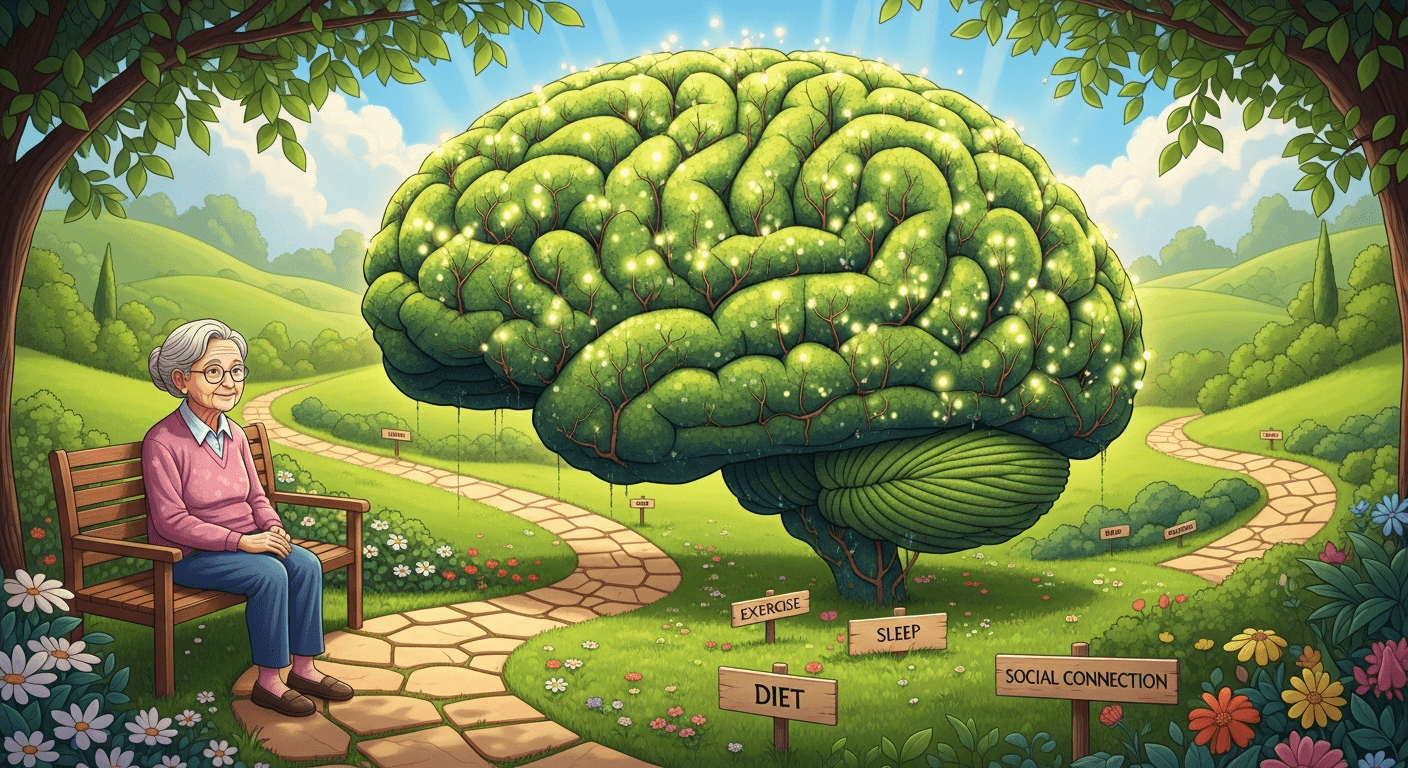
Think of the brain as a garden. Neurogenesis plants saplings; plasticity is the gardener pruning, training, and connecting those saplings so they grow into useful trees. New neurons are most flexible early on, which makes them particularly good at helping form distinct memories and adapt to new experiences.
Why this matters for aging and cognitive health
- It changes the default story from “brain decline is inevitable” to “the brain retains regenerative capacity.”
- It helps explain why lifestyle and environment still matter strongly for cognitive resilience late in life.
- If impaired neurogenesis is part of Alzheimer’s, then detecting declines in renewal might become an early warning sign — and boosting regeneration could become a therapeutic strategy.
Practical tips to support the brain garden
These are not magic bullets, but habits shown to help the brain’s environment so new cells can survive and thrive:
- Diet: Favor a Mediterranean-style pattern — lots of vegetables, fruits, whole grains, healthy fats (olive oil, nuts), lean proteins and fatty fish. Antioxidant-rich foods and omega-3s support brain health.
- Exercise: Regular aerobic activity (walking, cycling, swimming) is one of the strongest promoters of hippocampal health and neurogenesis.
- Mental activity: Challenge the brain with new learning, puzzles, language practice, musical instruments or hobbies — novelty encourages plasticity.
- Sleep: Deep, regular sleep is crucial for memory consolidation and cellular repair. Aim for consistent, quality sleep.
- Social connection: Strong social ties and meaningful engagement reduce stress and support cognitive resilience.
- Cardiovascular health: Control blood pressure, blood sugar, and cholesterol; what’s good for the heart is good for the brain.
Always consult your healthcare provider for personalized advice.
Common myths — cleared up
Myth: “You constantly lose brain cells as you age, so nothing can be done.” Reality: While some processes slow with age, the new study shows neuron formation continues well into late life in many people.
Myth: “If I’m already old, it’s too late to change things.” Reality: The brain retains plasticity. Lifestyle changes can still improve cognitive function and quality of life at older ages.
A balanced look — what this study does and doesn’t prove
- The study provides strong molecular evidence for adult neurogenesis, but it’s not a prescription for immortality.
- Neurogenesis declines with age for many people and varies between individuals; quantity alone doesn’t guarantee flawless memory — integration, connectivity and vascular support matter too.
- Postmortem and molecular studies tell us what is biologically possible; clinical trials are needed to show which interventions reliably boost cognitive function in real-world populations.
- The Alzheimer’s link is worrying but also instructive: loss of renewal may be one of several pathways to cognitive decline, and addressing it will likely require combination approaches.
Why I’m hopeful — and realistic
As someone who thinks a lot about memory, technology and what it means to keep ideas alive, this study felt energizing. It affirms that biology is not a closed book after a certain age. We can influence the chapters that come later through lifestyle, early detection, and — eventually — targeted therapies.
If you’re in your 40s, 60s, or 80s, the message is the same: small, sustained choices matter. Plant the right seeds, tend the garden, and you increase the odds that your brain will keep producing the young, adaptable cells that help sustain memory and learning.
If you want to read the news coverage, see the Times of India piece here: Human brain can grow new cells, remain sharp even in 80s: Study. For more on my earlier reflections about memory and preserving thoughts, you can see one of my posts about memory and digital avatars here.
Please consult your healthcare professional before making medical or major lifestyle changes.
Regards,
Hemen Parekh
Any questions / doubts / clarifications regarding this blog? Just ask (by typing or talking) my Virtual Avatar on the website embedded below. Then "Share" that to your friend on WhatsApp.
Get correct answer to any question asked by Shri Amitabh Bachchan on Kaun Banega Crorepati, faster than any contestant
Hello Candidates :
- For UPSC – IAS – IPS – IFS etc., exams, you must prepare to answer, essay type questions which test your General Knowledge / Sensitivity of current events
- If you have read this blog carefully , you should be able to answer the following question:
- Need help ? No problem . Following are two AI AGENTS where we have PRE-LOADED this question in their respective Question Boxes . All that you have to do is just click SUBMIT
- www.HemenParekh.ai { a SLM , powered by my own Digital Content of more than 50,000 + documents, written by me over past 60 years of my professional career }
- www.IndiaAGI.ai { a consortium of 3 LLMs which debate and deliver a CONSENSUS answer – and each gives its own answer as well ! }
- It is up to you to decide which answer is more comprehensive / nuanced ( For sheer amazement, click both SUBMIT buttons quickly, one after another ) Then share any answer with yourself / your friends ( using WhatsApp / Email ). Nothing stops you from submitting ( just copy / paste from your resource ), all those questions from last year’s UPSC exam paper as well !
- May be there are other online resources which too provide you answers to UPSC “ General Knowledge “ questions but only I provide you in 26 languages !


No comments:
Post a Comment