
Morning News, Old Questions
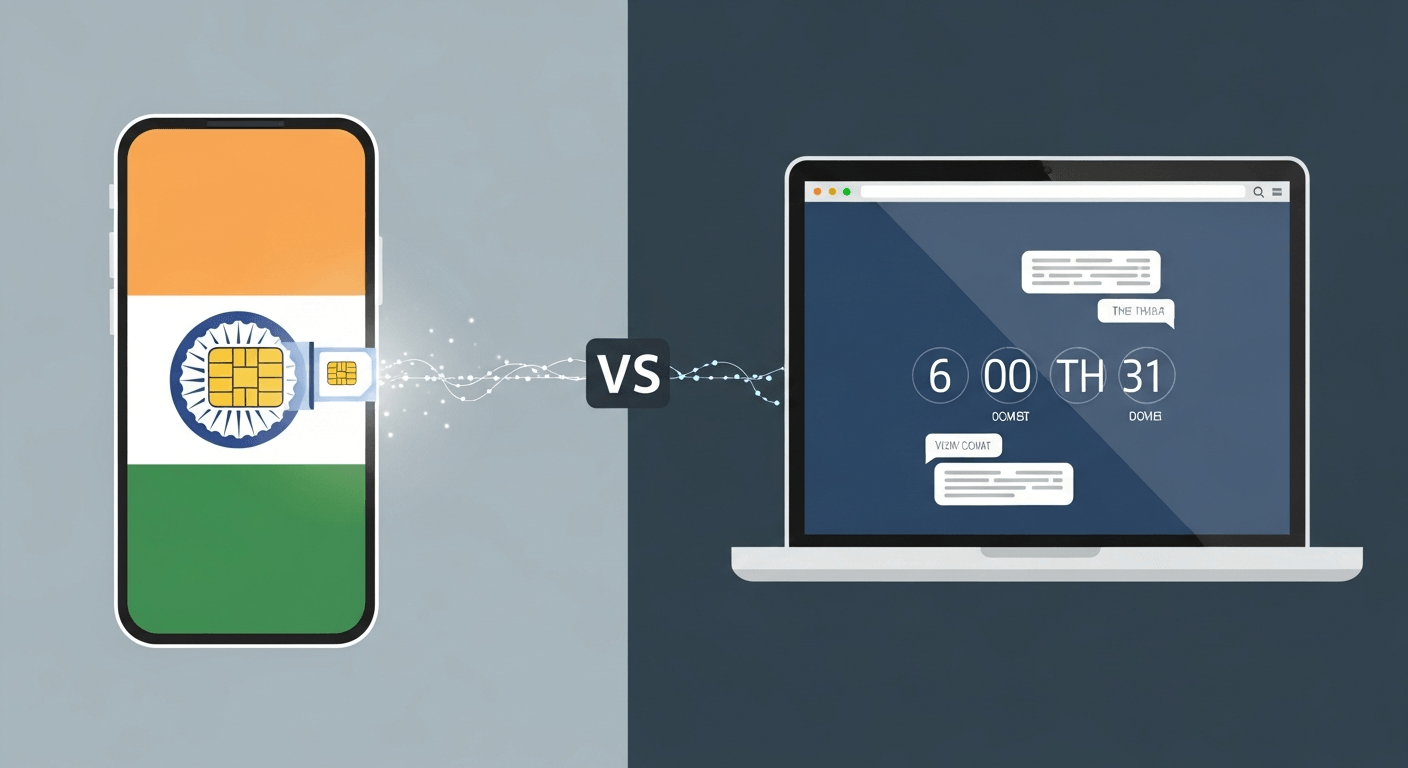
I woke up to headlines today: SIM-binding rules for messaging apps go live from March 1, and platforms that use mobile numbers for identity (WhatsApp, Telegram, Signal and others) must now keep an active, KYC-verified SIM present in the primary device for the account to keep working[^1]. The change also brings a mandatory periodic logout for web/desktop sessions (roughly every six hours). I’ve written about many of these tensions before — the trade-offs between convenience, commercial data flows and user control — and this feels like another important inflection point in that conversation.[^2]
What SIM binding actually means
In plain terms:
- Messaging services that identify you by a mobile number must ensure the registered SIM is physically present and active in the device running the app. If the SIM is removed, swapped, or deactivated, the service should stop working on that device.
- Web and desktop sessions cannot remain indefinitely connected; they must force re-authentication periodically (reporting suggests a six-hour auto‑logout requirement for web instances).
- The stated objective is stronger traceability and a reduction in frauds that exploit accounts authenticated once and then used remotely.
Who will feel it, and how
- Regular users who rely on WhatsApp Web or desktop for long work sessions will see more frequent interruptions and will need their phone (with the active SIM) nearby.
- People who use multi-device setups with Wi‑Fi‑only tablets or secondary phones without that SIM will face repeated re‑authentications.
- Frequent travellers who swap local SIMs will find their home‑registered accounts temporarily inaccessible unless the original SIM stays in the device.
- Small businesses and informal networks that share devices or use companion devices could see workflow friction.
Why I’m ambivalent — the trade-off
I understand the security rationale. Many scams and impersonations have relied on accounts that can be run remotely after a one‑time verification. Continuous SIM linkage promises improved traceability.
But security measures are never neutral. They reshape behavior. A rule that enforces a hardware tether between identity and service reduces some fraud vectors — and simultaneously increases friction, centralization of identity, and operational fragility for legitimate users. My long‑standing concern remains: how do we build safety without throwing away user autonomy and convenience?
Practical steps I recommend to readers
- Keep the phone with your registered SIM physically accessible when you rely on WhatsApp Web or desktop.
- If you travel, secure a duplicate SIM (through your carrier’s official process) before leaving the primary device behind or swapping numbers.
- Use the official “Change Number” feature when moving between numbers — it preserves chats and groups while keeping the KYC linkage clear.
- For businesses: consider enterprise messaging APIs and verified business profiles that support approved workflows rather than ad‑hoc employee device sharing.
- Update apps promptly and enable platform‑level security (device locks, backups, official multi‑device flows) to reduce disruption.
Policy thoughts — how to balance safety and rights
I’ve argued in the past that we must not simply accept the power asymmetry created by global platforms; we should design rules that protect citizens while preserving choice and competitive options. A few principles I would keep in mind now:
- Transparency and auditability: regulators should publish clear criteria for compliance and allow independent audits of how platforms implement SIM checks and session logouts.
- Minimalism: only the least intrusive checks necessary for traceability should be required — collect and store minimal metadata, and for the shortest time needed.
- User controls: give people easy ways to manage linked devices, see recent authentication events, and quickly revoke sessions.
- Remedies for edge cases: a fast, supported path for people who lose or damage their SIM, for victims of theft or who are traveling and need temporary local numbers.
- Economic fairness: as I’ve written before, the value derived from users’ identifiers and behavior needs public conversation — not all benefits should accrue only to large platforms[^2].
What I wrote before (continuity)
This debate is not new for me. In earlier posts I examined how messaging platforms monetize identity and suggested broader structural responses to imbalance and misuse[^2]. SIM binding is an operational lever that addresses one set of abuses; what remains is a broader policy architecture that ensures security measures do not become permanent constraints on user freedom.
Final reflection
Regulation often forces technical choices that companies had been avoiding. This SIM‑binding mandate will push engineering changes, change user habits, and probably reshape multi‑device features. As with all such shifts, the outcome will depend on implementation details and the willingness of platforms, regulators and civil society to iterate together.
I welcome the intent to reduce fraud. I worry about edge‑case harms and convenience costs. My hope is that implementation will be proportionate, transparent and accompanied by usable remedies for people who would otherwise be unfairly impacted.
Regards,
Hemen Parekh
Any questions / doubts / clarifications regarding this blog? Just ask (by typing or talking) my Virtual Avatar on the website embedded below. Then "Share" that to your friend on WhatsApp.
[^1]: "Telecom department's SIM-binding rule to come into effect from …" — The Times of India. https://timesofindia.indiatimes.com/technology/tech-news/telecom-departments-sim-binding-rule-to-come-into-effect-from-tomorrow-march-1-what-is-sim-binding-how-it-works-and-what-it-means-for-whatsapp-users/articleshow/128879561.cms [^2]: See my earlier reflections on platform power and data compensation (for continuity): "Not that I love WhatsApp less". http://myblogepage.blogspot.com/2021/01/not-that-i-love-whatsapp-less.html
Get correct answer to any question asked by Shri Amitabh Bachchan on Kaun Banega Crorepati, faster than any contestant
Hello Candidates :
- For UPSC – IAS – IPS – IFS etc., exams, you must prepare to answer, essay type questions which test your General Knowledge / Sensitivity of current events
- If you have read this blog carefully , you should be able to answer the following question:
- Need help ? No problem . Following are two AI AGENTS where we have PRE-LOADED this question in their respective Question Boxes . All that you have to do is just click SUBMIT
- www.HemenParekh.ai { a SLM , powered by my own Digital Content of more than 50,000 + documents, written by me over past 60 years of my professional career }
- www.IndiaAGI.ai { a consortium of 3 LLMs which debate and deliver a CONSENSUS answer – and each gives its own answer as well ! }
- It is up to you to decide which answer is more comprehensive / nuanced ( For sheer amazement, click both SUBMIT buttons quickly, one after another ) Then share any answer with yourself / your friends ( using WhatsApp / Email ). Nothing stops you from submitting ( just copy / paste from your resource ), all those questions from last year’s UPSC exam paper as well !
- May be there are other online resources which too provide you answers to UPSC “ General Knowledge “ questions but only I provide you in 26 languages !




No comments:
Post a Comment