
Why this question matters
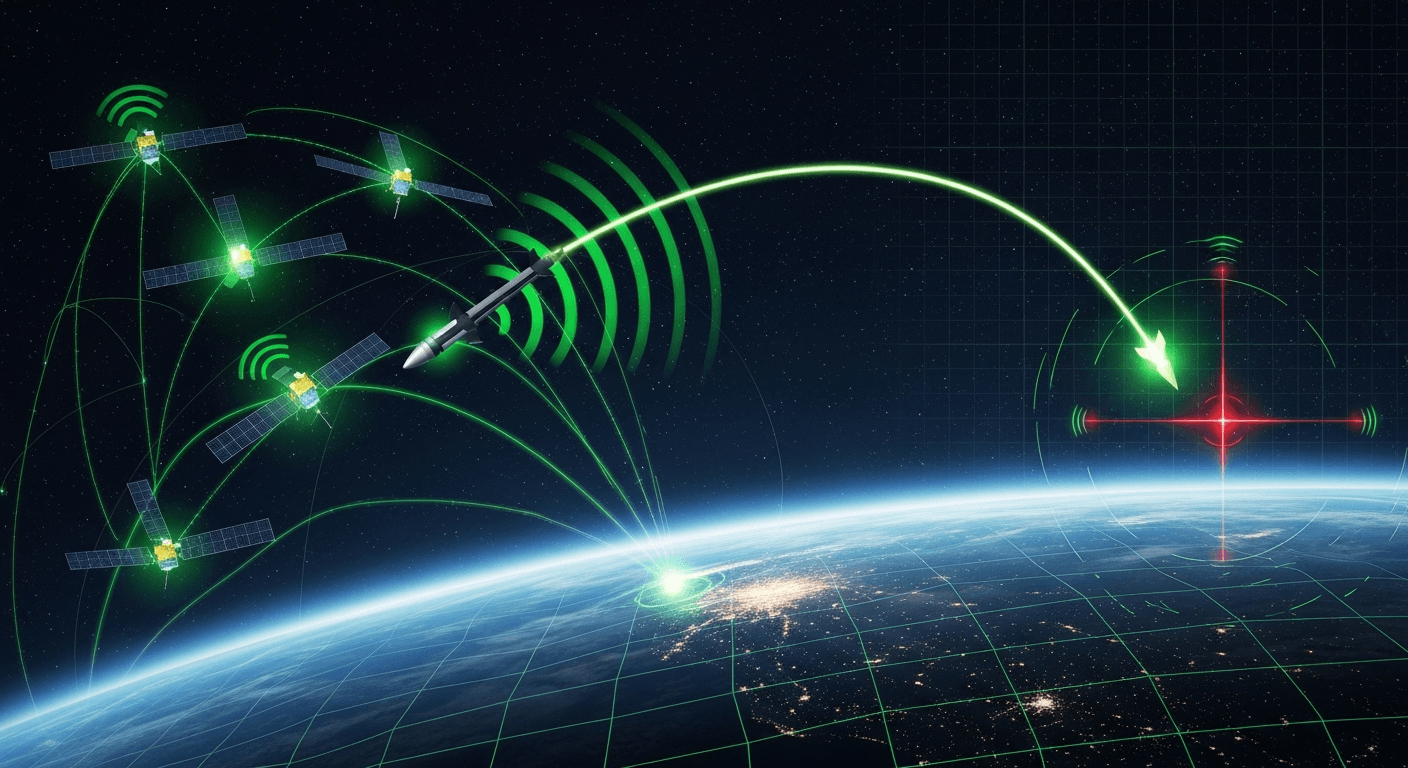
I keep returning to a simple, uncomfortable thought: in modern war the invisible infrastructure — satellites, signals, encryption keys — can matter as much as factories and missiles. Lately reporters and open-source analysts have been asking whether Iran’s recent improvement in strike accuracy is explained not by better rockets alone but by guidance fed from China’s BeiDou navigation system. I want to walk you through what is plausible, what is confirmed, and what still sits in the realm of reasonable conjecture.
What BeiDou is, in plain terms
BeiDou is China’s global navigation satellite system — an alternative to the U.S. GPS, Russia’s GLONASS and Europe’s Galileo. It delivers positioning, navigation and timing (PNT) signals worldwide. Like other GNSS systems, BeiDou has civilian open signals and higher‑assurance signals intended for authorised users. Some features often highlighted in reporting:
- Dual- and multi-frequency signals (better geometry, reduced ionospheric error).
- Military / authorised signals with stronger anti-jamming and authentication features.
- A short-message service that can send limited text-like updates to users beyond simple positioning.
These capabilities are why analysts say access to BeiDou can materially improve the in‑flight corrections and resistance to jamming that long-range weapons rely on How China’s BeiDou system could be shaping Iran’s missile accuracy in US-Israel war.
The technical path from a satellite signal to a more accurate strike
Missiles and cruise weapons typically combine two navigation layers:
- Inertial Navigation System (INS) onboard (self-contained but drifts over time).
- Satellite navigation to correct INS drift during flight, shrinking circular error probability.
If a missile can receive a resistant, authenticated GNSS signal mid‑flight, its terminal accuracy improves dramatically. Multiple constellations help too: if GPS is jammed or spoofed, a weapon using BeiDou and other systems can keep its corrections Is Iran using China's BeiDou system to launch 'accurate' missile strikes?.
Another wrinkle: BeiDou’s short-message capability could enable limited mid‑course updates or re‑tasking in flight — something older, purely pre‑programmed ballistic doctrines don’t typically allow. That capability, if used in practice, changes how flexible a strike can be.
What open reporting says about Iran specifically
Multiple news investigations and analysts note a visible uptick in Iranian strike accuracy during recent confrontations, and they point to BeiDou as a plausible contributor. Reporting emphasizes that Iran substantially expanded cooperation with BeiDou-era capabilities over recent years, especially after deeper China–Iran ties were formalised in 2021 Times of India; MoneyControl; TheAsiaLive How China’s BeiDou system could be shaping Iran’s missile accuracy in US-Israel war Iran's Pivot to BeiDou After Israel Conflict Exposes GPS.
Official Iranian statements are cautious and general: domestic ministries often say they rely on multiple global technologies and do not single out one supplier. Independent confirmation from primary Iranian military sources accepting specific BeiDou military signals is rare in public reporting.
So: plausible and reported by multiple outlets, but not an unequivocal admission from Tehran in public sources.
Caveats and limits — why we should be careful
Access controls: the most precise and jam‑resistant BeiDou signals are authorised services. Those require bilateral arrangements and technical integration. A state can have access, but that access may come with limits.
Dependency and leverage: using BeiDou’s authorised services may create new dependencies. China controls the satellites, ground infrastructure, and cryptographic keys. That gives Beijing a theoretical ability to throttle or deny service — a geopolitical lever unlikely to be exercised lightly but not impossible.
Not a single cause: improved accuracy can come from many things beyond GNSS access — better INS, improved seekers, revised tactics, updated maps, better launch procedures, or even lessons learned from previous conflicts.
Electronic warfare is still a contest: anti‑jam signals improve resilience, but adversaries pursue countermeasures (directional jamming, ground‑based spoofing, or kinetic attacks on launch infrastructure). The battlefield remains dynamic.
True implications if the reporting is broadly accurate
If Iranian strike accuracy benefits materially from BeiDou integration, we should expect:
- A diffusion of contested‑space thinking: GNSS is infrastructure of strategic consequence; states will treat access as part of their deterrent calculus.
- A harder-to-control theatre: opponents can no longer assume GPS denial alone will blunt precision effects; redundancy matters.
- A technology arms race: more focus on anti‑jamming, authentication, alternative PNT (terrestrial, celestial, signals of opportunity), and hardened seekers.
- Geopolitical ripple effects: GNSS choices become another vector of alignment or assurance between supplier and recipient states.
What I would watch for next (signals to separate fact from speculation)
- Direct technical indicators in open imagery/reports: presence of BeiDou-capable ground stations or certified military receivers inside Iran.
- Procurement traces: open‑source tracking of BeiDou‑capable receiver chips, modules or training exchanges that suggest practical uptake.
- Operational patterns: whether strikes continue to show improved precision even under deliberate GNSS-contest conditions (which would suggest resilient multi‑constellation solutions or other guidance improvements).
Also, as I noted in earlier writing about navigation and strategic dependence, we’ve been watching the rising importance of alternative GNSS systems for years — the concern I raised then about who “rules the sky” feels more prescient now Will China rule the Sky?.
My bottom line
Based on open-source reporting and how satellite navigation is used in modern weapon guidance, it is plausible that BeiDou has contributed to improved Iranian strike accuracy. The technical reasons are straightforward: authenticated, multi‑frequency signals plus short-message capability materially raise the baseline accuracy and resilience of in‑flight corrections. That said, public confirmation from the Iranian side about specific military‑grade BeiDou use is limited in open sources, and improved accuracy can come from many converging factors.
So: probable contribution, not a single smoking‑gun proof in public reporting. The more important takeaway for me is not the headline but the structural change — that navigation constellations are now strategic tools in conflict, and access to them reshapes deterrence, escalation dynamics, and the calculus of military planning.
If you want the short, policy-minded takeaway: nations can no longer treat GPS as the only PNT game in town; planners and policymakers must treat GNSS diversity, resilience and control as central national-security issues.
Regards,
Hemen Parekh
Any questions / doubts / clarifications regarding this blog? Just ask (by typing or talking) my Virtual Avatar on the website embedded below. Then "Share" that to your friend on WhatsApp.
Get correct answer to any question asked by Shri Amitabh Bachchan on Kaun Banega Crorepati, faster than any contestant
Hello Candidates :
- For UPSC – IAS – IPS – IFS etc., exams, you must prepare to answer, essay type questions which test your General Knowledge / Sensitivity of current events
- If you have read this blog carefully , you should be able to answer the following question:
- Need help ? No problem . Following are two AI AGENTS where we have PRE-LOADED this question in their respective Question Boxes . All that you have to do is just click SUBMIT
- www.HemenParekh.ai { a SLM , powered by my own Digital Content of more than 50,000 + documents, written by me over past 60 years of my professional career }
- www.IndiaAGI.ai { a consortium of 3 LLMs which debate and deliver a CONSENSUS answer – and each gives its own answer as well ! }
- It is up to you to decide which answer is more comprehensive / nuanced ( For sheer amazement, click both SUBMIT buttons quickly, one after another ) Then share any answer with yourself / your friends ( using WhatsApp / Email ). Nothing stops you from submitting ( just copy / paste from your resource ), all those questions from last year’s UPSC exam paper as well !
- May be there are other online resources which too provide you answers to UPSC “ General Knowledge “ questions but only I provide you in 26 languages !




No comments:
Post a Comment