
I watched a shadow voyage
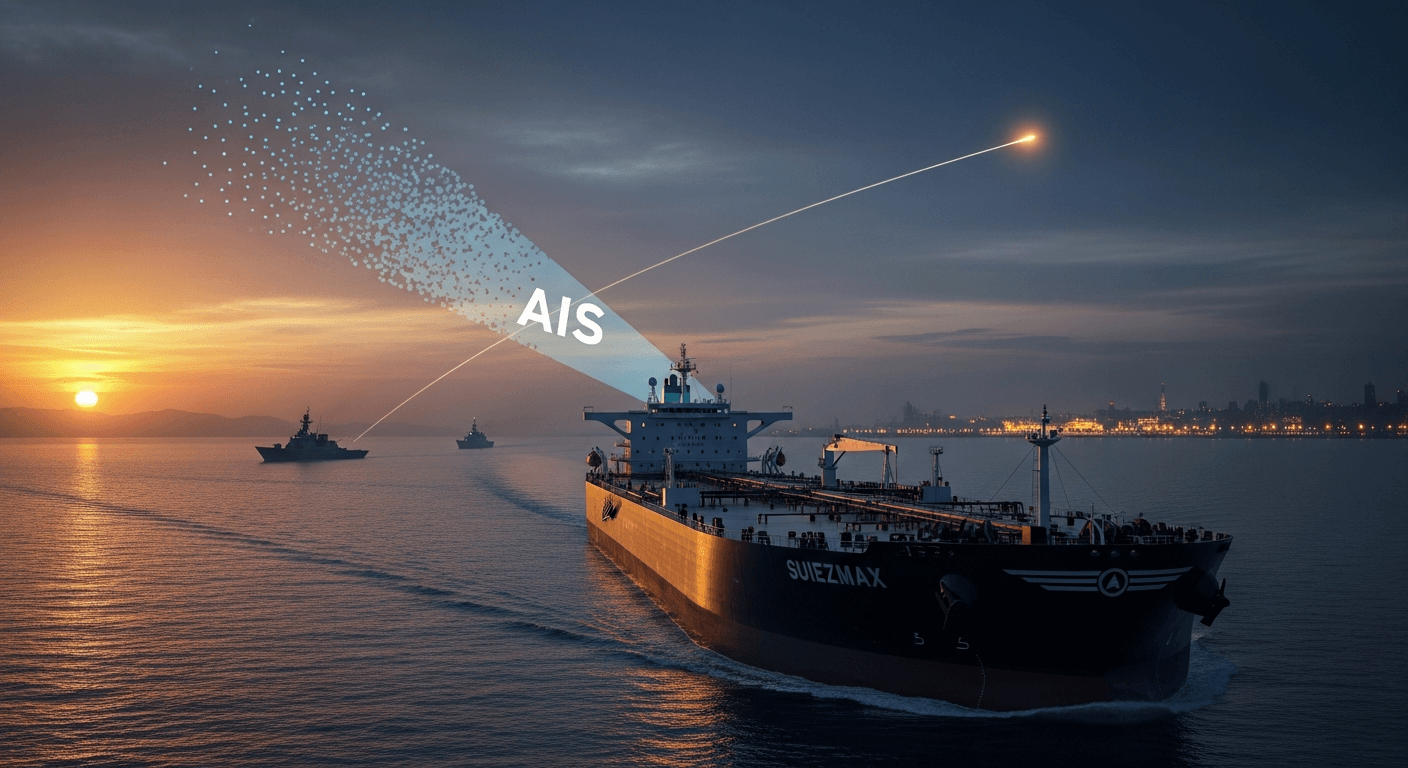
I still remember the quiet relief that rippled across a city that depends on steady fuel flows. A Liberia-flagged Suezmax tanker carrying Saudi crude slipped through the conflict-haunted Strait of Hormuz and arrived in Mumbai after briefly turning off its tracking systems — a tactic the industry calls "going dark." That journey has stuck with me not because of spectacle, but because it exposed a fragile truth about how the modern world keeps its lights on: risk, improvisation, and invisible choices made at sea.
What happened, in short
- The tanker Shenlong Suezmax loaded crude at Ras Tanura and later berthed at Mumbai’s Jawahar Dweep terminal, discharging roughly 135,335 metric tonnes of oil for local refineries (Times of India, NDTV).
- Maritime trackers show the ship’s Automatic Identification System (AIS) signals disappeared while it crossed the high-risk stretch of the Strait of Hormuz and then reappeared after the danger was passed (Hindustan Times).
- The Strait of Hormuz remains one of the planet’s most consequential chokepoints, moving the equivalent of roughly a fifth of global oil consumption on any given day — which is why what happens there matters to every refinery and every commuter pump.
Why a ship would ‘go dark’ — and why that unsettles me
Going dark is not a technological novelty; it's a human decision under duress. Captains and companies sometimes disable AIS to avoid becoming easy targets in conflict waters. I accept that decision as understandable in extremis, but it carries layered consequences:
- Safety vs. security: AIS exists to prevent collisions and enable search-and-rescue. Turning it off reduces targeting risk but raises the chance of accidents or delayed help.
- Rules and norms: International maritime regulations expect AIS to be active for safety. Deviations reflect the breakdown of norms under military pressure.
- Invisible risks to crew and commerce: The lives of seafarers and the continuity of supply chains are held together by improvised choices that rarely make headlines until something goes wrong (and then everyone asks whether the system failed or did what it had to).
The structural problem beneath the headline
What struck me most is how a single shadowy passage reveals strategic dependencies. India — like many nations — still depends heavily on seaborne oil that passes through narrow chokepoints. When conflict makes those routes precarious, the immediate consequence is tactical improvisation; the longer-term consequence is systemic vulnerability.
I’ve written about energy dependence and the moral clarity of investing in resilient alternatives before. Years ago I urged a serious shift toward domestic solar and decentralised energy solutions as practical ways to reduce strategic exposure and conserve scarce resources (Sun is THE SOLUTION). That argument feels less abstract today.
Not just geopolitics — human stories
Behind the tanker’s arrival are crews, port workers, logistics teams and families. Every time a vessel chooses a riskier route or a captain makes a split-second security call, real people bear the consequences. Worse still, when an attack occurs — as other ships in the region have suffered — the human cost is immediate and tragic.
What we should learn and do next
- Diversify energy sources: Build speed and scale in renewables, storage, and alternative fuels so supply shocks in a single corridor matter less.
- Protect seafarers: Strengthen international cooperation to establish safe corridors and rescue protocols that prioritise human life over geopolitics.
- Reimagine logistics resilience: Rethink stock buffers, alternative shipping routes, and strategic reserves with modern modelling — not as emergency politics but as ongoing policy.
I keep returning to a simple idea: if a society’s normal operations can be disrupted by a single narrow sea lane, then the problem is not merely tactical — it is civilisational. We must plan for the mundane contingencies and the extraordinary crises with equal seriousness.
Regards,
Hemen Parekh
Any questions / doubts / clarifications regarding this blog? Just ask (by typing or talking) my Virtual Avatar on the website embedded below. Then "Share" that to your friend on WhatsApp.
Get correct answer to any question asked by Shri Amitabh Bachchan on Kaun Banega Crorepati, faster than any contestant
Hello Candidates :
- For UPSC – IAS – IPS – IFS etc., exams, you must prepare to answer, essay type questions which test your General Knowledge / Sensitivity of current events
- If you have read this blog carefully , you should be able to answer the following question:
- Need help ? No problem . Following are two AI AGENTS where we have PRE-LOADED this question in their respective Question Boxes . All that you have to do is just click SUBMIT
- www.HemenParekh.ai { a SLM , powered by my own Digital Content of more than 50,000 + documents, written by me over past 60 years of my professional career }
- www.IndiaAGI.ai { a consortium of 3 LLMs which debate and deliver a CONSENSUS answer – and each gives its own answer as well ! }
- It is up to you to decide which answer is more comprehensive / nuanced ( For sheer amazement, click both SUBMIT buttons quickly, one after another ) Then share any answer with yourself / your friends ( using WhatsApp / Email ). Nothing stops you from submitting ( just copy / paste from your resource ), all those questions from last year’s UPSC exam paper as well !
- May be there are other online resources which too provide you answers to UPSC “ General Knowledge “ questions but only I provide you in 26 languages !



No comments:
Post a Comment