
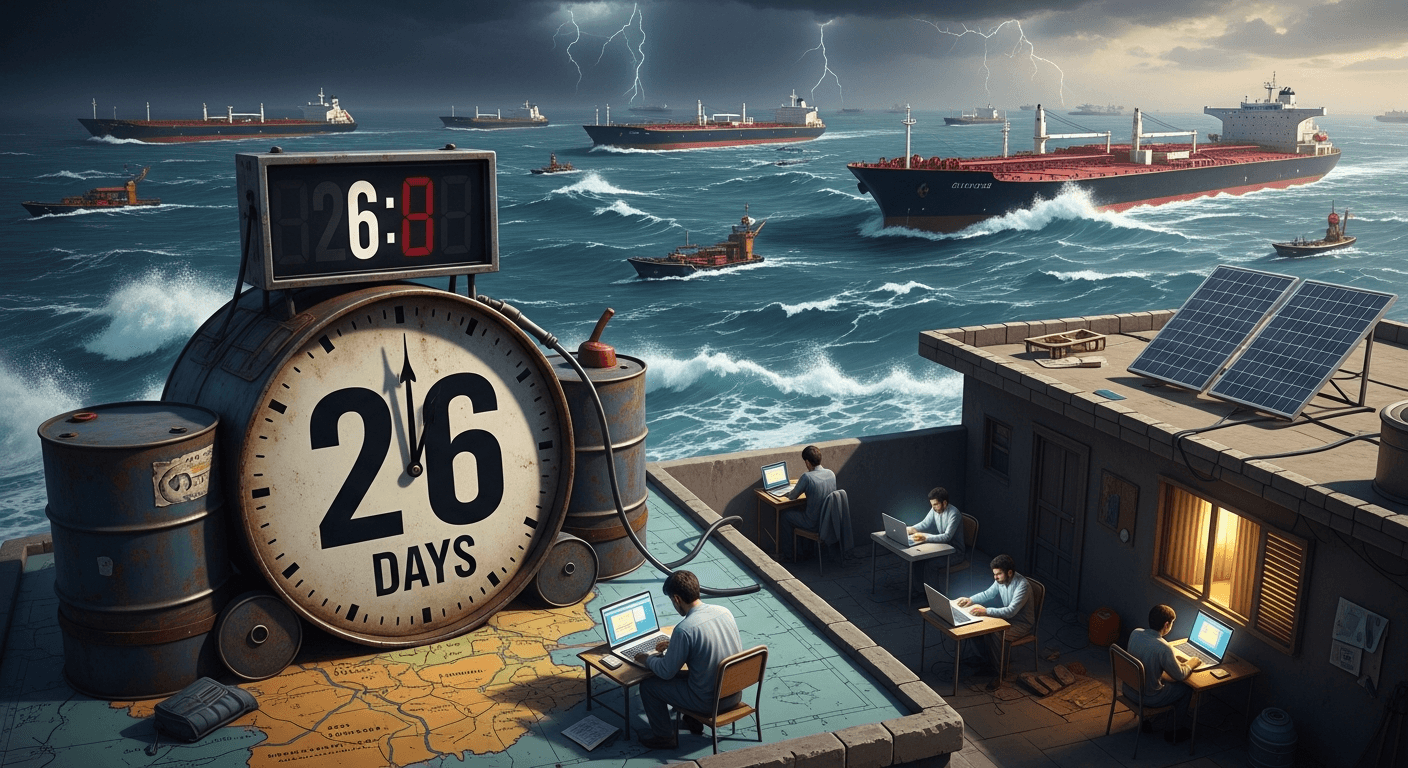
I woke up to headlines that felt like déjà vu — an oil chokepoint in the Gulf, a nervous scramble for alternative routes, and a country being asked to stretch the life of its fuel stocks to a month. Pakistan is reported to have roughly 25–26 days of petrol and diesel in storage, and authorities are weighing measures from weekly price revisions to a temporary return to remote working to conserve fuel and avoid panic Pakistan left with 26 days of fuel, may impose work-from-home as Strait of Hormuz crisis deepens. Other outlets describe similar contingency plans and the steep rise in shipping and insurance costs that make imports far more expensive and uncertain Pakistan may run out of petrol, diesel within a month amid Iran war; mulling mandatory WFH.
I write about this as someone who has long worried about our fragile dependence on centralized supply chains and a world where a single geographic flashpoint can ripple across economies. Years ago I called attention to the structural vulnerabilities of energy dependencies and argued that geopolitical shocks are often the very Black Swan moments we pretend will never happen A Twin Tragedy. Today’s developments feel like an overdue reminder: resilience is not optional.
Why this matters right now
- The Strait of Hormuz handles a significant share of seaborne oil. When traffic there is disrupted — whether by attacks, closures, or insurance-driven avoidance — freight and insurance premiums can multiply several times over, instantly making imports prohibitively expensive.
- For countries that import finished fuels and rely on scheduled tankers, the lag between disruption and visible shortages can be short. Stocks that look adequate in headlines ("26 days") can translate into real economic pain in just a few weeks if shipments are delayed or carriers refuse routes.
- Policy responses that sound technical — weekly price revisions, compensation mechanisms for oil marketers, and rationing of distributor allocations — have deep social consequences. They affect commuters, small businesses, farmers, and hospitals.
Short-term measures I think make sense
- Calm, transparent communication. Panic buying wastes fuel and accelerates shortages. Regulators and suppliers must publish clear stock figures and distribution plans in real time.
- Targeted demand reduction rather than blanket austerity. Encouraging remote work where feasible and staggering hours for essential services can lower fuel consumption with minimal economic disruption. But these decisions should be coordinated, equitable, and time-bound — not open-ended decrees that penalize informal and hourly workers.
- Protect critical logistics and agricultural needs. Any conservation policy must carve out exemptions for food supply chains, emergency services, and critical manufacturing.
- Compensate responsibly. If governments choose to offset skyrocketing insurance and freight costs for private oil marketers to keep supply lines open, they must do so transparently and temporarily, with clear accountability.
Medium- and long-term imperatives
This is where my mind always returns. A crisis like this should not only be a firefight; it must be an accelerator for structural change.
- Diversify import routes and suppliers. The immediate push to route cargoes via the Red Sea or find alternative suppliers is necessary; institutionalize that diversification rather than treating it as a temporary workaround.
- Build strategic and regional cooperation. Shared buffer stocks, mutual-aid pacts for energy, and regional logistics corridors reduce single-point dependence.
- Leapfrog to renewables and distributed systems. Rooftop solar, community microgrids, and electrified transport can blunt the impact of fossil-fuel supply shocks. I’ve written about the potential for decentralised solar and why long-term planning for renewables isn’t just environmentalism but energy security A Twin Tragedy.
- Modernize pricing and subsidy policies. Price signals should reflect transport and insurance costs quickly, but policymakers must pair that with protection for the poor and for sectors that cannot easily switch modes.
On the human side
I keep returning to the same two truths. First, crises reveal inequalities: wealthier households and well-capitalized firms can absorb sudden price spikes or switch to alternatives; the poor cannot. Second, our policy choices reveal values. Will we protect the vulnerable? Will we use this shock to accelerate resilient infrastructure and cleaner energy, or will we simply paper over problems with short-term transfers until the next shock arrives?
A personal note
I’ve been writing about energy risk and the need for decentralised resilience for years. It’s easy to sound prophetic during calm times; during crises, the choice is harder: propose immediate triage and insist on long-term change. Both are necessary. If policy levers now are used only to keep the status quo afloat, the next disruption — unavoidable in a volatile world — will be the harsher teacher.
If you live in a city affected by supply measures, think practical first:
- Consolidate trips and carpool where possible.
- Use established, official channels for fuel updates rather than social media rumours.
- Support community-level solutions — shared transport pools, local procurement for essentials — that reduce pressure on long-haul logistics.
We are in a brittle moment: geography, geopolitics, and logistics have conspired to test systems we take for granted. The short-term policy toolkit is clear enough; the greater test is whether this moment becomes a pivot toward real resilience.
Sources and further reading
- Reporting on immediate developments and policy options: Times of India and Economic Times.
- My earlier reflections on energy vulnerability and the opportunity to shift to decentralised power: A Twin Tragedy.
Regards,
Hemen Parekh
Any questions / doubts / clarifications regarding this blog? Just ask (by typing or talking) my Virtual Avatar on the website embedded below. Then "Share" that to your friend on WhatsApp.
Get correct answer to any question asked by Shri Amitabh Bachchan on Kaun Banega Crorepati, faster than any contestant
Hello Candidates :
- For UPSC – IAS – IPS – IFS etc., exams, you must prepare to answer, essay type questions which test your General Knowledge / Sensitivity of current events
- If you have read this blog carefully , you should be able to answer the following question:
- Need help ? No problem . Following are two AI AGENTS where we have PRE-LOADED this question in their respective Question Boxes . All that you have to do is just click SUBMIT
- www.HemenParekh.ai { a SLM , powered by my own Digital Content of more than 50,000 + documents, written by me over past 60 years of my professional career }
- www.IndiaAGI.ai { a consortium of 3 LLMs which debate and deliver a CONSENSUS answer – and each gives its own answer as well ! }
- It is up to you to decide which answer is more comprehensive / nuanced ( For sheer amazement, click both SUBMIT buttons quickly, one after another ) Then share any answer with yourself / your friends ( using WhatsApp / Email ). Nothing stops you from submitting ( just copy / paste from your resource ), all those questions from last year’s UPSC exam paper as well !
- May be there are other online resources which too provide you answers to UPSC “ General Knowledge “ questions but only I provide you in 26 languages !



No comments:
Post a Comment