
Headline: "Scary time": How stranded passengers in Dubai used cabs, cash and detours to flee
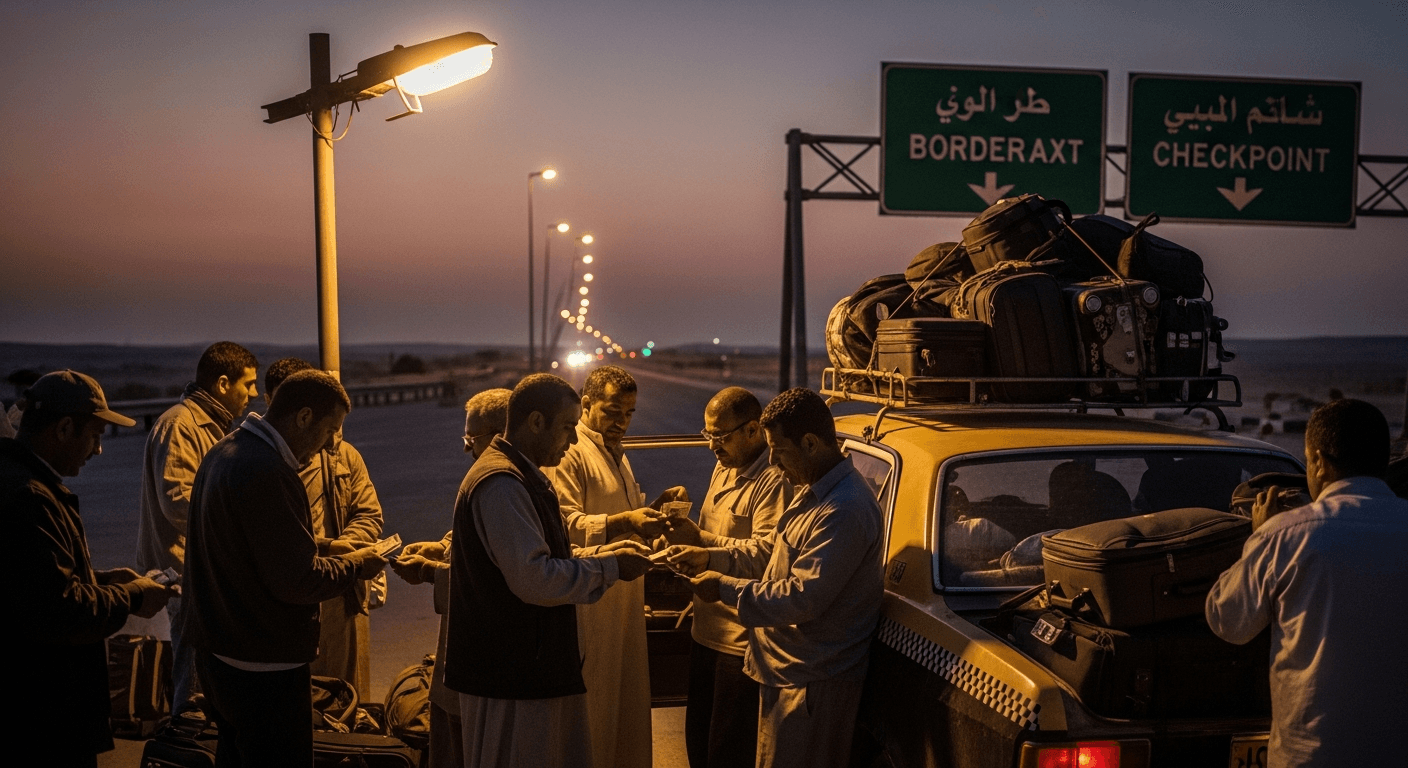
I write this from the perspective of someone who watches cities, systems and people under pressure—and who believes the stories we tell in crisis are as important as the facts. Over the last few days I followed reports and first-person accounts of thousands of travellers stranded in Dubai after regional airspace closures. The images that stuck with me were not of private jets and headline-grabbing evacuations, but of ordinary people improvising: pooling cash, hailing taxis at dawn, and driving long detours to reach the nearest working airport.
What happened — an overview
A sharp escalation of hostilities in the region prompted multiple countries to close or restrict airspace around Gulf hubs. The result: major airports — including Dubai International — suspended many services, leaving connecting passengers and tourists suddenly without flights. With airlines rerouting, cancellations piling up and official guidance lagging, many people found themselves deciding between waiting at crowded terminals or taking their fate into their own hands.
Several investigative pieces and on-the-ground reports describe the same pattern: passengers paying for long taxi rides to Oman or Saudi Arabia, hiring drivers willing to cross borders, or booking expensive last-minute tickets out of other functioning airports Times of India, Business Standard.
Voices on the road
“We realised staying meant more uncertainty. We pooled money and found a driver who would take us to Muscat,” said one traveller I spoke with indirectly through reporting sources. They described swapping drivers at the border, paying in cash and sleeping in the car for sections of the journey.
Another anonymous passenger told a reporter: “It felt like the ground disappeared. Hotels were full, cards were被 declined by some machines, so you used cash. The taxis charged much more than normal.”
These voices are not celebrity anecdotes. They are echoed across multiple reports: travelers paying steep sums for overland transfers, long waits at checkpoints and frantic calls to embassies and family back home Economic Times.
A short timeline (typical sequence)
- Day 0: Incident or escalation triggers initial alerts; military activity reported; some flights diverted or delayed.
- Day 1: Major carriers suspend flights; airports declare temporary closure of some operations. Passengers begin queuing at information desks. Hotels fill or raise prices. Embassies issue travel advice.
- Day 2: Border crossings and alternative airports become obvious escape routes (Muscat, Riyadh). Demand for taxis, coaches and private transfers spikes. Cash becomes crucial in areas where systems are overloaded.
- Day 3+: Overland corridors see congestion, ad-hoc shuttle services, charity and corporate assistance; some commercial flights resume slowly and large-scale evacuations are coordinated by governments over several days.
This pattern mirrors multiple verified reports during the disruption, where two principal exit routes emerged: via Saudi Arabia or to Oman’s Muscat Airport, depending on which borders or airports remained operational Business Standard.
Why cabs, cash and detours became necessary
- Rapid collapse in scheduled flights creates immediate demand for alternatives.
- Payment systems and hotel capacity strain under surges; cash remains the simplest accepted currency in many ad-hoc transactions.
- Borders and routes open and close unpredictably—drivers and local agents who know the terrain become valuable.
It’s a striking reminder that when systems fail, the infrastructure that remains is often low-tech: relationships, local knowledge and cash.
Practical tips for travellers (how to prepare and what to do)
- Keep emergency cash in small denominations in a separate pouch. Card systems can be patchy in high-demand situations.
- Download airline apps, embassy travel advisories and offline maps (download the region) before you travel.
- Photograph or screenshot your passport, visa stamps, insurance and booking confirmations; store encrypted copies in cloud and offline.
- Register with your embassy or consulate on arrival — it speeds help and notifications.
- Identify alternate airports and overland exit points before you travel; know approximate travel times and visa requirements between neighbouring countries.
- If you must hire private transport, choose licensed services where possible, share rides to reduce cost, verify driver identity and agree price and exit points before departure.
- Keep a portable charger, basic first-aid kit and a list of emergency contacts (family, travel insurer, embassy) in both paper and digital form.
Broader reflections: airline communication and traveler resilience
This episode exposed two structural weaknesses. First, communication chains during rapidly changing geopolitical events often break down. Airlines are overloaded, official channels slow, and small travellers get lost in the noise. Second, the market responds: private brokers, NGOs, and local businesses step in to fill demand, sometimes fairly and sometimes opportunistically.
I’ve written before about transport systems and the role of technology in easing travel frictions—about passport-less flows and more integrated logistics solutions that could reduce bottlenecks in normal times. See my earlier reflections on streamlined border processes and integrated transport planning for airports and cities Hemen Parekh blog on transport and Changi-type innovations. Those ideas are still relevant: better digital coordination between states, carriers and consulates could prevent much of the panic.
But technology isn’t a panacea. In crises, human agency matters. I found myself admiring the resourcefulness of travellers who pooled cash, shared rides, and used local networks to get home. Their improvisation speaks to resilience: people can and will create pathways even when systems buckle.
Final thoughts
If this disruption teaches us anything, it is that resilience is layered. Infrastructure, corporate contingency plans, and government coordination matter. But so do simple things—cash in your pocket, a downloaded map, a contact who knows the road. For planners and airlines, the challenge is to make those layers work together so that when the exceptional becomes real, the ordinary traveller is not left to improvise survival.
Regards,
Hemen Parekh
Any questions / doubts / clarifications regarding this blog? Just ask (by typing or talking) my Virtual Avatar on the website embedded below. Then "Share" that to your friend on WhatsApp.
Get correct answer to any question asked by Shri Amitabh Bachchan on Kaun Banega Crorepati, faster than any contestant
Hello Candidates :
- For UPSC – IAS – IPS – IFS etc., exams, you must prepare to answer, essay type questions which test your General Knowledge / Sensitivity of current events
- If you have read this blog carefully , you should be able to answer the following question:
- Need help ? No problem . Following are two AI AGENTS where we have PRE-LOADED this question in their respective Question Boxes . All that you have to do is just click SUBMIT
- www.HemenParekh.ai { a SLM , powered by my own Digital Content of more than 50,000 + documents, written by me over past 60 years of my professional career }
- www.IndiaAGI.ai { a consortium of 3 LLMs which debate and deliver a CONSENSUS answer – and each gives its own answer as well ! }
- It is up to you to decide which answer is more comprehensive / nuanced ( For sheer amazement, click both SUBMIT buttons quickly, one after another ) Then share any answer with yourself / your friends ( using WhatsApp / Email ). Nothing stops you from submitting ( just copy / paste from your resource ), all those questions from last year’s UPSC exam paper as well !
- May be there are other online resources which too provide you answers to UPSC “ General Knowledge “ questions but only I provide you in 26 languages !


No comments:
Post a Comment