
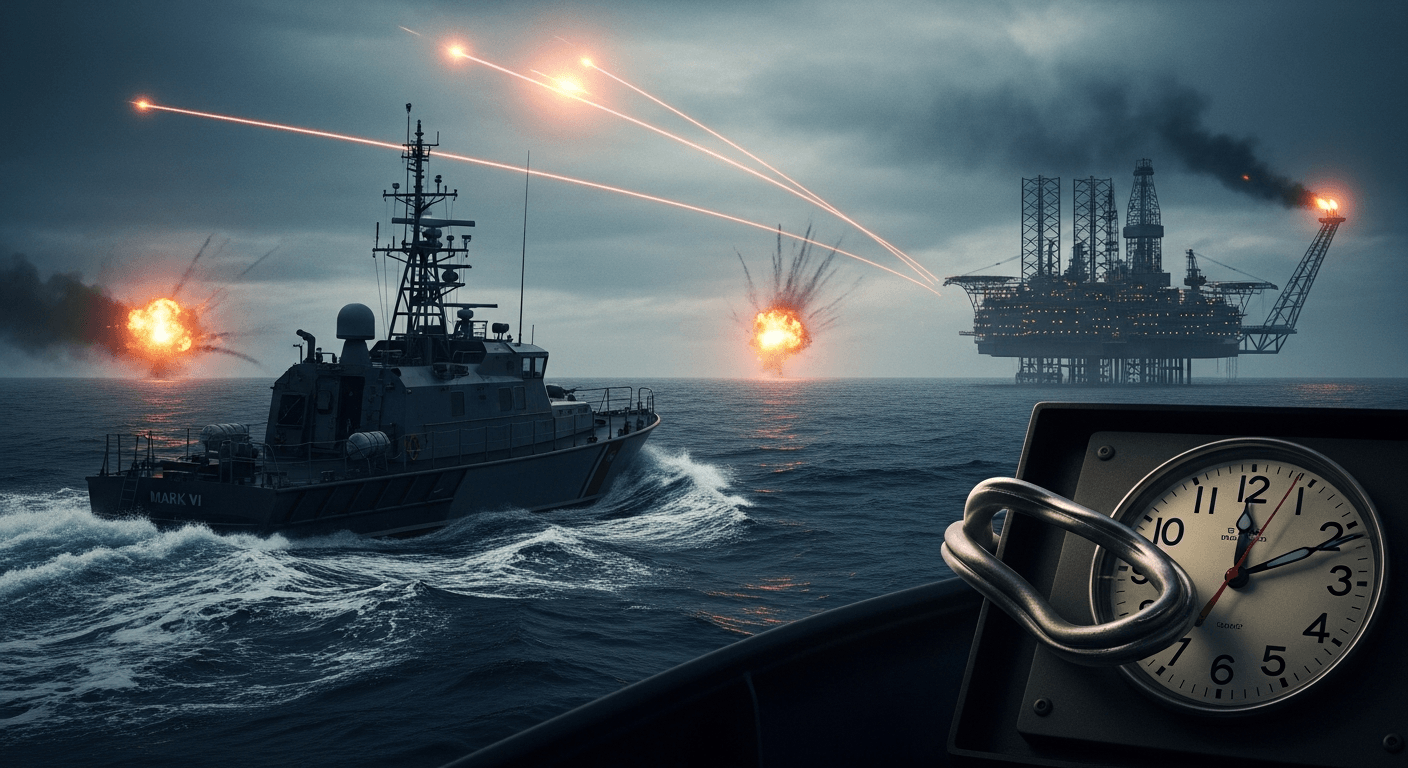
Left to Fend Alone
I woke up to reports that our Gulf neighbours felt blindsided — that air raids and strikes were launched with little or no advance notice, and that the consequences of retaliation fell disproportionately on states that host allied bases, commerce and families.
Reading those dispatches I felt a familiar, uneasy pulse: the old pattern of great-power action followed by local fallout. The headlines are new, but the pattern is not. I have written before about proxy wars and how ordinary people and nearby states become collateral in geopolitical gambits A Syria at our Doorsteps and why such dynamics produce long-term instability Four Sides of the Coin.
What worries me
Tactical secrecy can make operational sense, but when secrecy becomes the default for actions that reshape regional risk, it breaks the social contract between allies. Those left to intercept missiles, reroute flights, protect civilians and secure trade routes suddenly carry costs they did not sign up for.
Defence systems and interceptor stocks are finite. Reports of interceptor depletion and overwhelmed air-defence networks are not abstract — they mean airports closed, supply chains strained, and civilians at risk.
Trust is strategic. When partners feel abandoned in moments of crisis, the political and military trust that underpins alliances erodes. That loss of trust is itself a long-lived weapon: it forces states to hedge, to diversify suppliers, and to make independent security investments that fragment coordination.
The costs beyond the battlefield
Economic: Gulf airspace and ports are arteries for global trade. Interruptions ripple through markets, insurance costs rise, and ordinary businesses pay the price.
Political: Perceived abandonment fuels domestic criticism of allied governments and can drive closer ties with other great powers — precisely the realignment many do not wish to see.
Humanitarian: Civilian casualties, displaced people and strained hospitals are the immediate measure of policy failure. Technical debates about warning windows or operational security matter less at 2 a.m. when families are sheltering from incoming threats.
What responsible alliance should look like
I believe alliances must balance three things: operational security, clear burden-sharing, and predictable communications. Practically, that means:
Shared contingency planning: Regularly exercised playbooks for retaliation scenarios so host states can scale defences fast.
Transparency thresholds: Agreed signals (not detailed targeting lists) that give allied governments enough time to activate civilian protections and manage airspace.
Industrial and logistical support: Rapid resupply lines for interceptors, spare parts and repair teams pre-negotiated long before crises begin.
Diplomatic choreography: A joint communications strategy that explains risks and responsibilities to domestic publics in host nations.
A word about escalation
Escalation rarely follows a tidy script. Once a campaign spreads into a theatre with many stakeholders, unintended consequence multiplies. That is the reason I have argued previously that proxy engagements and short-sighted tactical wins risk long-term strategic losses. Secrecy without forethought becomes an accelerant.
A personal plea
I am not arguing that states must abandon necessary operations. I am arguing we should insist that power be used with proportional responsibility. If a nation asks others to bear collateral costs — basing rights, shared logistics, economic disruption — then those others deserve a seat at the table when decisions are made.
Transparency is not weakness. It is the currency of durable security.
Regards,
Hemen Parekh
Any questions / doubts / clarifications regarding this blog? Just ask (by typing or talking) my Virtual Avatar on the website embedded below. Then "Share" that to your friend on WhatsApp.
Get correct answer to any question asked by Shri Amitabh Bachchan on Kaun Banega Crorepati, faster than any contestant
Hello Candidates :
- For UPSC – IAS – IPS – IFS etc., exams, you must prepare to answer, essay type questions which test your General Knowledge / Sensitivity of current events
- If you have read this blog carefully , you should be able to answer the following question:
- Need help ? No problem . Following are two AI AGENTS where we have PRE-LOADED this question in their respective Question Boxes . All that you have to do is just click SUBMIT
- www.HemenParekh.ai { a SLM , powered by my own Digital Content of more than 50,000 + documents, written by me over past 60 years of my professional career }
- www.IndiaAGI.ai { a consortium of 3 LLMs which debate and deliver a CONSENSUS answer – and each gives its own answer as well ! }
- It is up to you to decide which answer is more comprehensive / nuanced ( For sheer amazement, click both SUBMIT buttons quickly, one after another ) Then share any answer with yourself / your friends ( using WhatsApp / Email ). Nothing stops you from submitting ( just copy / paste from your resource ), all those questions from last year’s UPSC exam paper as well !
- May be there are other online resources which too provide you answers to UPSC “ General Knowledge “ questions but only I provide you in 26 languages !



No comments:
Post a Comment