
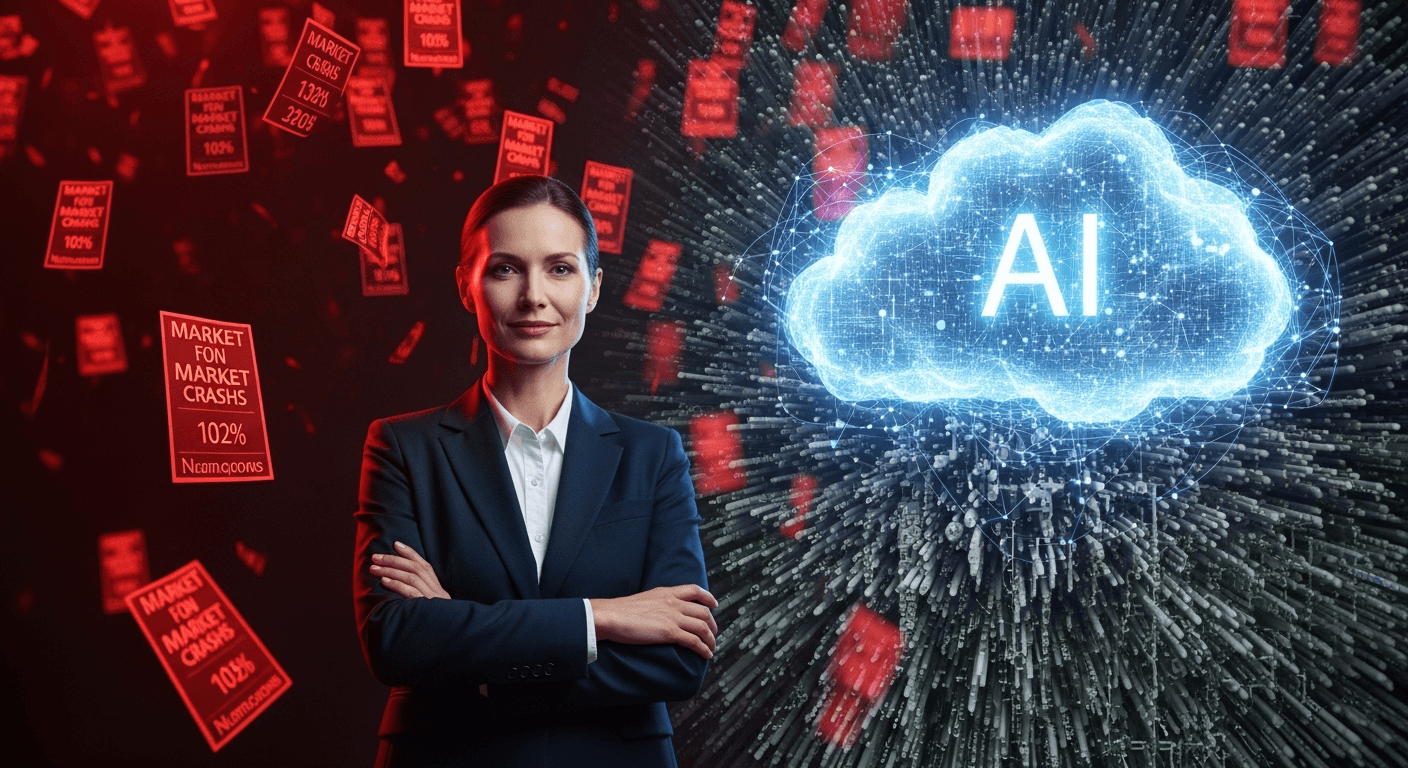
Why the sell-off feels familiar—and what I tell myself
Last week I read the blunt counsel from K Krithivasan (k.krithi@tcs.com): the AI-driven market rout that has wiped billions from software and services valuations is — in his words — a phase of "worry and anxiety." I found that phrasing liberating. It doesn't dismiss the risk; it frames today's reaction as emotional, not inevitable. Times of India captured the context: global traders are repricing whole business models overnight.
"Will the whole value chain be replaced by an LLM? That's not going to happen," said K Krithivasan (k.krithi@tcs.com). The image of dropping a single chatbot into decades of enterprise plumbing is seductive—but naive.
A personal frame: anxiety looks like a market, not like reality
I've watched technology cycles long enough to recognise the pattern: a leap forward in capability → breathless headlines → investor extrapolation to extremes → panic-driven price moves → a calmer phase of integration and re-pricing. The short-term market outcome can be brutal; the long-term shape usually includes both winners and many reconfigured incumbents.
I wrote about the human side of this once before when I asked, "Wherefore Art Thou, O Jobs?" — the piece was a probe into which roles modern AI might compress and which it will augment (Wherefore Art Thou, O Jobs?). The same emotional dynamics—fear of loss, hope for upside, and the impulse to simplify complexity—are playing out now at the level of corporate valuations.
Three realities beneath the headlines
Enterprise systems are messy and context-rich. You cannot "drop Anthropic" into a 25-year banking stack and expect all downstream consultants to disappear overnight. The work of integration, compliance, data governance and domain knowledge remains human-heavy for a long period.
AI compresses effort; it does not always compress value. Faster, cheaper delivery pressures pricing and headcount models—but it also creates opportunities to repackage outcomes, sell higher-value products, and build new monitoring, safety and customization services.
Markets often price narratives, not fundamentals. When anxiety runs high, multiple plausible futures get conflated into one catastrophic storyline: extinction of an entire business model. That sells headlines—and it terrifies short-term holders.
What leaders should do now (my practical checklist)
Tell your organisation the truth: acknowledge the efficiency gains and be explicit about where value might be compressed.
Build a migration playbook: identify the messy legacy areas where AI helps but does not eliminate human craft (security, audit trails, compliance, and bespoke integrations).
Re-skill with intent: teach engineers to pair with AI agents, not to compete with them. That means focusing on systems thinking, domain expertise, and product design.
Re-architect commercial models: move from headcount-driven billing to outcome-based pricing, platforms, and managed-AI operations.
Invest in trust and auditability: clients will pay a premium for explainability, controls, and data residency. That is a durable moat.
What investors should ask (and what I would ask if I were reallocating capital)
Is the company embedding AI to increase margins or simply shaving hours? The former is additive; the latter is deflationary.
How dependent is revenue on recurring, commoditised maintenance versus bespoke transformation work?
Can the firm capture revenue from the safety, governance and customisation layers that AI requires?
Is management realistic about a near-term pause in growth while investing for the long-term change?
For employees: anxiety is a signal, not a verdict
If you feel threatened, treat the feeling as a call to adapt. Learn to co-pilot with AI tools. Master the context that machines struggle with: the politics of your client, the corner cases in their data, the ethical and regulatory constraints.
Closing thought
I admire the honesty of K Krithivasan (k.krithi@tcs.com) in naming the mood. Calling this moment a phase of "worry and anxiety" is not a denial of risk; it's a reminder to separate emotion from structural analysis. Markets will find their new equilibrium. The work that needs doing—re-architecting systems, embedding governance, capturing new business models—remains.
If you want one practical takeaway: treat today's price swings as a risk-management problem, not a prophecy. Use this pause to build the capabilities that will win in the next decade.
Regards,
Hemen Parekh
Any questions / doubts / clarifications regarding this blog? Just ask (by typing or talking) my Virtual Avatar on the website embedded below. Then "Share" that to your friend on WhatsApp.
Get correct answer to any question asked by Shri Amitabh Bachchan on Kaun Banega Crorepati, faster than any contestant
Hello Candidates :
- For UPSC – IAS – IPS – IFS etc., exams, you must prepare to answer, essay type questions which test your General Knowledge / Sensitivity of current events
- If you have read this blog carefully , you should be able to answer the following question:
- Need help ? No problem . Following are two AI AGENTS where we have PRE-LOADED this question in their respective Question Boxes . All that you have to do is just click SUBMIT
- www.HemenParekh.ai { a SLM , powered by my own Digital Content of more than 50,000 + documents, written by me over past 60 years of my professional career }
- www.IndiaAGI.ai { a consortium of 3 LLMs which debate and deliver a CONSENSUS answer – and each gives its own answer as well ! }
- It is up to you to decide which answer is more comprehensive / nuanced ( For sheer amazement, click both SUBMIT buttons quickly, one after another ) Then share any answer with yourself / your friends ( using WhatsApp / Email ). Nothing stops you from submitting ( just copy / paste from your resource ), all those questions from last year’s UPSC exam paper as well !
- May be there are other online resources which too provide you answers to UPSC “ General Knowledge “ questions but only I provide you in 26 languages !


No comments:
Post a Comment