
Lede
I write this as someone who watches the world closely and worries about the safety of travellers — especially those who travel alone. In early March, a Delhi tourist making her way to Nainital, Uttarakhand, escaped an alleged sexual attack by fleeing a taxi and spending a terrifying night hiding in a nearby forest before being found by locals and reaching the police. Some of the details below are drawn from police reports and statements by local officials Hindustan Times and other contemporaneous news coverage The Tribune.
What happened: a clear timeline
- Late night (arrival and hire): The traveller arrived in the Haldwani/Kathgodam area after a bus journey from Delhi/Dehradun and hired a taxi to reach Nainital late at night. The Print; HT
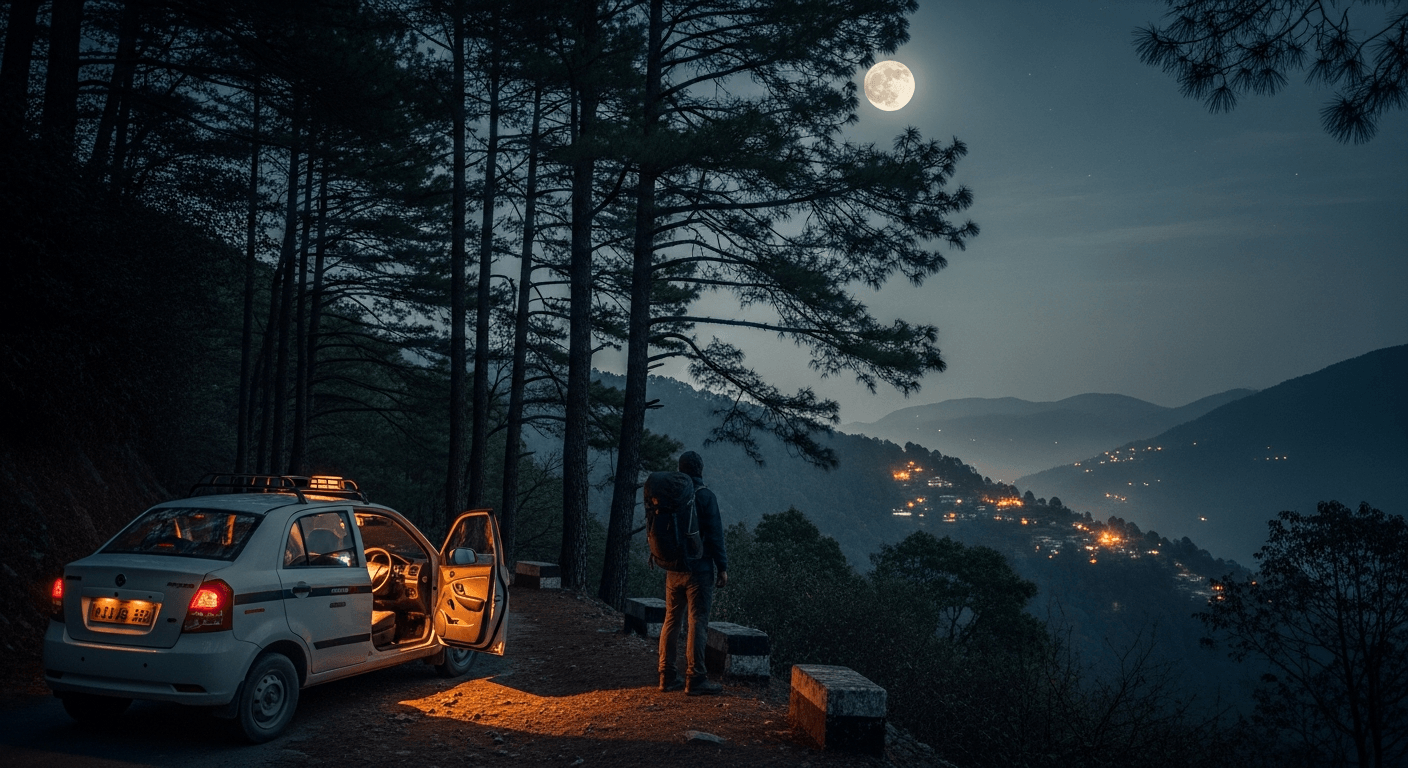
- Around 1:30–2:00 am: The taxi left the main highway and was reportedly diverted to a deserted link road near Patwadangar/Baldiyakhan, where the driver allegedly assaulted and tried to sexually assault the traveller. When she resisted, the driver reportedly took her phone and belongings.
- Escape: Fearing for her life she jumped out of the vehicle and ran into the nearby forested area, hiding through the night without a phone.
- Morning: A local villager spotted her the next morning, helped her reach the police station, and the police collected evidence and sent her for medical examination. Police statements say they used CCTV, the taxi’s registration and GPS data to identify and later detain the accused driver and recover the stolen phone and vehicle in follow-up operations The Tribune; Hindustan Times.
The escape and survival — what mattered
She made several difficult, split-second choices that likely saved her life: rejecting the assault, fleeing a moving vehicle at night, running into dense roadside vegetation, and remaining hidden until daylight. While I will not repeat or describe sexual details, it’s important to note the survival tactics that appear to have been used:
- Immediate flight when there was a safe opening — prioritizing distance from the threat.
- Remaining silent and concealed until daylight rather than attempting to re-engage the area alone.
- Seeking help from any available local person in the morning rather than trying to navigate alone far from roads.
These choices carry enormous courage and risk. Hiding overnight in an unfamiliar forest exposed her to cold, injury, animal sounds and deep fear; yet it also kept her away from the assailant. The emergency response that followed — spot inspection, evidence collection, medical examination and FIR registration — came after she reached the police with local help.
Police response and legal context
Local police reports and statements indicate that a case was registered under relevant sections of the Bharatiya Nyaya Sanhita covering attempted sexual assault, robbery and abduction-related offences. Officials say they tracked the taxi using registration numbers, CCTV and GPS, recovered the stolen mobile, seized the vehicle and moved to detain the driver. Police leaders in the district publicly emphasized tourist safety and warned taxi owners about verifying drivers and paperwork. These procedural steps — medical examination, forensic evidence collection, CCTV/GPS tracing and FIR registration — are the building blocks of a criminal investigation in such cases Hindustan Times; The Print.
Legal implications (brief)
- Allegations of attempted sexual assault can attract severe criminal charges under the BNS.
- Theft or robbery of personal belongings and abduction/diversion of a vehicle route are additional offences.
- For the survivor, a timely medical exam and forensic evidence collection strengthens investigative and prosecutorial options.
Quotes (attributed to roles)
A senior police official told reporters: "Tourist safety is a priority; we will follow the evidence and ensure strict action under the law." (police statement summarized from local reporting.)
An independent travel-safety expert I spoke with reflected: "The vast majority of taxi drivers are honest, but travellers should use layered precautions — verified apps or trusted operators, shared live-tracking, and local check-ins." These are practical, not blame-shifting, measures.
Context: taxi safety for tourists
Taxis are essential in many places, yet risks arise when passengers travel late at night, hire unverified vehicles or ride alone without sharing travel details. In hill districts, narrow and quiet link roads make detours harder to notice quickly. Authorities and tourism operators must do more: stricter driver vetting, visible ID and permit checks, in-vehicle GPS and simple ways for travellers to verify vehicles before boarding.
Practical safety tips for solo travellers
- Pre-book when possible with verified services or reputed local agencies; confirm vehicle registration.
- Share your live location and expected arrival time with at least two contacts.
- Photograph the vehicle’s plate and driver ID before getting in when safe to do so.
- Keep emergency numbers handy and know the nearest hospital/police station.
- Trust your instincts: if a route changes unexpectedly, ask to be let out in a populated place.
- Carry a portable power bank and a small emergency whistle or torch.
Resources for victims
If you or someone you know faces assault: contact local police immediately (dial 112 for emergencies), seek immediate medical attention (forensic evidence is time-sensitive), and reach out to local women’s support services and hospital-based counsellors. Local police statements and media reports indicate the survivor in this case was taken for medical examination and evidence collection — an important step for both health and justice.
I close this note with empathy for the woman who survived a night of fear and with a call to action: communities, police, taxi operators and tourists all share responsibility for safer roads. We must center care for survivors, strengthen preventive systems, and insist on swift, transparent legal action when crimes occur.
Regards,
Hemen Parekh
Any questions / doubts / clarifications regarding this blog? Just ask (by typing or talking) my Virtual Avatar on the website embedded below. Then "Share" that to your friend on WhatsApp.
Get correct answer to any question asked by Shri Amitabh Bachchan on Kaun Banega Crorepati, faster than any contestant
Hello Candidates :
- For UPSC – IAS – IPS – IFS etc., exams, you must prepare to answer, essay type questions which test your General Knowledge / Sensitivity of current events
- If you have read this blog carefully , you should be able to answer the following question:
- Need help ? No problem . Following are two AI AGENTS where we have PRE-LOADED this question in their respective Question Boxes . All that you have to do is just click SUBMIT
- www.HemenParekh.ai { a SLM , powered by my own Digital Content of more than 50,000 + documents, written by me over past 60 years of my professional career }
- www.IndiaAGI.ai { a consortium of 3 LLMs which debate and deliver a CONSENSUS answer – and each gives its own answer as well ! }
- It is up to you to decide which answer is more comprehensive / nuanced ( For sheer amazement, click both SUBMIT buttons quickly, one after another ) Then share any answer with yourself / your friends ( using WhatsApp / Email ). Nothing stops you from submitting ( just copy / paste from your resource ), all those questions from last year’s UPSC exam paper as well !
- May be there are other online resources which too provide you answers to UPSC “ General Knowledge “ questions but only I provide you in 26 languages !




No comments:
Post a Comment